

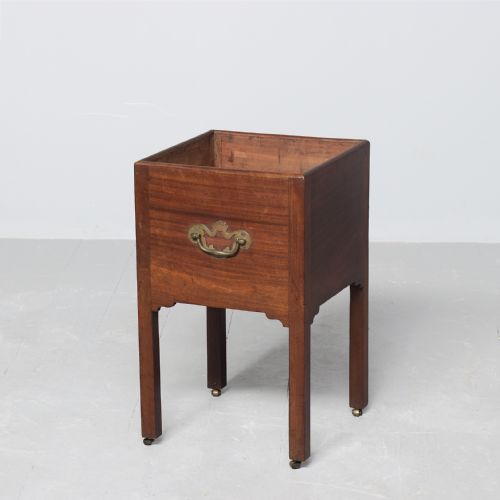
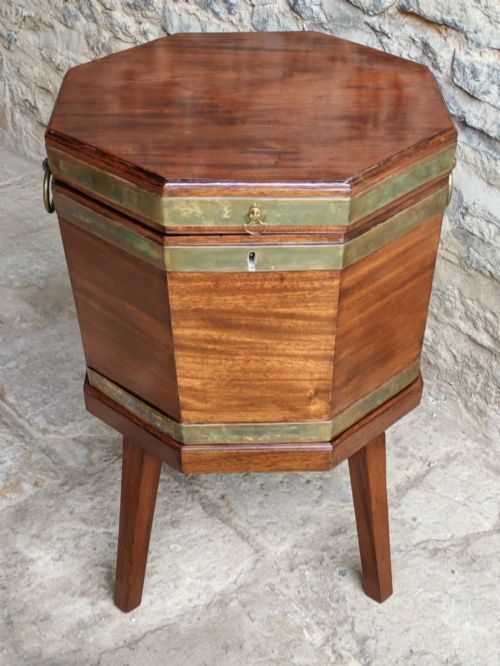
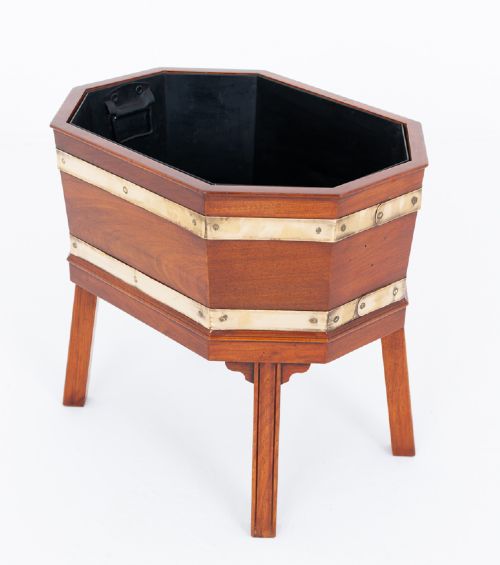
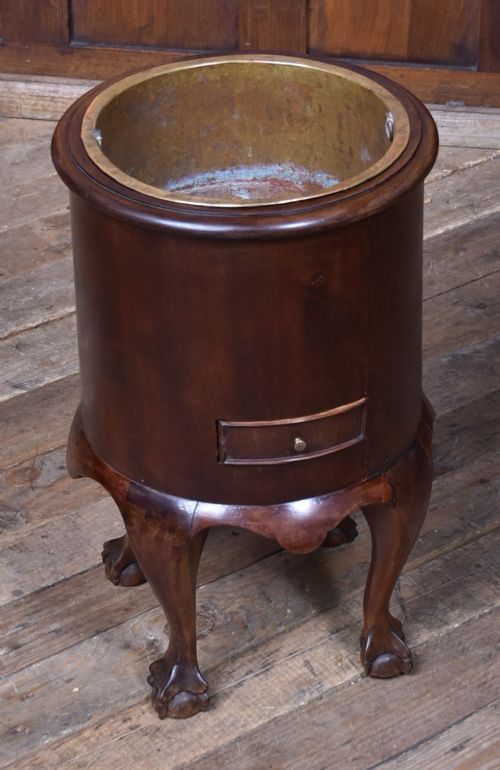


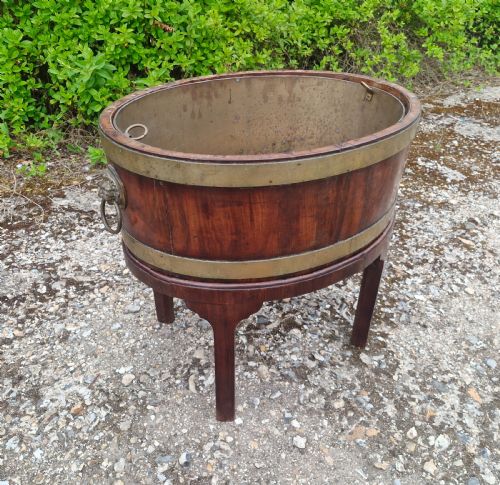

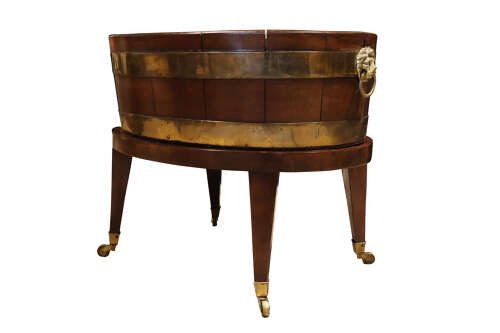


Wine Cistern on Stand
A wine cistern on stand is a stately dining room centrepiece designed for chilling bottles, bringing genuine period gravitas to any interior.
Wine Cistern on Stand
When you search for a wine cistern on stand, you encounter substantial serving vessels created to hold ice and bottles during grand meals. The pieces on this page span the eighteenth and nineteenth centuries, including Georgian, Regency, and Victorian iterations.
You will most frequently meet mahogany examples, often shaped as octagonal or oval buckets with brass banding. Many double as jardinières or planters, reflecting how later owners repurposed these grand dining room items.
The selection ranges from Chippendale period open wine coolers to Dutch marquetry inlaid designs in satinwood and rosewood. Each piece unites utility and display, designed to sit directly on the floor or upon a dedicated stand.
How they were made
Cabinet makers utilised dense timber like mahogany, often employing cooperative techniques with tight stave construction to hold water safely. Brass bands or hoops were fitted around the wooden bodies to secure the staves and provide structural strength.
Interiors typically incorporated metal liners or zinc elements to protect the wood from melting ice and moisture. Finer examples integrated elaborate marquetry in satinwood and rosewood, alongside boxwood stringing and brass handles.
Wine Cistern on Stand Retail Price Guide 2026
Typical asking prices for wine cistern on stand among the pieces listed under this phrase on Sellingantiques today, from the lower quarter to the upper quarter. They describe what is for sale here now, not the wider market.
Listings span the eighteenth and nineteenth centuries, featuring Georgian, Regency, and Victorian periods constructed predominantly from mahogany, brass, and zinc.
What varies in quality
Quality rests in the crispness of the cabinet work, the integration of the stand, and the retention of original metal liners or brass fittings. Pieces retaining their original matching stands demonstrate superior craftsmanship compared to later marriages.
The choice of timber grain, the precision of coopered staves, and delicate inlay work separate standard utility items from high-status dining furniture. Original patination on the timber and brass further elevates a piece's standing.
The Wine Cistern on Stand Glossary
- Coopered
- Constructed using vertical wooden staves bound by metal hoops, similar to barrel making. This technique ensured the vessel could hold ice and water without leaking.
- Jardinière
- An ornamental stand or pot designed to hold plants or flowers. Many wine cisterns were later adapted or originally constructed to serve this dual purpose.
- Marquetry
- Decorative veneer applied to furniture in patterns using different woods. Dutch examples frequently employ this method with satinwood and rosewood.
- Stands
- The supporting base or legs beneath the cistern body. Some are integrated directly, while others are separate frames designed to elevate the cooler.
- Brass bound
- Fitted with external metal bands for reinforcement and decoration. These bands secured the wooden staves and added a polished metallic contrast.
Wine Cistern on Stand: Frequently Asked Questions
What is a wine cistern on stand?
A wine cistern on stand is a large, historically significant dining room vessel used to ice bottles during meals.
These pieces combine sturdy timber construction with metal linings to keep wine chilled for guests.
How were these cisterns used originally?
Servants filled the vessels with ice and water to chill multiple wine bottles before they were served at the table.
They stood prominently in the dining room, combining practical cooling utility with a display of household wealth.
Are these pieces waterproof today?
While many retain original metal liners, aged seals and historical wear mean modern use for holding water requires caution.
Collectors generally treat them as display furniture or utilise modern internal trays to protect the antique wood.
How do I identify a Georgian piece?
Georgian examples typically feature rich mahogany timber, traditional brass binding, and precise coopered construction.
Look for period proportions, hand-cut dovetails, and classic oval or octagonal shapes characteristic of the eighteenth century.
Can these be used as planters?
Many historic cisterns served as jardinières or plant stands in subsequent centuries due to their generous proportions.
Using a protective inner pot allows you to display large house plants safely within the antique wooden housing.