




William Mary Inlaid Chest
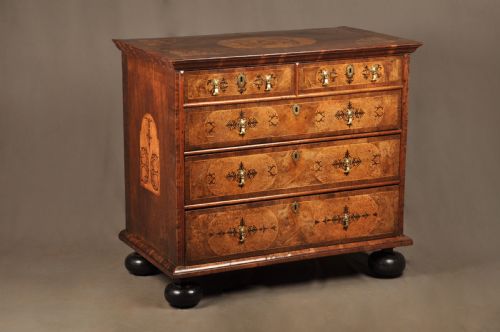
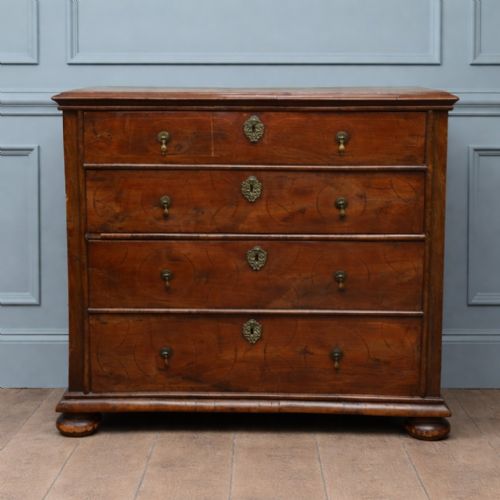
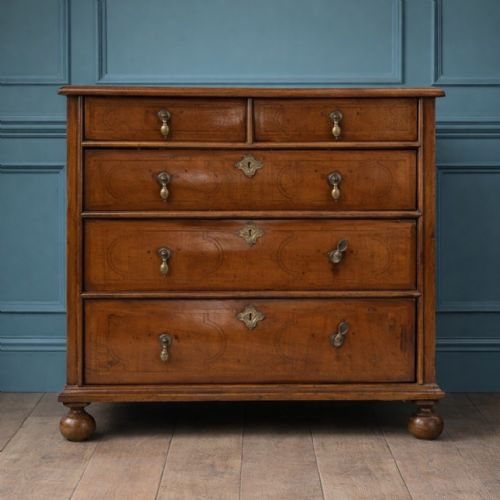
A william mary inlaid chest brings late seventeenth-century cabinet-making directly into a room through rich timber patterns and precise decorative banding.
William Mary Inlaid Chest
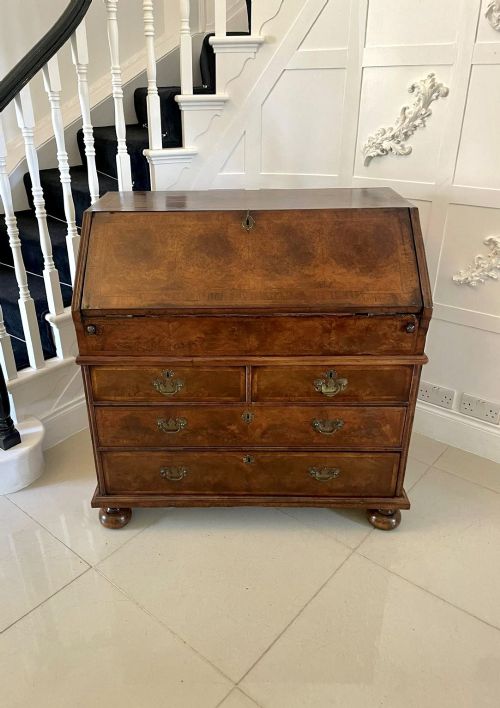
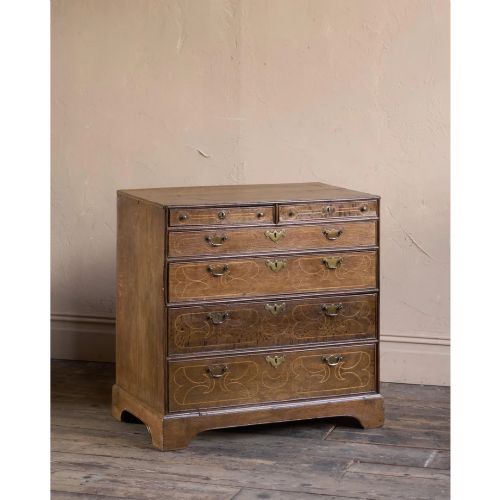
A william mary inlaid chest stands as a principal form of case furniture from the late seventeenth century, combining sturdy carcases with elaborate surface decoration. The pieces appearing here span the seventeenth century, the eighteenth century, and the georgian period, alongside later nineteenth century interpretations.
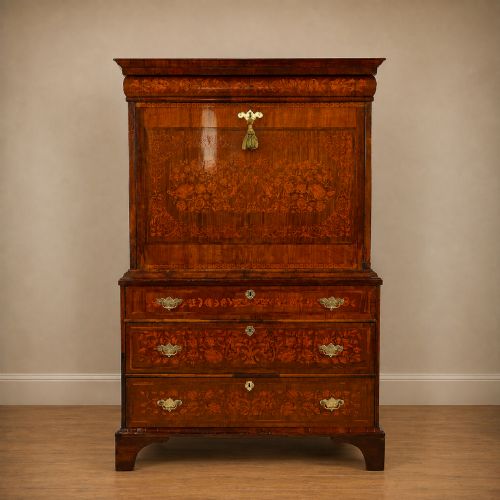
Most examples emerge as chest of drawers formats, while related forms include cabinets on stand, bureaux, bureau bookcases, and decorative boxes. Walnut dominates the selection, accompanied by oak, fruitwood, burr walnut, kingwood, yew, maple, olive wood, and laburnum.
Stylistic labels attached to these items encompass william and mary, queen anne, jacobean, and dutch baroque. Buyers encounter variations that range from strict linear stringing to sweeping pictorial panels across the primary facade.
Construction and Materials
Cabinet-makers built the foundational carcases using solid timbers such as oak, applying decorative veneers across the visible exterior surfaces. Walnut serves as the primary ground for many examples, often selected in figured burr sections to create dramatic visual movement.
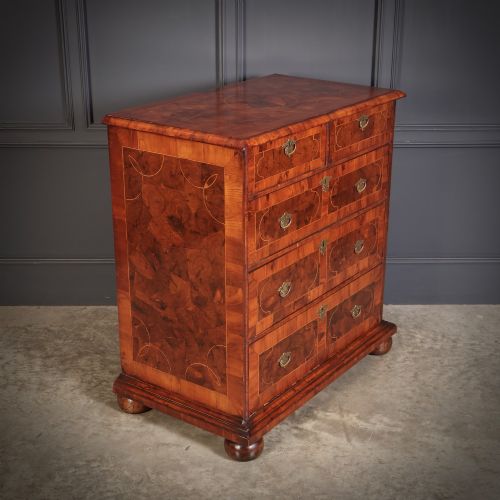
Inlay techniques rely on contrasting materials like boxwood and fruitwood, arranged in geometric herringbone patterns, floral marquetry, or intricate seaweed designs. Artisans also utilised oyster veneering, slicing small branch wood transversely to produce repeating circular grain motifs.
Branch wood sliced thin to mimic seafood.
Assessing Quality
The distinction between tiers rests upon the precision of the veneer work and the complexity of the inlay. Master workshops achieved seamless alignment where banding meets the outer borders, maintaining tight joints across complex floral or arabesque marquetry panels.
Timber selection dictates the upper echelon of these pieces, where deeply figured burr walnut or laburnum oyster veneers display intense natural patterning. Secondary woods and internal drawer construction reveal the original hand-labour involved, separating contemporary interpretations from period survivals.
The William Mary Inlaid Chest Glossary
- Marquetry Inlay
- A technique of cutting contrasting veneers into a prepared ground to form pictorial or floral designs. This method decorates drawer fronts and top panels on seventeenth-century case pieces.
- Oyster Veneer
- Cross-grain slices of small branches laid in repeating patterns resembling oyster shells. This finish appears frequently on walnut and olive wood surfaces.
- Herringbone Inlay
- Thin strips of wood arranged in alternating diagonal rows to create a zigzag pattern. Makers used this detail to frame drawer perimeters and top edges.
- Burr Walnut
- Timber taken from a tree growth that produces swirling, highly figured grain patterns. It forms the primary decorative surface on high-status cabinets and chests.
- Cabinet on Stand
- A case piece raised on an integrated support structure of legs connected by stretchers. These tall forms display elaborate surface decoration across multiple doors.
William Mary Inlaid Chest: Frequently Asked Questions
How do I identify a period piece?
Period pieces display construction methods consistent with late seventeenth-century joinery, including hand-cut dovetails and oak secondary linings. Close inspection of the timber reveals natural shrinkage and patination developed over centuries.
Surface treatments such as oyster veneering or marquetry reflect specific workshop practices of the william and mary era. Later copies often betray their origins through uniform modern adhesives or machine-cut elements.
What is seaweed marquetry?
Seaweed marquetry refers to intricate, fine-line scrolling inlay that resembles marine flora. Artisans cut two contrasting veneers placed together to create interlocking light and dark patterns.
This technique requires exceptional skill and appears on high-status walnut cabinets and chests from the late seventeenth century. The delicate arabesques usually cover entire top surfaces or drawer fronts.
How should I clean walnut veneer?
Walnut veneer requires gentle maintenance using a soft, dry cloth to remove dust. Excessive moisture damages historic glues and lifts the thin timber layers from the carcase.
Application of microcrystalline wax periodically feeds the old wood and preserves the original polish. Avoid modern silicone sprays or harsh chemical cleaners entirely.
Where did oyster veneering originate?
Oyster veneering gained prominence in continental workshops before spreading to British cabinet-makers in the late seventeenth century. The technique allowed artisans to utilise smaller branches and fruitwoods effectively.
Dutch baroque influences encouraged the use of repeating circular grain patterns across large drawer surfaces. Walnut, laburnum, and olive wood served as favored timbers for this method.