
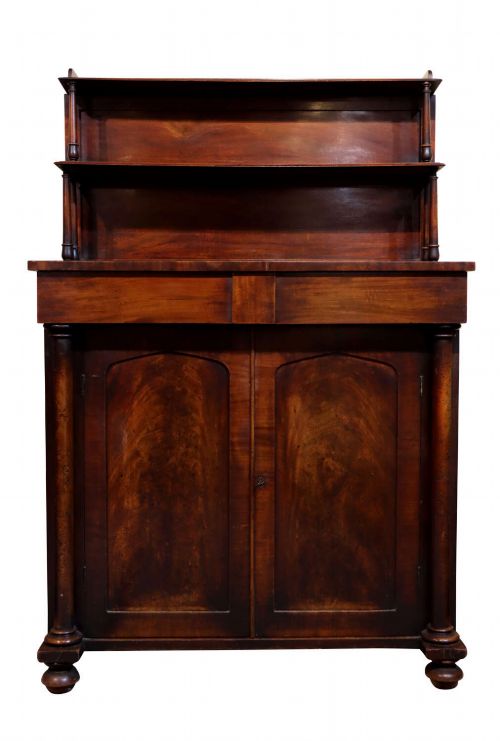
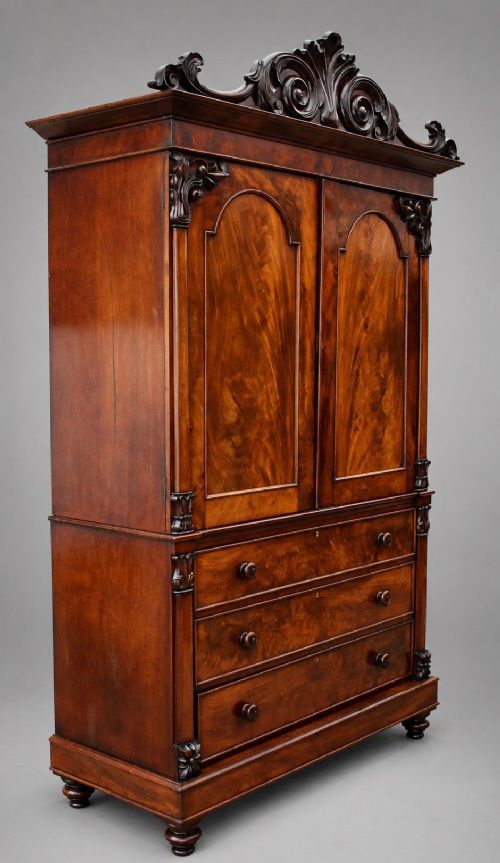


William IV Storage Cabinet
A william iv storage cabinet brings solid timber and proportion to a room, offering practical shelving and cupboards beneath distinct nineteenth-century styling.
William IV Storage Cabinet
When you search for a william iv storage cabinet, you encounter a variety of forms designed for holding books, linen, and household objects. The selections span standard chiffoniers, library bookcases, linen presses, and sideboards originating in the nineteenth century, including the Regency and Late Georgian periods.
The most common version on this page is the mahogany chiffonier or side cabinet, frequently featuring enclosed lower doors and upper shelving. These items range from compact bedside cupboards and tabletop repositories to large breakfront chiffoniers and pedestal cabinets.
Makers and workshops of the era utilised dense timbers to create functional furniture for country houses and libraries. Pieces often integrate open shelves or fabric-backed glass panels, reflecting the domestic storage needs of the period.
What varies in quality
The selection of timber grain and veneer figure marks the distinction between standard items and superior examples. Cabinets exhibiting matched flame mahogany or rich rosewood show greater attention to visual impact during construction.
Complexity of form and hardware integration influence the character of each piece. Elaborate configurations such as breakfront facades, brass grillwork, and fitted interior drawers demonstrate higher standards of cabinet-making skill.
One listed item includes a tabletop repository described as a bachelor's book cabinet, built for a studious gentleman on the move.
Gillows
The William IV Storage Cabinet Glossary
- Chiffonier
- A low sideboard or cabinet featuring enclosed cupboards below, sometimes surmounted by a shelf or a small superstructure.
- Flame mahogany
- Timber veneer cut to reveal a wavy, flamed grain pattern that resembles flickering fire.
- Breakfront
- A piece of furniture where the central section projects forward from the flanking outer sections.
- Linen press
- A tall cupboard traditionally used for storing folded linen, typically fitted with interior sliding trays or shelves.
- Pedestal cabinet
- A freestanding piece built with a column or pedestal base supporting the main storage compartment.
William IV Storage Cabinet: Frequently Asked Questions
What is a william iv chiffonier?
A chiffonier is a low storage cabinet typically enclosed by two doors below, often paired with a shelf above for display purposes.
These pieces served as practical sideboards in nineteenth-century dining rooms and parlours for holding tableware or books.
How do I identify a william iv cabinet?
William IV furniture often displays robust proportions, architectural mouldings, and dense mahogany or rosewood timbers characteristic of the 1830s.
Makers frequently incorporated classical details such as turned columns, brass grilles, and flame veneer panels.
Where were these cabinets used?
Original locations included libraries, country house drawing rooms, and bedrooms where enclosed storage was required for books, linen, or personal items.
Today they function effectively in modern hallways, living rooms, and dining spaces as sideboards or media storage.
What timber was used most often?
Mahogany and rosewood dominate the material record, frequently utilised in both solid form and as decorative veneers.
Oak and satinwood also appear in specific library bookcases and breakfront chiffoniers from the period.