

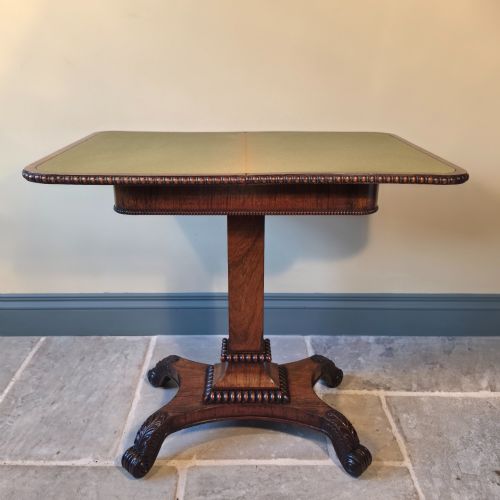


William IV Rosewood Console Table
A william iv rosewood console table brings architectural weight and rich grain to a room through dense tropical timber.
William IV Rosewood Console Table
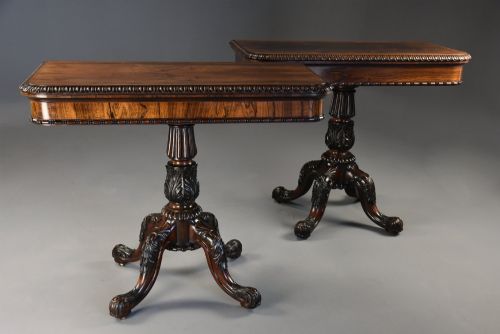
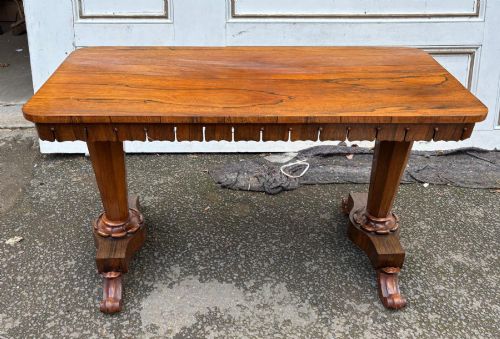
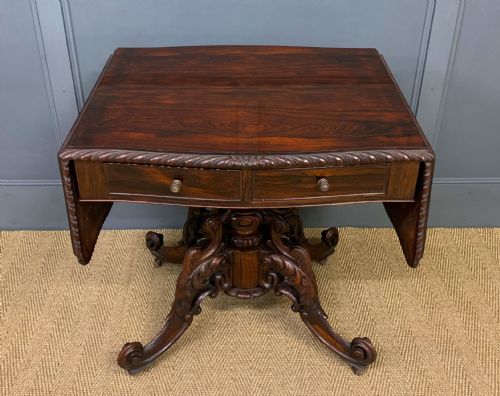
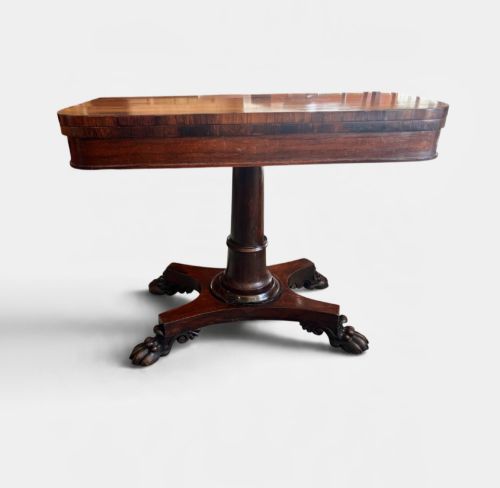
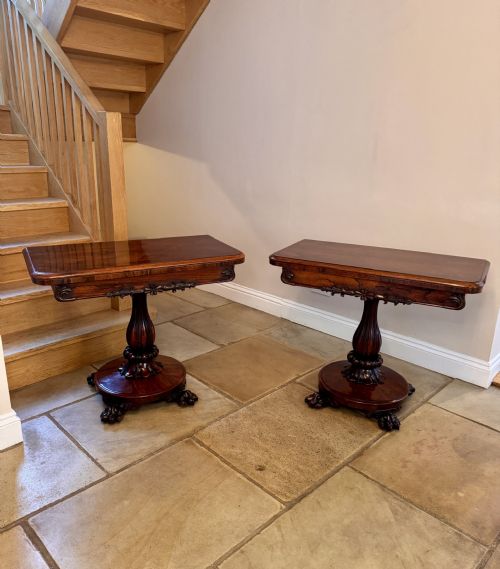
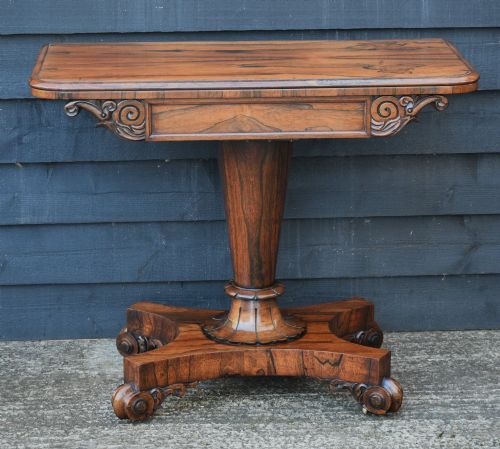
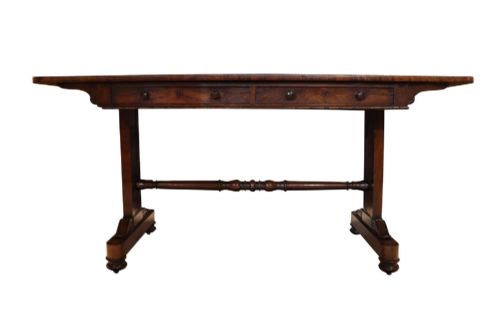
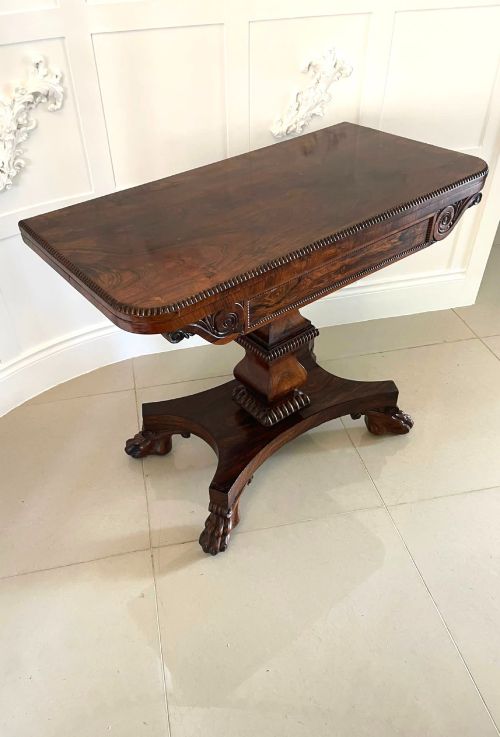
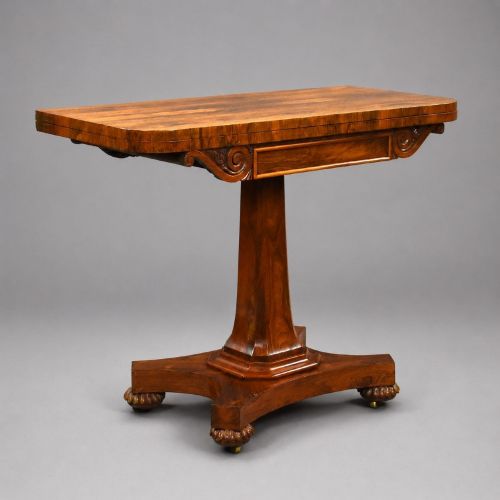
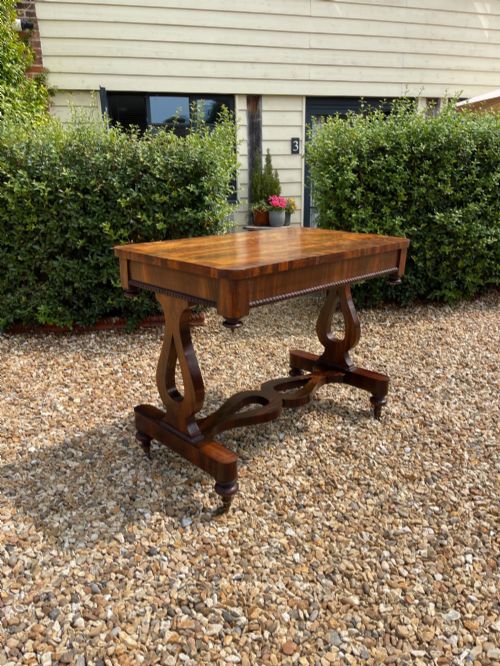
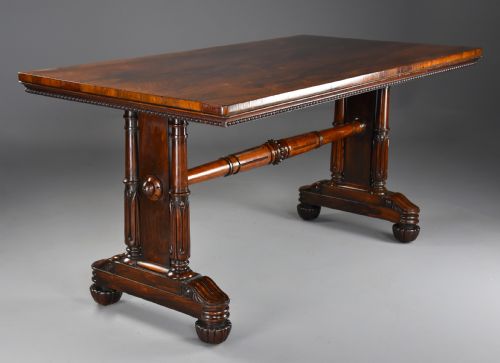
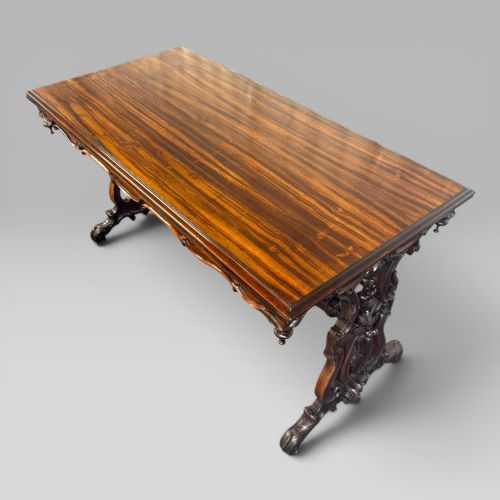
A william iv rosewood console table sits alongside related nineteenth-century forms designed for formal entertaining and display, including card tables, library tables, tea tables, and sofa tables. These pieces span the Regency, William IV, and early Victorian periods, capturing a time of confident cabinet-making.
Materials and Construction
Makers utilised dense rosewood timbers, frequently applied as rich veneers over secondary woods to display dramatic grain patterns across wide tabletops. Inlaid boxwood lines and brass mounts provide sharp contrast against the dark, oiled or polished wood surface.
Heavy central pedestals resting on platform bases or carved feet give these tables structural stability to support hinged folding tops and marble slabs. Secondary woods like mahogany appear within drawer linings and framing components.
William IV Rosewood Console Table Retail Price Guide 2026
Typical asking prices for william iv rosewood console table among the pieces listed under this phrase on Sellingantiques today, from the lower quarter to the upper quarter. They describe what is for sale here now, not the wider market.
Listings span the nineteenth century, capturing the stylistic transition from Regency restraint through William IV mass to early Victorian elaboration.
Judgement of Quality
The distinction between standard production and top-tier pieces rests on the choice of timber veneer and the crispness of carved details such as scrolling foliage, dolphins, or paw feet. Dense, figured rosewood selected for symmetry shows a maker of ambition.
Engineering integrity separates superior examples, particularly in the smooth action of folding card table mechanisms, solid drawer construction, and stable pedestal joints that prevent timber warping over decades.
Gillows·T & G Seddon
The William IV Rosewood Console Table Glossary
- Console table
- A table designed to stand against a wall, frequently secured with brackets or resting on heavy front legs. These pieces often incorporate marble tops and mirror backs.
- Card table
- A folding table with a baize-lined interior surface created for evening games. The top swivels or folds back to reveal a concealed storage well.
- Rosewood
- A heavy, durable tropical timber prized for its dark purple-brown colour and contrasting black grain figures. Cabinet-makers used it extensively for high-status nineteenth-century furniture.
- Pedestal base
- A central column support rising from a plinth or footed platform. This structure replaced traditional four-leg table designs during the Regency and William IV eras.
- Fold-over top
- A hinged tabletop that doubles the surface area when opened. It frequently conceals a recessed compartment utilised for storing playing cards and counters.
William IV Rosewood Console Table: Frequently Asked Questions
How do I use a card table today?
A card table serves well as a side table or a hall console when kept folded against a wall. The hinged top opens easily when extra surface space is needed.
The interior baize surface provides a traditional writing or game desk. Many owners place them in living rooms or studies where versatile furniture proves useful.
How do I tell Regency from William IV?
Regency pieces often show lighter classical restraint with slender lines and refined brass inlay. William IV furniture tends to be heavier, with bolder proportions and robust carved supports.
Both periods relied heavily on dark rosewood, but William IV designs frequently emphasise massive pedestals and architectural scrollwork rather than delicate neoclassical reeding.
How do I care for antique rosewood?
Antique rosewood requires protection from direct sunlight and sudden temperature shifts to prevent the timber from splitting. Regular dusting with a soft, dry cloth preserves the polished finish.
Avoid silicone-based sprays and excessive moisture. Occasional application of quality beeswax feeds the dry wood and maintains its natural lustre.