


William IV Pedestal Sideboard
These heavy timber pieces carry the substantial presence of a nineteenth-century dining room.
William IV Pedestal Sideboard
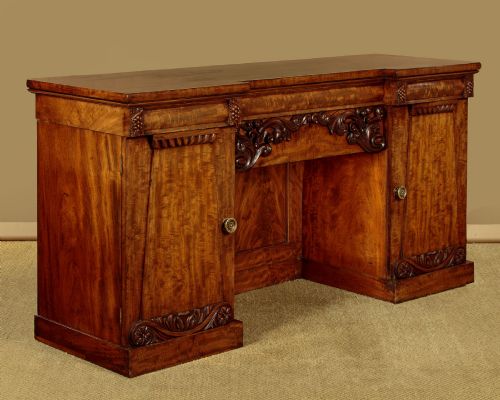
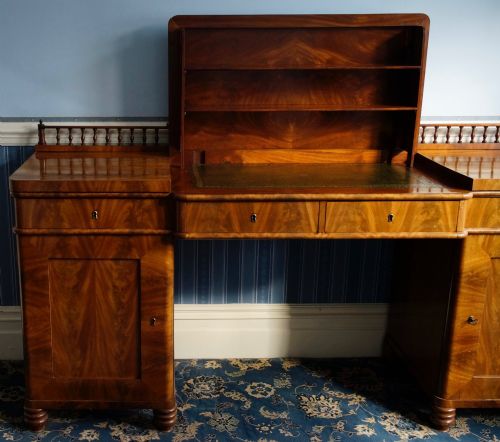
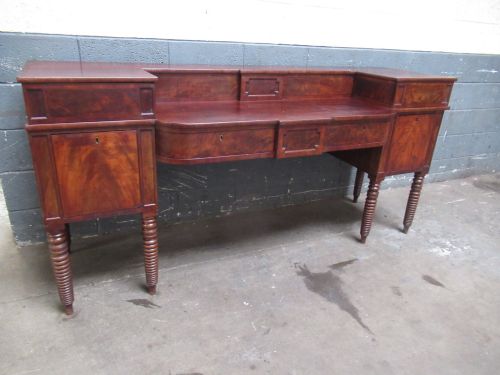
When you search for a william iv pedestal sideboard, you are looking at substantial dining room furniture typically constructed during the nineteenth century. These pieces usually feature a central serving surface flanked by two floor-standing pedestals, designed to anchor a formal dining space.
The versions most common on this page date from the nineteenth century and carry the distinct architectural weight of the period. While some examples align with late Regency styles, the core of the selection centres on the robust forms typical of the William IV era.
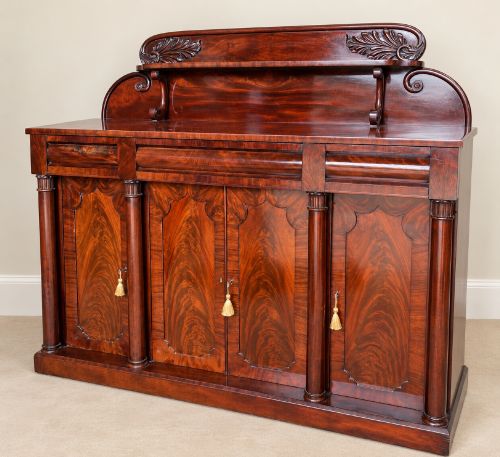
Makers of the period built these sideboards to serve both practical storage and display functions in large houses. They appear primarily in mahogany, often with flame veneers that demonstrate the decorative ambition of nineteenth-century cabinet makers.
How they were made
Cabinet makers constructed these sideboards using solid mahogany and mahogany veneers over secondary timbers. Workshops frequently selected flame mahogany veneers to create striking grain patterns across the large flat surfaces of the doors and upstand.
Structural elements incorporated brass details for hardware and mounts, whilst selected interiors utilised leather surfaces. Carved scrollwork and pedestals required skilled hand chiselling to achieve the sculptural relief seen on the columns and plinths.
Listings feature mahogany, rosewood, and brass materials across nineteenth-century periods including Regency and Victorian eras.
What varies in quality
The quality of a pedestal sideboard rests on the selection of the timber and the depth of the carving. Superior pieces display matched flame mahogany veneers that mirror across the central section and pedestal doors, creating a deliberate visual harmony.
Construction methods also set examples apart, particularly in the thickness of the timbers used for the pedestals and the crispness of the applied carved details. Pieces with well-proportioned architectural cornices and robust pedestals represent the upper tier of nineteenth-century cabinet work.
James Mein of Kelso
The William IV Pedestal Sideboard Glossary
- Pedestal sideboard
- A large dining room furnishing featuring two distinct floor-standing cupboards connected by a central table or board. This form became the dominant sideboard layout during the nineteenth century.
- Flame mahogany veneer
- A thin slice of wood cut from the fork of the mahogany tree to produce a flickering, flame-like grain pattern. Cabinet makers applied this to the most prominent exterior surfaces for decorative impact.
- Upstand
- The raised wooden gallery attached to the rear edge of the sideboard top. It prevented items from sliding off the back and often featured elaborate scroll carving.
- Breakfront
- A furniture facade where the central section projects forward from the flanking pedestals or cabinets. This architectural arrangement creates depth and shadow across the front of the piece.
- Cellarette
- A fitted container designed to hold bottles of wine, frequently incorporated into the lower pedestals of a sideboard. They allowed hosts to store beverages securely within the dining room.
William IV Pedestal Sideboard: Frequently Asked Questions
What is a pedestal sideboard?
A pedestal sideboard is a heavy dining room piece consisting of two large floor-standing cupboards joined by a central serving table or board. These items emerged in the nineteenth century to store tableware and serve food during large meals.
They offer deep interior space within the pedestals, often fitted with cellarettes, drawers, or shelving. The top surface provides ample room for displaying silver or serving dishes.
How do I date a William IV sideboard?
Dating relies on identifying stylistic markers such as heavy scrolled corbels, recessed panels, and architectural cornices typical of the 1830s. The heavy proportions distinguish them from lighter eighteenth-century serving tables.
Examining the construction methods inside the pedestals and drawers also helps confirm the period. Secondary timbers and hand-cut dovetails provide further clues to the exact decade of manufacture.
Where were these sideboards used?
These sideboards stood primarily in the dining rooms of large country houses and town residences during the nineteenth century. Servants used the flat surfaces to prepare dishes before bringing them to the main dining table.
The enclosed pedestals kept wine, cutlery, and linens close at hand during long meals. Their monumental scale required large rooms with high ceilings to look properly proportioned.
How do I care for mahogany veneer?
Caring for mahogany veneer requires maintaining stable humidity levels in the room to prevent the thin wood from lifting or cracking. Regular dusting with a dry, soft cloth preserves the polished finish without building up wax residues.
Keep these sideboards away from direct sunlight and heat sources, which can fade the rich reddish-brown tones of the timber. Occasional treatment with appropriate furniture polish helps nourish the grain.