



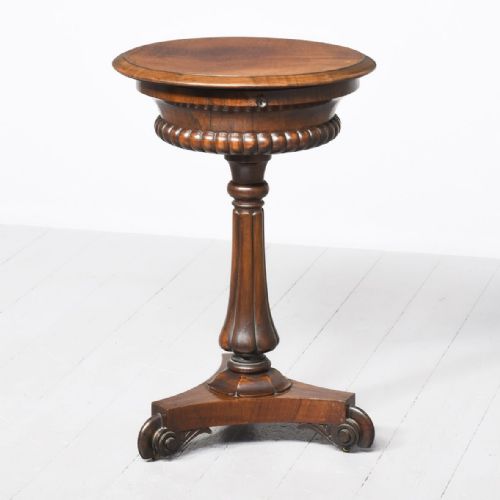

William IV Needlework Box
These William IV needlework box items are practical nineteenth-century tables and boxes designed for domestic sewing.
William IV Needlework Box
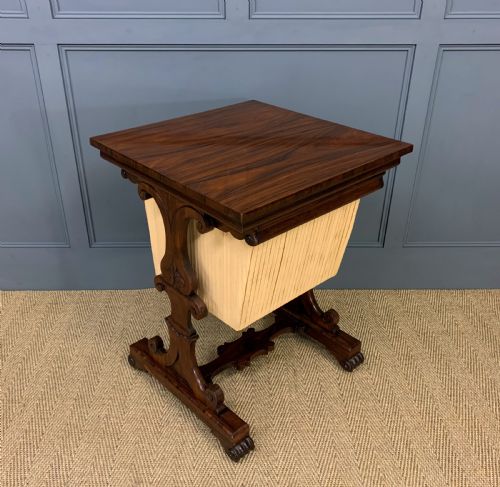
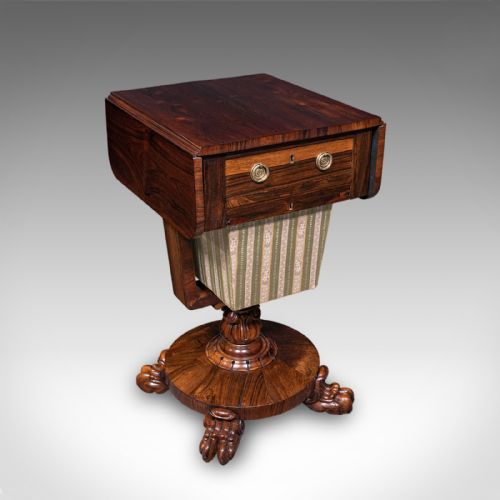
A william iv needlework box typically appears as a compact occasional table, sewing table, or work table built during the nineteenth century. These pieces combine a storage compartment for threads and textiles with a sturdy tabletop surface, sometimes incorporating drop leaves or games boards.
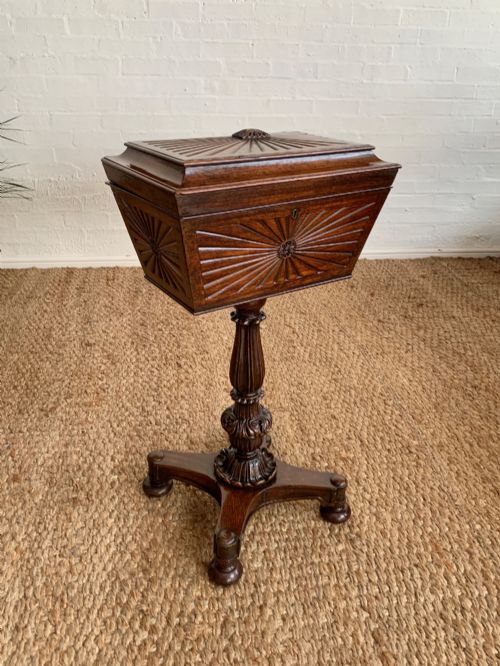
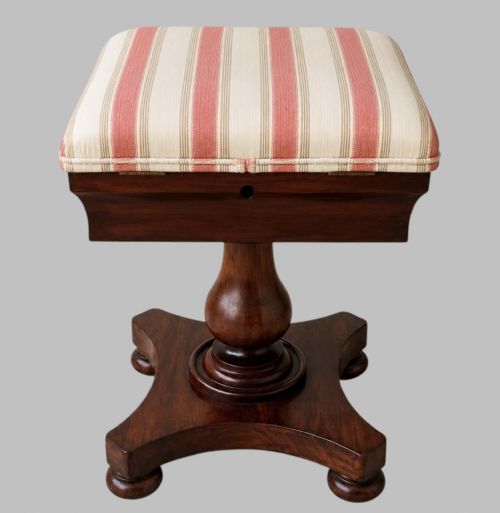
The most common format on this page is the rosewood or mahogany work table, often featuring pedestal bases or lyre ends. Makers of the period also produced box stools and ottomans with upholstered needlework seats for parlour use.
How they were made
Cabinetmakers utilised rich timber stocks such as rosewood, flame mahogany, and figured mahogany to construct these sewing tables. Surfaces were often enhanced with distinct details like sunburst carvings and caddy tops.
Interiors incorporated fitted compartments lined with fabric and silk to organise sewing implements and threads. Structural supports frequently took the form of carved pedestal bases or distinctive lyre ends.
William IV Needlework Box Retail Price Guide 2026
Typical asking prices for william iv needlework box among the pieces listed under this phrase on Sellingantiques today, from the lower quarter to the upper quarter. They describe what is for sale here now, not the wider market.
Some sewing tables secretly doubled as games boards, proving that nineteenth-century needlework required a swift retreat into checkers.
What varies in quality
The selection of timber grain largely determines the distinction between standard and superior pieces, with highly figured flame mahogany and richly toned rosewood representing the upper tier. Cabinetmaking finesse is visible in the crispness of carved details such as sunburst motifs and the neat alignment of drop leaves.
Interior execution also separates examples, particularly the complexity of fitted compartments and the survival of original silk and fabric linings. Structural integrity in the pedestal base or lyre ends dictates the long-term stability of the piece.
The William IV Needlework Box Glossary
- Work Table
- A piece of furniture designed specifically for sewing and needlework, incorporating storage for materials beneath the main surface. These items served ladies in the parlour during the nineteenth century.
- Flame Mahogany
- A veneer cut from mahogany logs where the grain creates a distinctive flickering flame pattern. This decorative timber was favoured by Regency and William IV cabinetmakers for principal surfaces.
- Caddy Top
- A raised, stepped lid style reminiscent of tea caddies, frequently utilised on the top compartment of work boxes and tables. It adds architectural depth to the profile of the furniture.
- Lyre End
- A table support shaped in the classical form of a lyre musical instrument. This stylistic feature appears frequently on the pedestals of Regency and William IV occasional tables.
William IV Needlework Box: Frequently Asked Questions
What is a William IV needlework box?
A William IV needlework box is a nineteenth-century piece of furniture, often built as a table or a stool, designed to hold sewing supplies. They combine functional storage compartments with elegant display surfaces for the parlour.
Cabinetmakers constructed these items using timbers like rosewood and mahogany, frequently incorporating drop leaves or games boards into the design.
How were these tables used?
These tables served as dedicated stations for domestic needlework, embroidery, and sewing tasks. The internal compartments kept threads, needles, and fabric organised close to hand.
The sturdy top surface also allowed the tables to function as occasional stands for lamps, books, or parlour games when sewing was finished.
What woods were commonly used?
Regency and William IV craftsmen relied heavily on dense tropical hardwoods, particularly rosewood and mahogany. Figured and flame varieties of mahogany were especially prized for their decorative grain patterns.
Secondary woods provided internal support for the storage boxes, while brass hardware added functional accents to hinges and locks.