

William IV Mahogany Seat
A william iv mahogany seat brings the solid weight and carved detail of the early nineteenth century straight into a modern room.
William IV Mahogany Seat
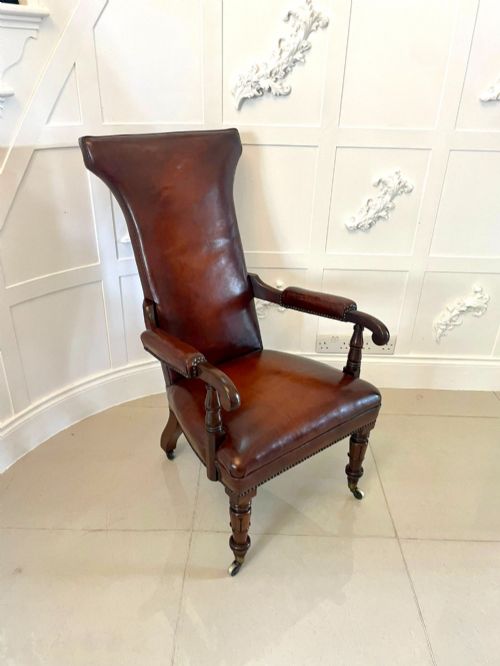
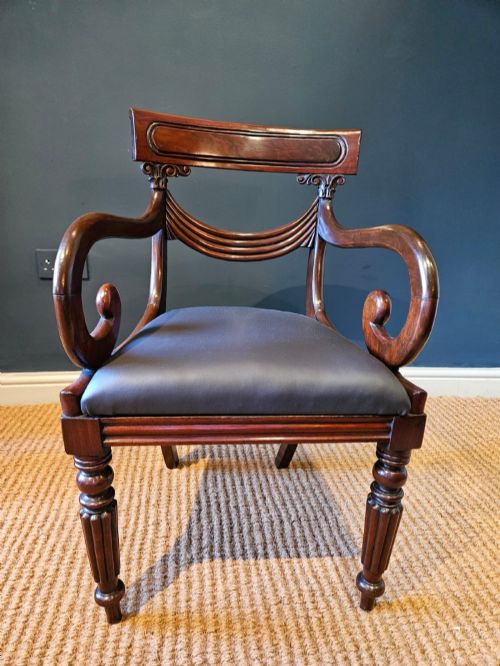
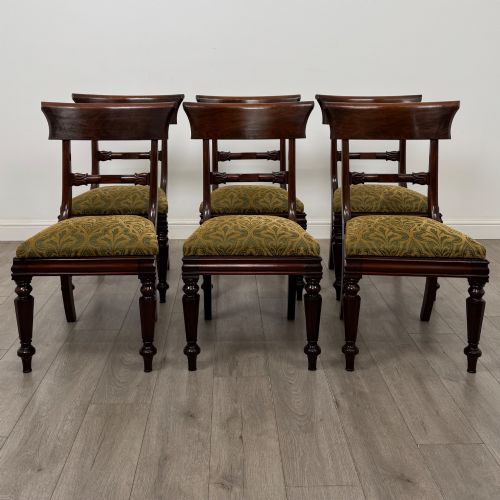
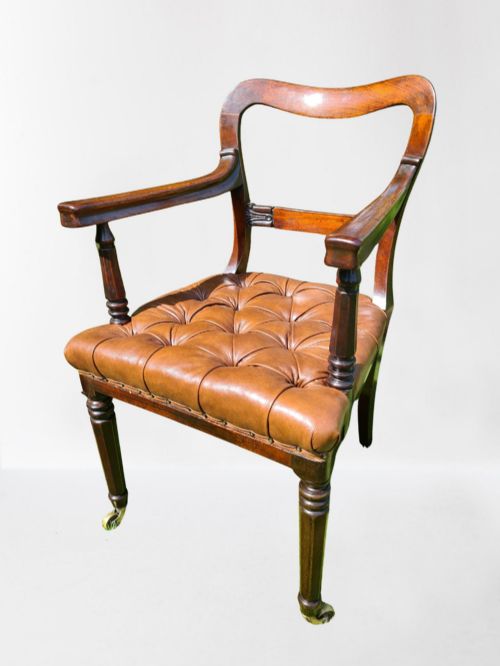
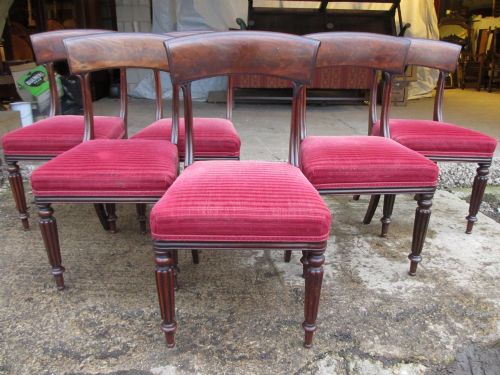
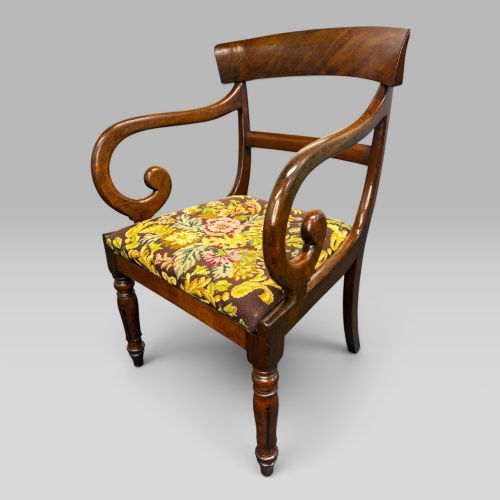
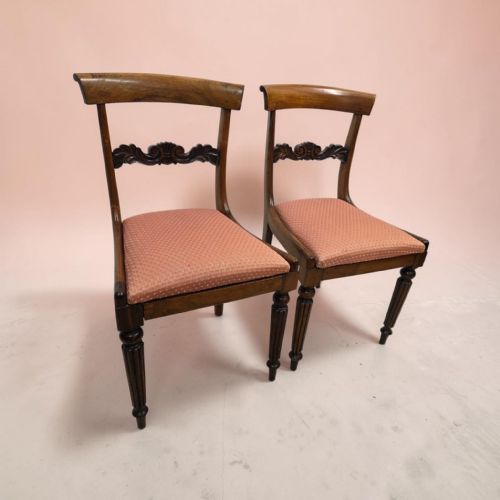
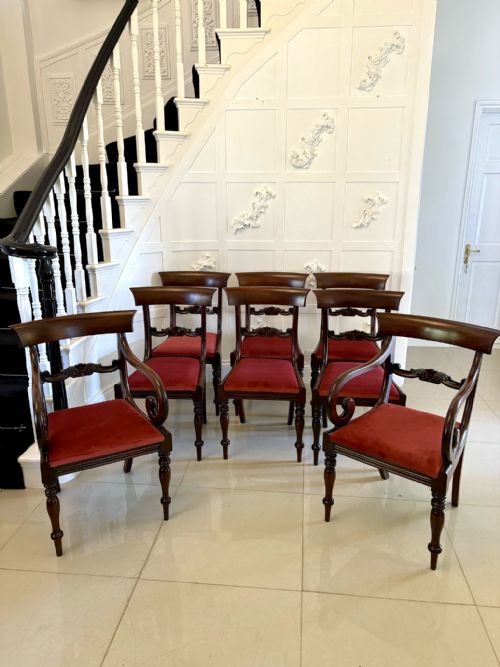
A william iv mahogany seat encompasses dining chairs, armchairs, window seats, stools and hall benches produced primarily during the 1830s. The listings show a strong presence of formal dining sets alongside single reception chairs and long window seats designed for country houses.
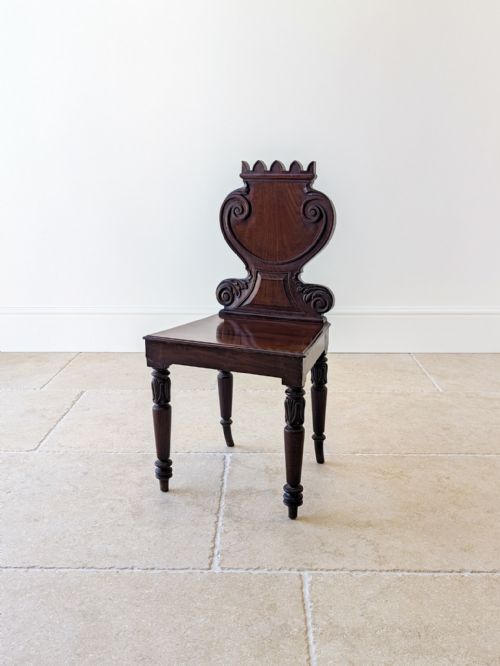
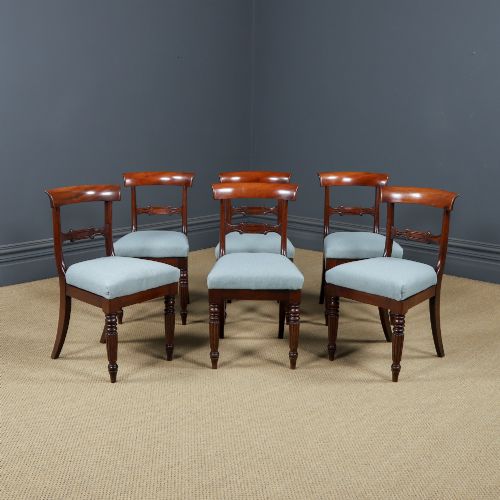
Makers and cabinetmakers of the period drew upon late Regency and early Victorian design idioms, combining substantial timber with robust classical motifs. Buyers frequently encounter single hall chairs with carved wooden backs as well as larger sets of dining chairs featuring upholstered pads.
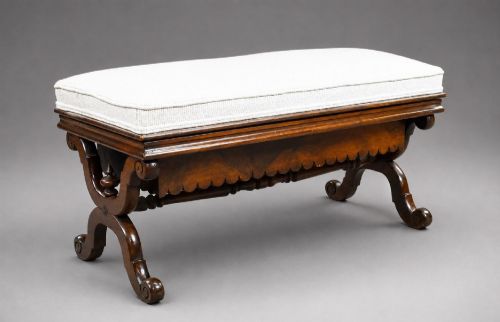
The category extends beyond standard chairs to include specialist forms such as revolving piano stools, footstools with kilim or needlework covers, and extending dining tables accompanied by seating. Window seats and hall benches often display scrolling ends and turned legs characteristic of the era.
Materials and construction
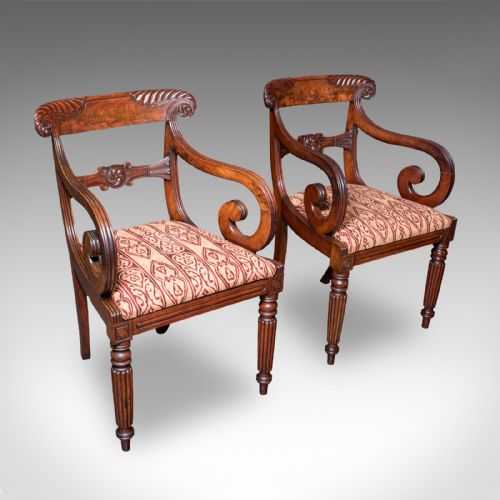
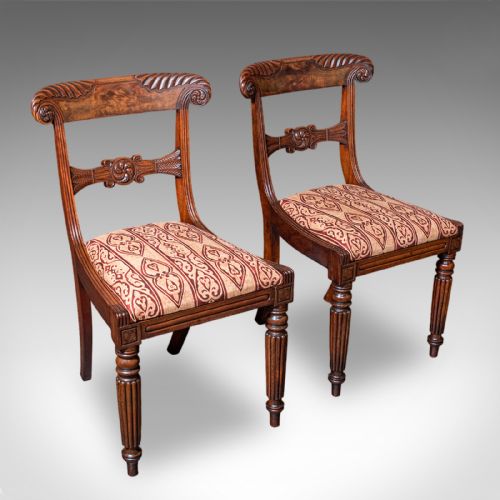
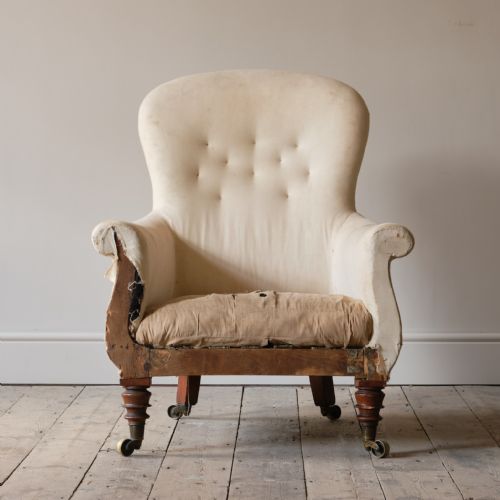
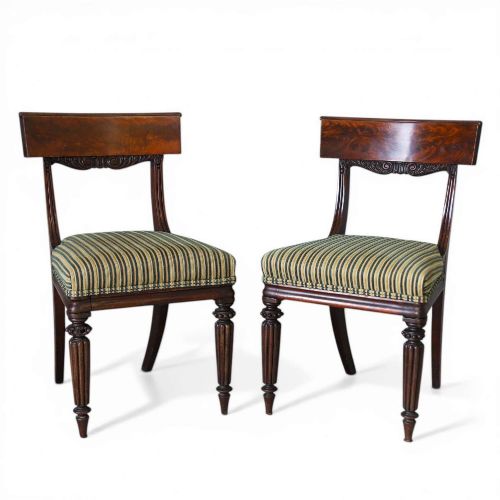
Mahogany serves as the primary structural timber across the archive, selected for its deep grain and capacity to hold crisp hand-carved details like reeded legs and scroll motifs. Brass castors frequently support heavier armchairs and dining tables, while secondary woods remain concealed within the frame construction.
Upholstery relies on traditional stuffing methods over webbing, paired with surface coverings ranging from horsehair and leather to velvet and striped fabric. Needlework and kilim textiles appear on specific stools and window seats, reflecting both original period choices and subsequent nineteenth-century re-covering.
Listings demonstrate that mahogany remains the dominant timber, frequently paired with brass hardware and diverse upholstery fabrics including leather and velvet.
What separates the grades
The distinction between standard utility seating and top-tier pieces rests on the depth of carving and the integrity of the solid timber frames. Master workshops invested heavily in sculpted bar backs, turned and reeded forelegs, and heavy gauge mahogany that resisted warping over decades of use.
Completeness and originality dictate the standing of larger sets and individual pieces alike. Matching sets of six, eight or more dining chairs retain higher desirability when their original frames remain unaltered, while single hall chairs command attention through exceptional crispness in the carved crest rails.
Gillows·John Taylor·Minter
The William IV Mahogany Seat Glossary
- Bar back
- A chair design featuring a horizontal wooden slat across the upper backrest, frequently curved and carved with central roundels or foliate motifs.
- Reeded leg
- A cylindrical furniture leg carved with parallel convex mouldings running vertically down the wood, common on classical revival seating.
- Overstuffed
- An upholstery style where the fabric extends entirely over the seat frame to conceal the wooden rails beneath.
- Window seat
- A long, bench-like form without a full back, usually featuring rolled or scrolled ends, designed to sit beneath a bay or tall sash window.
- Metamorphic
- A piece of furniture engineered with folding or pivoting mechanisms to transform from one functional form into another, such as a child's high chair.
William IV Mahogany Seat: Frequently Asked Questions
How do I identify a genuine piece?
Examine the timber underneath and inside the frame for dark patination, hand-cut joinery marks, and dense solid mahogany construction rather than modern veneers.
Look closely at the carving style, turning details on the legs, and traditional upholstery methods which align with early nineteenth-century cabinetmaking standards.
Can I use these chairs daily?
Most pieces are structurally sound for regular modern use, though dining chairs should be checked periodically at the joints to ensure the nineteenth-century glue remains stable.
Heavier armchairs and hall seats handle daily wear easily, but antique leather and delicate fabric covers may require careful maintenance or professional conservation.
Where do window seats fit best?
Window seats suit entryways, hallways, and living rooms where their low profile and scrolled ends provide an architectural focal point without blocking natural light.
They also function effectively at the foot of a bed or along long corridors as narrow bench seating.
What defines the style?
The style sits directly between Regency elegance and early Victorian mass production, favouring heavy scrollwork, Egyptian and Greek revival motifs, and substantial proportions.
Scroll arms, turned or reeded legs, and carved crest rails distinguish these forms from lighter Georgian or highly ornate late Victorian equivalents.