





William IV Desk Drawers
William iv desk drawers bring solid nineteenth-century timber and practical writing compartments into a room.
William IV Desk Drawers
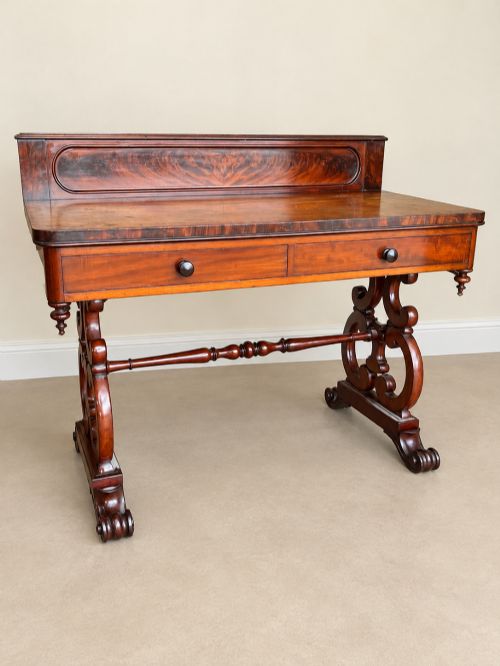
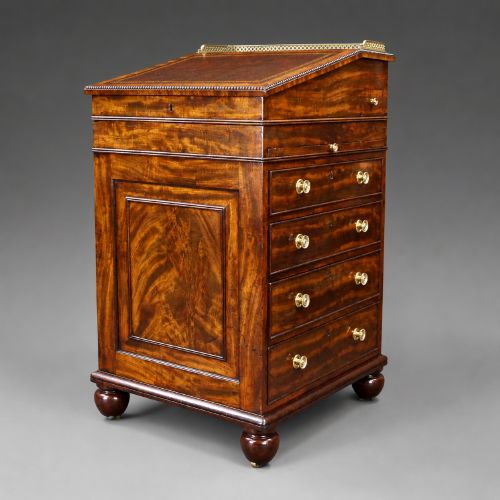
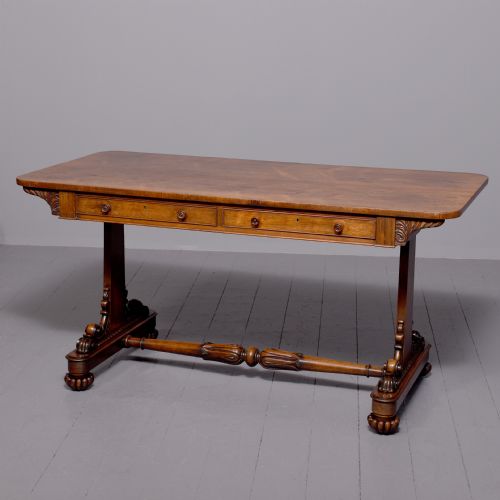
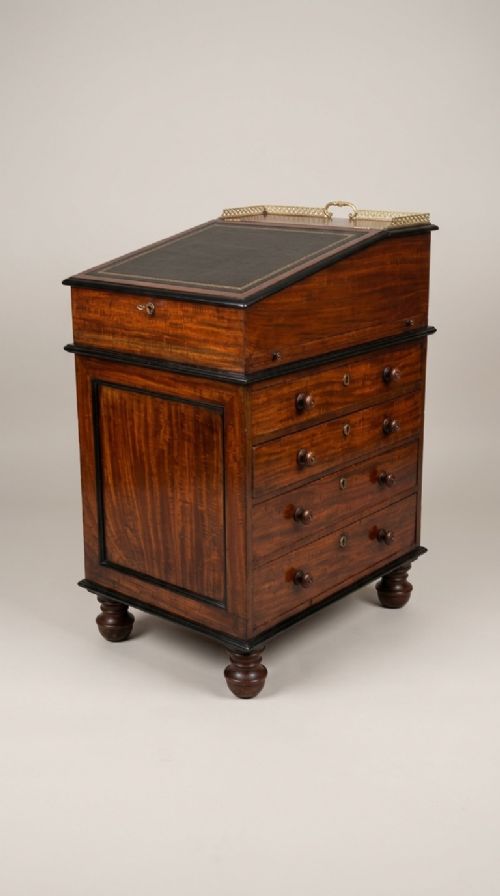
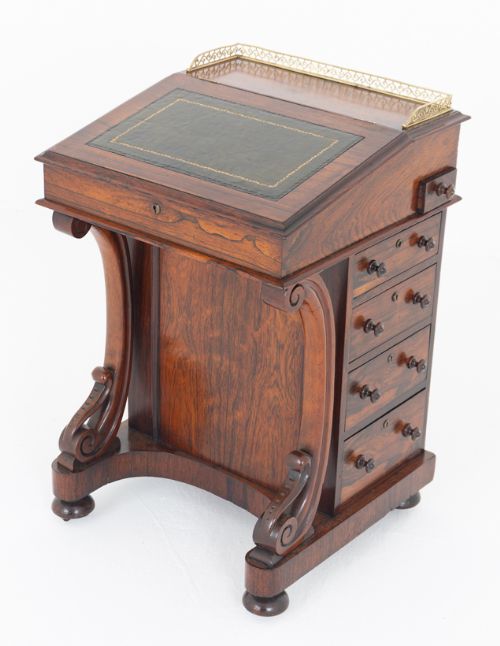
William iv desk drawers encompass writing tables, library tables, and compact davenports produced during the nineteenth century. Buyers searching this phrase meet pieces spanning late georgian, regency, and william iv styles, often fitted with functional drawers for daily correspondence.
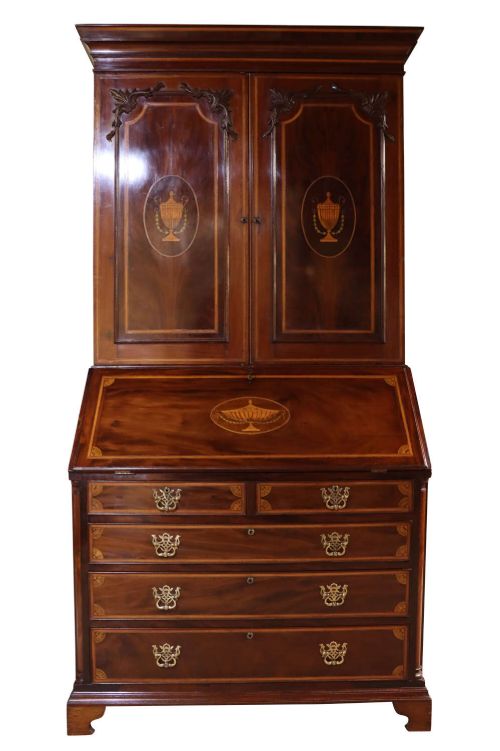
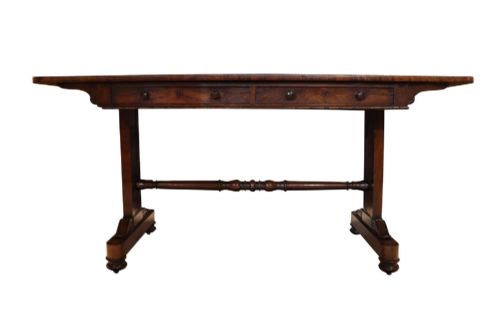
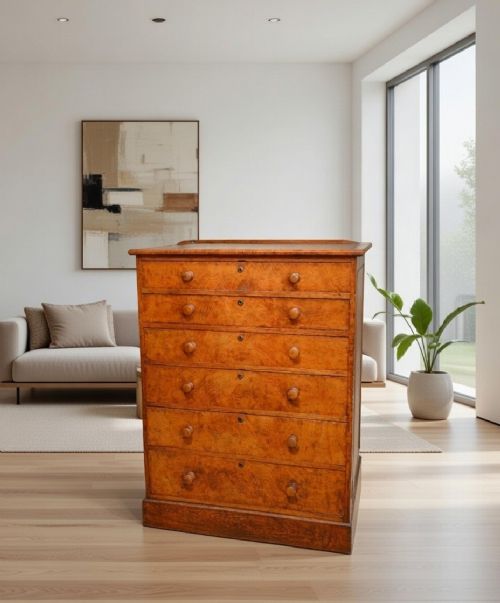
Mahogany and rosewood dominate the listings, alongside flame mahogany, pollard oak, and padouk woods. Formats range from large free-standing centre tables with end drawers to smaller dressing tables and bureau bookcases.
Materials and construction methods
Cabinetmakers utilised dense tropical hardwoods like mahogany and rosewood, frequently selecting figured flame mahogany or pollard oak for prominent surfaces. Brass hardware, leather writing inserts, and subtle wood inlay complete the construction of these tables and desks.
Tables often feature turned end supports or pedestals, while davenports and bureau bookcases integrate stationary compartments with lockable writing drawers. Solid timber framing ensures stability across writing tables and library furniture.
William IV Desk Drawers Retail Price Guide 2026
Typical asking prices for william iv desk drawers among the pieces listed under this phrase on Sellingantiques today, from the lower quarter to the upper quarter. They describe what is for sale here now, not the wider market.
Several pieces double as practical laptop desks for modern offices.
Distinctions in craftsmanship
Quality rests in the selection of timber figure, such as richly grained flame mahogany or dark rosewood, and the crispness of turned supports and inlay. Maker attribution, visible in documented works by Gillows or James Winter & Son, elevates a piece significantly.
The integration of original leather inserts, functioning brass locks, and clean internal drawer construction separates standard workshop output from exceptional examples of period cabinet work.
Gillows·Mein of Kelso·James Winter & Son
The William IV Desk Drawers Glossary
- Davenport
- A compact desk featuring a sloping writing surface above a pedestal of drawers. This form became popular in the nineteenth century for writing and correspondence.
- Secretaire
- A cabinet or desk incorporating a pull-down drawer that reveals a fitted interior of small drawers and pigeonholes. It combines storage with a dedicated writing surface.
- Library Table
- A large free-standing table utilised for reading and writing, frequently finished on all sides with frieze drawers. These pieces often anchor the centre of a room.
- Flame Mahogany
- A veneer cut from the fork of a mahogany tree to produce a dramatic, flickering grain pattern. Cabinetmakers reserved this material for primary display surfaces.
- Ebonised Wood
- Timber treated to imitate ebony, providing a dark contrast against lighter mahogany or rosewood details. It appears on mouldings and specific decorative elements.
William IV Desk Drawers: Frequently Asked Questions
What is a william iv writing table?
A william iv writing table is a nineteenth-century freestanding desk featuring one or more frieze drawers beneath the top. These tables were designed for domestic studies and libraries.
They often stand on turned or pedestal supports and frequently retain leather writing surfaces inset into the timber top.
How do I identify a davenport desk?
A davenport is a small, boxy desk with a sloping, hinged writing lid on top and a set of drawers opening to one side. The upper section often houses stationary compartments.
Most examples seen in these pieces date from the regency and william iv periods, constructed in rosewood or mahogany.
Where were these tables placed?
Library and centre tables were positioned in the middle of a room, finished on all sides so they looked correct from every angle. Smaller side tables and davenports stood against walls or near windows.
Their drawer arrangements provided accessible storage for papers and writing implements in principal rooms.
What woods were used for these desks?
Mahogany and rosewood are the primary timbers found across these desks and tables. Cabinetmakers also selected flame mahogany, pollard oak, and padouk for distinctive grain patterns.
Secondary materials include brass handles, leather inserts, and ebonised wood details used for contrast.