





White Relief Art
White relief art encompasses sculptural wall pieces, delicate plaster casts and crisp engravings that bring classical texture and luminous depth to an interior.
White Relief Art
White relief art captures sculptural form and classical decoration across materials such as plaster, marble, porcelain and paper. When collectors search for white relief art, they encounter framed Grand Tour intaglios, Neoclassical wall plaques, architectural engravings and delicate porcelain vessels.
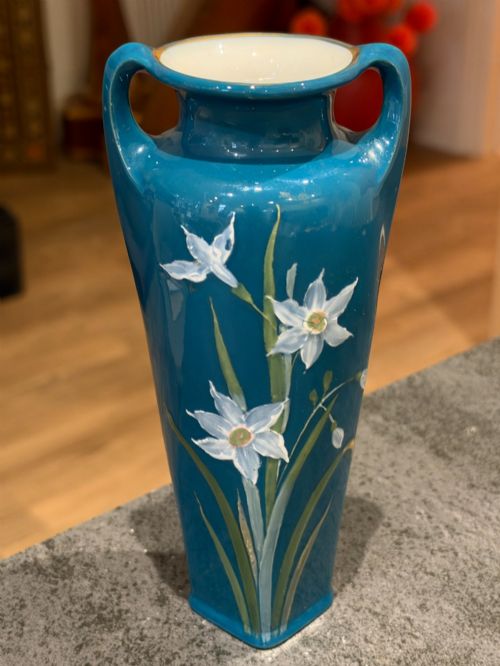
The pieces on this page span several centuries, reaching from eighteenth-century architectural engravings and winged cherub friezes to nineteenth-century marble profile plaques and twentieth-century opalescent vases. Neoclassical, Art Nouveau, Baroque Revival and Victorian classical revival styles predominate throughout the selection.
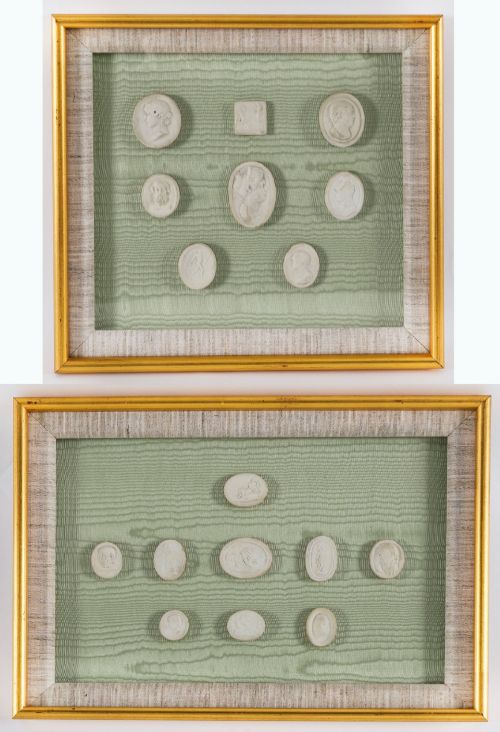
Forms range from intimate framed sets of plaster cast medallions and profile portraits of literary figures to large scale wall art and twin-handled vases. These works rely on subtle tonal variations and raised surfaces rather than vibrant colour to command attention in a room.
Materials and methods
Plaster, marble, porcelain and paper form the primary physical substance of these works, shaped through casting, carving, engraving and pâte-sur-pâte techniques. Plaster cast medallions and wall friezes capture meticulous detail from classical originals, while marble dust and solid stone provide robust relief sculptures.
Engravings on paper utilise fine ink lines to record architectural antiquities and mythological scenes with scholarly precision. Porcelain and glass pieces employ specialised layering and moulding methods to achieve translucent white surfaces and raised decorative motifs.
White Relief Art Retail Price Guide 2026
Typical asking prices for white relief art among the pieces listed under this phrase on Sellingantiques today, from the lower quarter to the upper quarter. They describe what is for sale here now, not the wider market.
The selection includes architectural engravings from the Antiquities of Athens alongside Victorian marble profile plaques.
Distinctions in quality
Mastery in engraving and pâte-sur-pâte ceramic work shows in the delicate control of line and tone. Historical provenance and the integrity of original nineteenth-century framing also elevate certain decorative wall plaques and intaglio collections above standard decorative items.
Gebrüder Heubach·Giovanni Liberotti·Rene Lalique·James Basire·Edward Rooker·J. Brown·Minton
The White Relief Art Glossary
- Intaglio
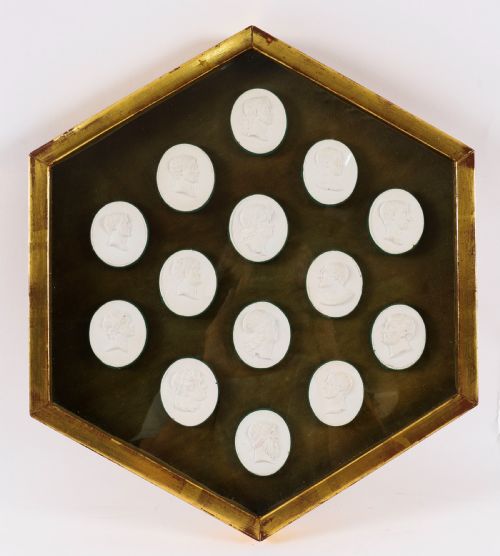
- A gem or gemstone carved in intaglio has a design incised into the flat surface so that an impression in wax creates a raised relief. These small carvings were avidly collected during the Grand Tour.
- Pâte-sur-pâte
- A ceramic technique where porcelain slip is applied layer by layer to a contrasting body to build up a low relief cameo effect before firing. This method requires exceptional skill from the ceramic artist.
- Grand Tour
- A traditional educational trip through Europe undertaken by upper-class young men in the eighteenth and nineteenth centuries. Travellers collected classical antiquities, plaster casts and intaglios to display at home.
- Relief sculpture
- A sculptural technique where elements remain attached to a solid background of the same material. Relief is classified by the degree of projection from the wall, ranging from shallow low relief to deep high relief.
- Engraving
- A printmaking process where an artist cuts lines directly into a metal plate with a burin. The resulting inked lines produce precise architectural and classical illustrations on paper.
White Relief Art: Frequently Asked Questions
What are Grand Tour intaglios?
Grand Tour intaglios are small classical carved gems or plaster casts gathered by travellers touring European historical sites during the eighteenth and nineteenth centuries. They record antique sculptures and mythological scenes for study and display.
Mounted in framed collections, these plaster and stone casts preserve miniature classical art forms for domestic interiors.
How should I hang heavy relief plaques?
Heavy plaster or marble relief plaques require secure wall anchors and appropriate fixings rated for substantial weight. Professional framing or hanging hardware ensures the piece distributes its load safely.
Checking the structural integrity of the wall backing prevents damage to fragile antique materials.
How do I identify Neoclassical plaster panels?
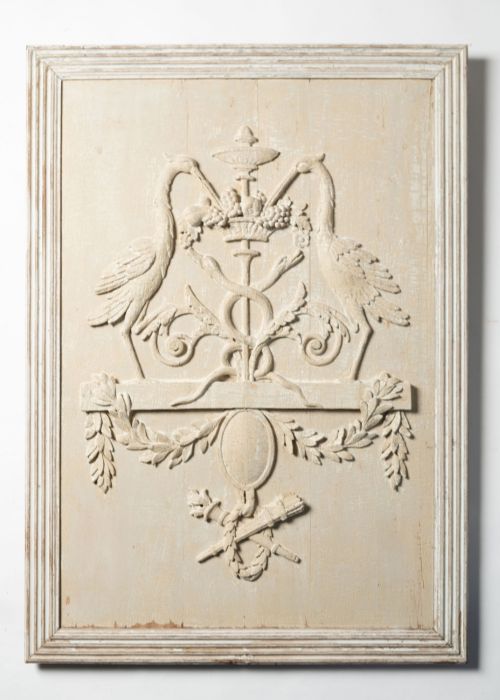
Neoclassical plaster panels feature motifs inspired by ancient Greek and Roman art, including mythological figures, cherubs, urns and architectural friezes. They exhibit balanced symmetry and restrained ornamental detail.
These pieces date predominantly from the eighteenth and nineteenth centuries when classical revival taste dominated European design.
What is the difference between an engraving and a relief?
An engraving is a two-dimensional printed image on paper created by lines cut into a metal plate. A relief is a sculptural work where figures project outward from a flat background.
Both forms often depict the same classical antiquities and architectural subjects found in archaeological surveys.