
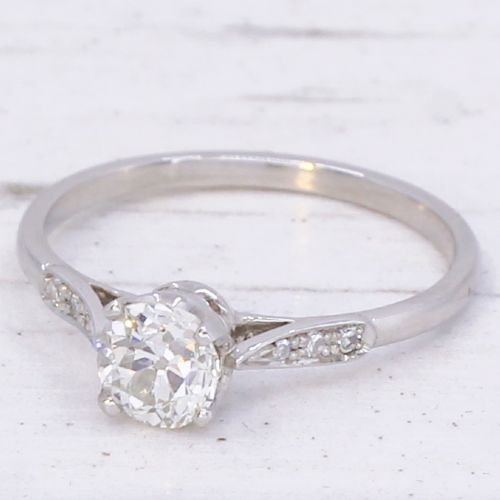
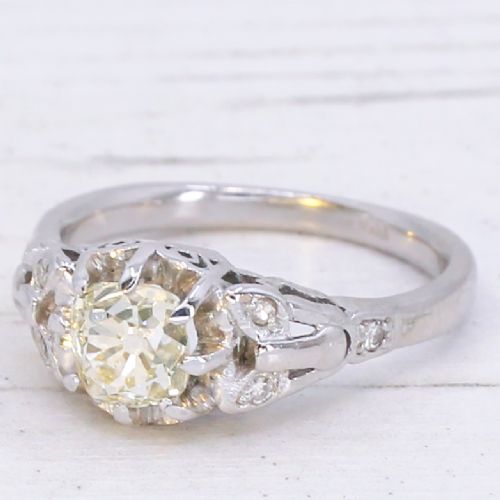
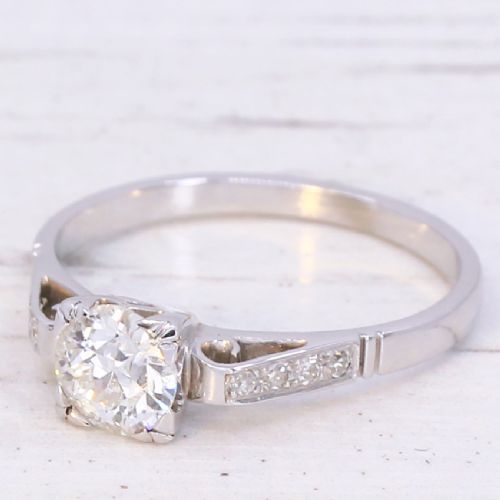
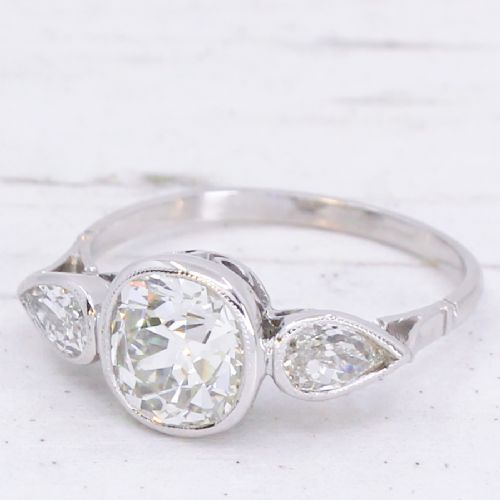


White Platinum Engagement Ring
A white platinum engagement ring combines durable precious metal with enduring stones spanning Edwardian, Art Deco and mid-century periods.
White Platinum Engagement Ring
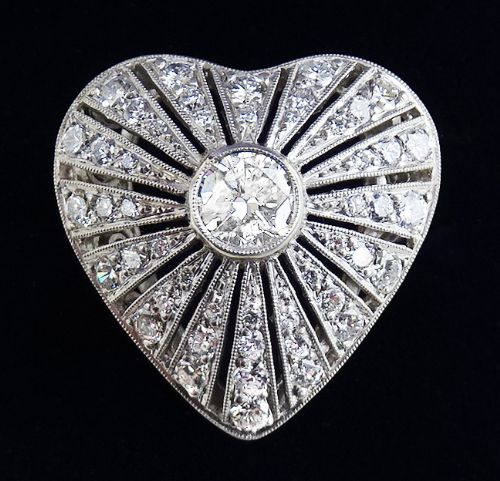
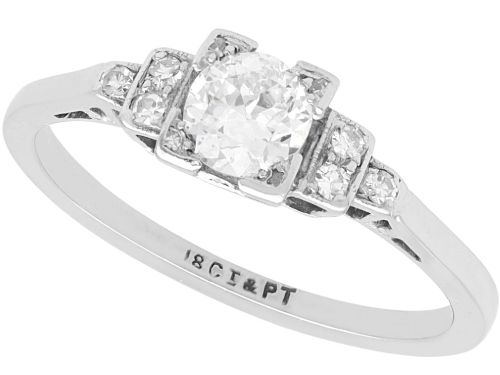
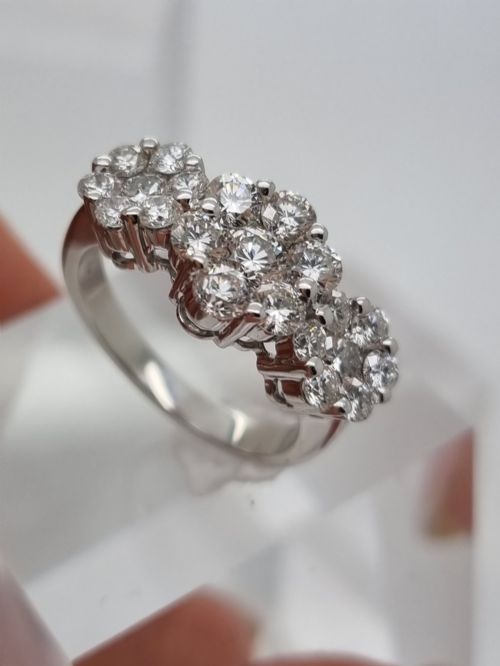
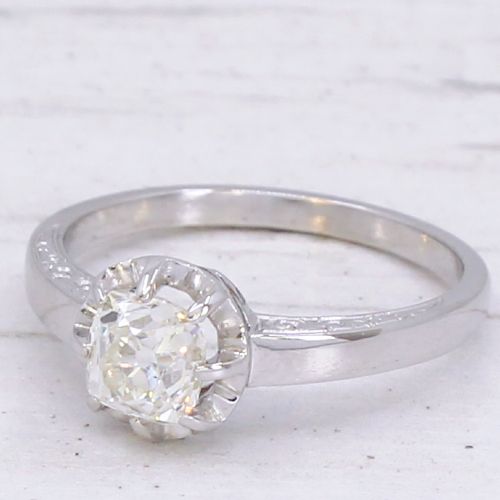
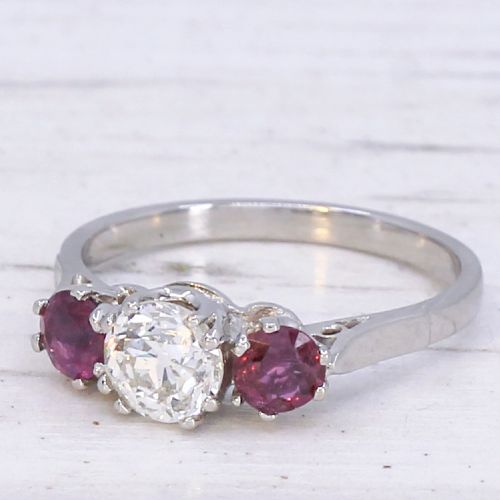
A white platinum engagement ring represents a significant category of vintage and antique jewellery spanning from the Edwardian era through the Art Deco period, 1940s Retro, and 1960s designs. Buyers exploring this selection encounter solitaire rings, cluster formations, three-stone configurations, and delicate twist designs.
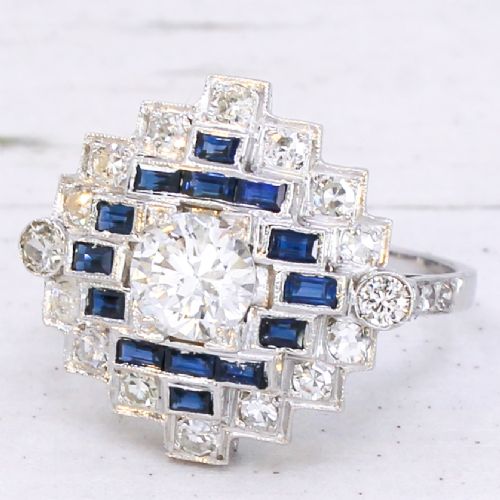
The pieces frequently showcase old cut diamonds, transitional cut diamonds, and brilliant cut stones, often accompanied by natural sapphire, ruby, moonstone, pearl, and onyx accents. Settings range from refined Edwardian mountings to bold geometric Art Deco arrangements and later mid-century creations.
Materials and construction techniques
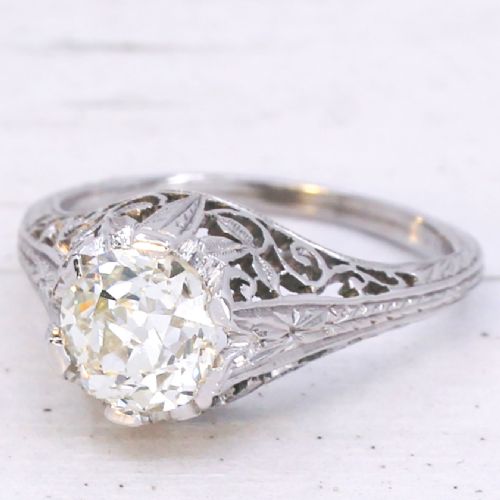
Platinum serves as the primary structural metal for many of these rings, prized for its strength, which allowed artisans to create remarkably fine wirework and secure prong settings without adding heavy bulk. Alongside solid platinum, 18ct gold and 18ct white gold appear frequently, providing alternative backdrops for diamond and gemstone arrangements.
Gems such as old European cut, old cushion, and old pear cut diamonds are hand-set into the metal, reflecting the prevailing lapidary techniques of their respective decades. Cluster and multi-stone formats rely on intricate metalwork to position surrounding rubies, sapphires, or smaller diamond shoulders around central stones.
Many Edwardian platinum rings were engineered so delicately that the metal resembles hand-spun lace.
Distinctions in construction and stone selection
Quality in these rings often relates to the precision of the setting work and the original integrity of the precious metal mount. Hand-carved details, symmetrical prong alignment, and minimal wear to the platinum or gold shanks indicate superior initial craftsmanship.
The grade, cut style, and clarity of the central diamonds or unheated coloured gemstones heavily influence the character of each piece. Older diamond cuts like old European and old cushion cuts display distinct light-return characteristics compared to later brilliant cuts.
The White Platinum Engagement Ring Glossary
- Old cut diamond
- A diamond cut by hand before modern standards were established, typically featuring a small table, high crown, and open culet. These stones exhibit distinctive broad facet reflections.
- Platinum
- A dense, durable, naturally white precious metal utilised in fine jewellery since the Edwardian and Art Deco periods for its secure setting capabilities.
- Cluster ring
- A ring design featuring a central gemstone surrounded by a cluster of smaller stones, often diamonds framing a sapphire or ruby.
- Trilogy ring
- A three-stone ring configuration representing past, present, and future, frequently executed with a larger centre diamond flanked by two smaller stones.
- Transition cut
- A diamond cut used primarily during the mid-twentieth century that bridges older hand-cut styles and modern brilliant cuts.
White Platinum Engagement Ring: Frequently Asked Questions
How do I identify an Art Deco platinum ring?
Art Deco platinum rings typically feature geometric motifs, symmetric patterns, and stylized floral or architectural lines from the 1920s and 1930s. They frequently incorporate millegrain detailing and calibre-cut side stones.
The metalwork prioritizes strong lines and stark contrasts, often pairing bright platinum with old cut diamonds, onyx, or calibrated sapphires.
What is the difference between platinum and white gold?
Platinum is a naturally white, dense, and durable metal that retains its colour over time without requiring plating. White gold is an alloy of yellow gold mixed with white metals like palladium or nickel.
White gold settings often receive a rhodium plating to enhance their bright white appearance, whereas platinum develops a soft patina with regular wear.
How should I care for a vintage diamond ring?
Clean vintage rings gently using warm water, mild soap, and a soft-bristled brush to remove daily residue from beneath the setting. Avoid harsh chemical cleaners or ultrasonic machines, particularly with softer gemstones like pearls or opals.
Regularly check the prongs with a jeweler to ensure the older cut diamonds remain firmly secured in their original mountings.
What are old European cut diamonds?
Old European cut diamonds are round stones hand-cut prior to the development of the modern round brilliant cut in the mid-twentieth century. They possess smaller tables, steeper crown angles, and larger facets.
These characteristics produce a distinctive patterned sparkle under candlelight or lower lighting conditions compared to contemporary diamond cuts.