





White Opaline Pendant
White opaline pendant lights bring a soft, milk-white glow to a room, offering both functional illumination and clean decorative presence.
White Opaline Pendant
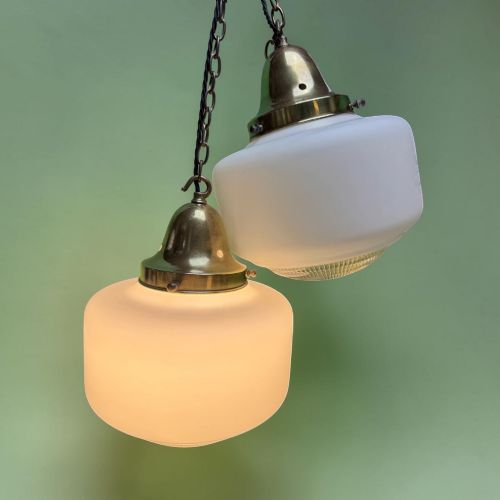
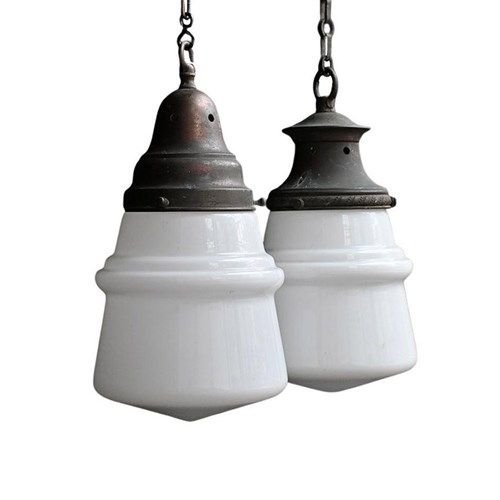
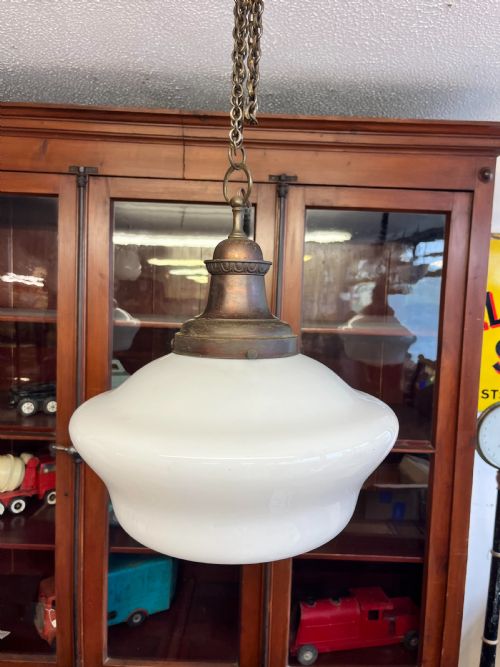
A white opaline pendant is a ceiling-hung lighting fixture featuring a milky glass shade, appearing across periods such as Edwardian, 1910, 1920, and 1930. These pieces function primarily as overhead illumination for hallways, kitchens, and living spaces, offering diffused light through their distinctive translucent glass.
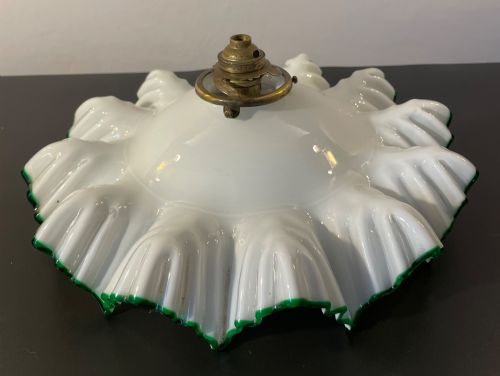
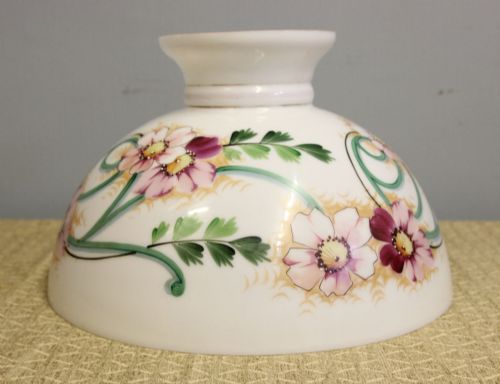
Buyers browsing this selection will frequently encounter single conical, pear-shaped, and dish forms, alongside industrial styles and French frill designs. The inventory spans straightforward utilitarian chapel and hallway shades as well as more decorative painted or reeded variants.
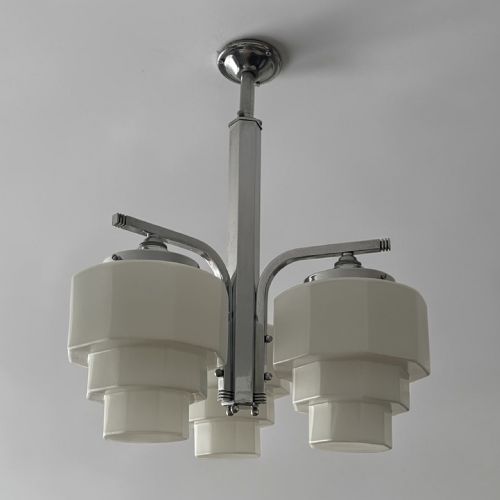
Origins among these pieces lean towards early twentieth-century French and British workshops, often incorporating simple brass, bronze, or chrome suspension hardware. The diverse styles range from Art Deco and Art Nouveau to industrial and Neoclassical, reflecting the broad utility of opaline glass through successive decades.
Materials and construction
The shades are formed from opaline glass, a dense and milky material created by adding opacifiers to the molten batch to achieve its characteristic soft opacity. This glass is then blown or moulded into various profiles, including conical, fish scale, and reeded designs.
Mounting hardware typically relies on brass, chrome, or bronze, often paired with simple metal galleries that secure the glass shade to the suspension cord or rod. Enamel and painted accents occasionally supplement the plain white glass on specific period examples.
White Opaline Pendant Retail Price Guide 2026
Typical asking prices for white opaline pendant among the pieces listed under this phrase on Sellingantiques today, from the lower quarter to the upper quarter. They describe what is for sale here now, not the wider market.
Listings feature opaline glass combined with brass, bronze, and chrome across periods spanning the Edwardian era through the 1930s.
Assessing quality
Quality in these pendants rests upon the purity and weight of the opaline glass itself, determining how evenly it diffuses light and how well it holds its milky density. Thicker, heavier glass formations with well-defined moulding, such as fish scale patterns or pronounced ribbing, separate finer examples from simpler utilitarian shades.
The integrity of the original metal suspension fittings, whether brass, bronze, or chrome, contributes significantly to the overall merit of the piece. Fine casting and intact original galleries indicate superior manufacture compared to later or replaced hardware.
The White Opaline Pendant Glossary
- Opaline glass
- A translucent, milky-white glass developed to diffuse light gently without glare. It often forms the main body of Edwardian and early twentieth-century pendant shades.
- Pendant light
- A hanging light fixture suspended from the ceiling by a cord, chain, or metal rod. These units provide direct task or ambient room illumination.
- Plafonnier
- A ceiling-mounted light fixture where the glass shade sits close to the ceiling surface. This style suits rooms with lower headroom.
- Gallery
- The metal ring or collar used to grip and support a glass lampshade from a fitting. It connects the fragile shade to the suspension wiring.
- Reeded
- Decorated with parallel raised ridges or grooves running along the surface of the glass. This technique adds texture and catches the light.
White Opaline Pendant: Frequently Asked Questions
What rooms suit a white opaline pendant?
These pendants work well in kitchens, hallways, and dining areas where focused yet softened overhead lighting is required. Their neutral white tone complements both traditional and modern interiors.
Because the glass diffuses light evenly, they reduce harsh shadows and create a welcoming atmosphere without overwhelming the surrounding decor.
How do I clean opaline glass shades?
Wipe the glass gently with a soft, damp cloth and mild soapy water to remove dust and household grime. Avoid harsh scouring pads that might scratch the surface.
Dry the shade thoroughly with a lint-free cloth before reattaching it to the suspension hardware to prevent water spots.
Are these lights compatible with modern wiring?
Most antique and vintage pendants can be fitted with contemporary electrical components by a qualified electrician to meet current safety standards. The original glass shades and metal galleries are retained while the internal wiring is updated.
It is advisable to consult a professional to ensure the ceiling mount and bulb holder safely support the weight of the shade.
How can I tell the period of a pendant?
Dating relies on examining the manufacturing techniques of the glass, the style of the metal gallery, and the form of the shade. Edwardian and 1910 pieces often feature softer, hand-finished details, while 1930s examples frequently display Art Deco geometry or industrial utility.
Comparing the fitter neck and hardware construction against known period standards helps clarify the age of the fixture.