


White Metal Seat
White metal seat designs span robust cast iron garden benches, intricate wirework arbours, and strapwork garden seats from the Regency, Victorian, and interwar periods.
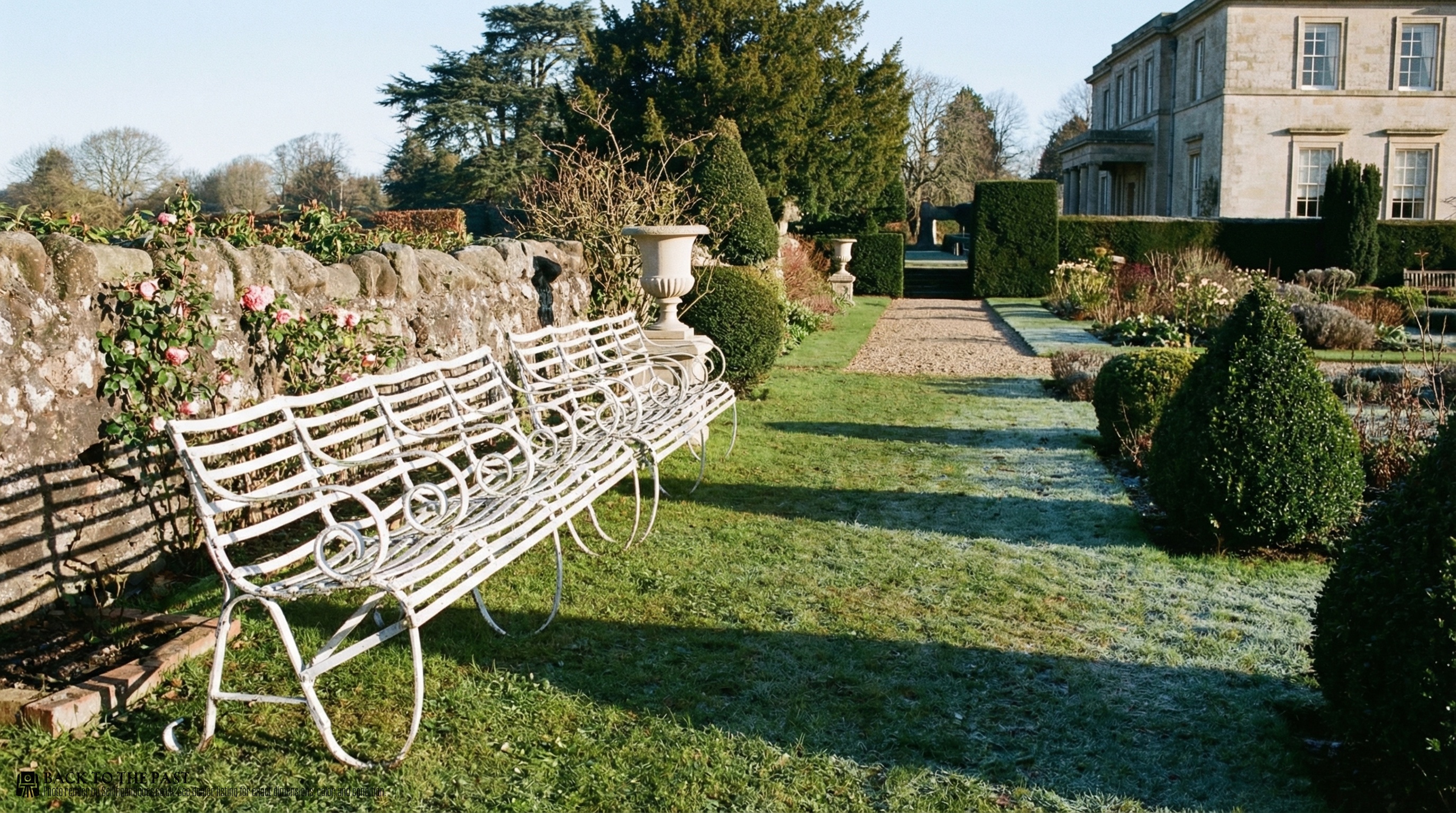
White Metal Seat
A white metal seat encompasses garden benches, armchairs, daybeds, and dining sets formed from durable metals like cast iron, wrought iron, and steel. These outdoor furnishings primarily originate from the nineteenth century, the Victorian era, and the early decades of the twentieth century.
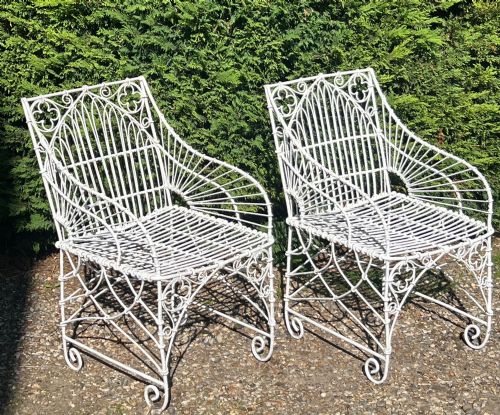
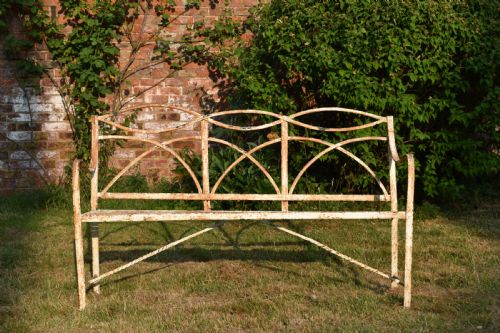
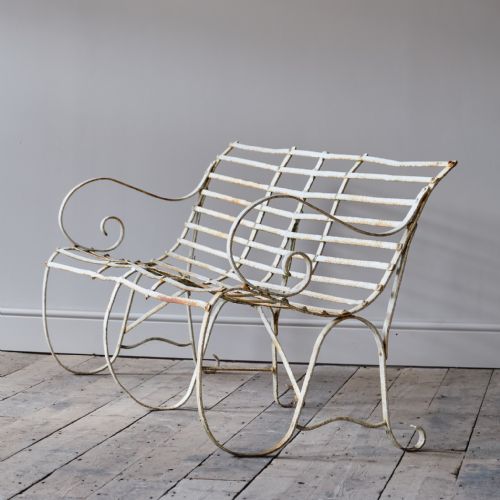
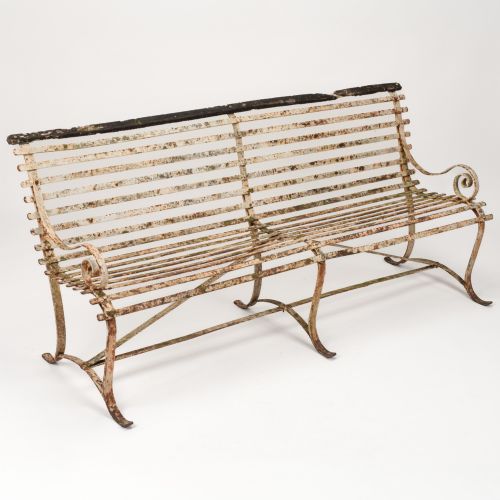
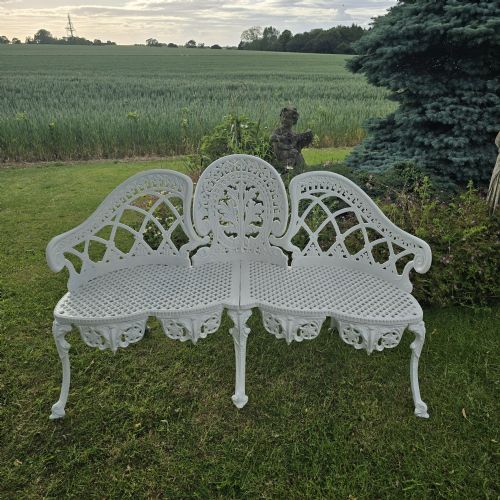
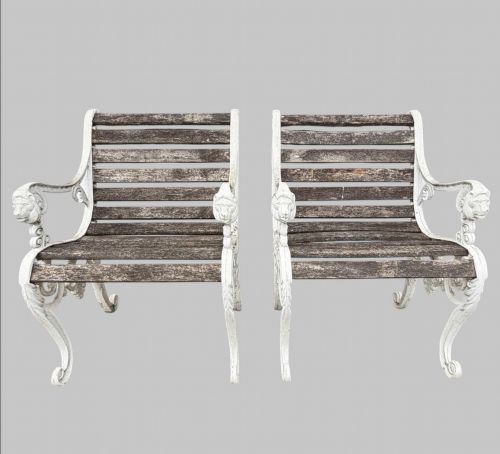
The most common forms encountered on this page are garden benches and chairs finished in historic painted surfaces, often reflecting Regency, Gothic Revival, or Victorian wirework styles. Pieces range from simple strapwork benches to ornate seats featuring lion masks and faux bois designs.
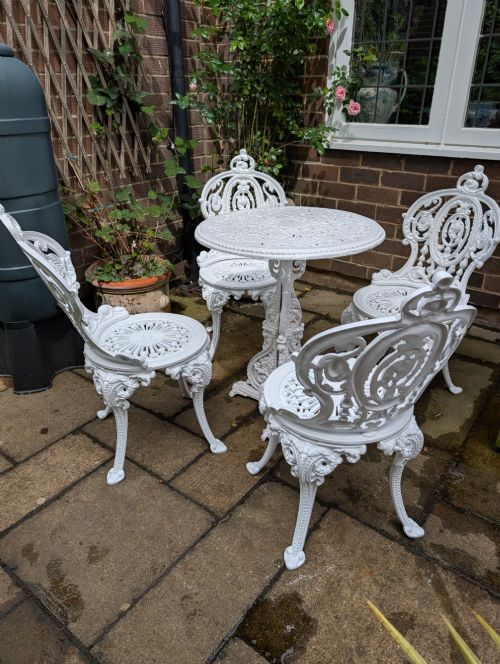
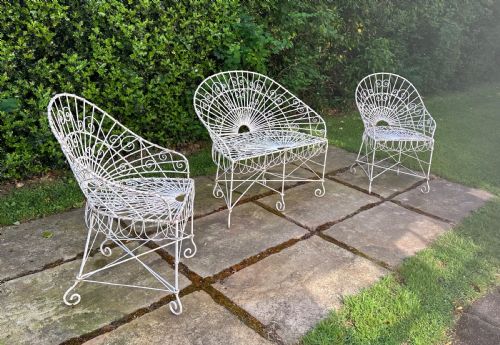
Buyers seeking a white metal seat will find examples spanning multiple decades, from early nineteenth-century Regency pieces to 1930s garden dining sets and arbours. Each era introduces distinct decorative treatments, from structural cast metal to delicate wire construction.
Assessing quality in metal garden furniture
Quality in a white metal seat rests upon the crispness of the casting and the complexity of the ironwork. Early Victorian ornate castings and finely fashioned Regency strapwork demonstrate superior craftsmanship compared to later, simpler reproductions.
The integrity of the original construction, including the survival of matched pairs of garden chairs or benches, elevates the standing of a piece. Finer examples often attribute their design lineage to notable historic foundries and designers.
The durability and preservation of the metal framework, alongside the character retained in weathered painted surfaces, separate standard garden furniture from exceptional period examples.
Some Victorian iron benches imitate timber logs so convincingly that visitors instinctively reach out to feel the bark.
Coalbrookdale
The White Metal Seat Glossary
- Strapwork
- Flat bands of metal arranged in geometric or interlaced patterns. This technique defines the linear aesthetic of Regency garden benches.
- Faux bois
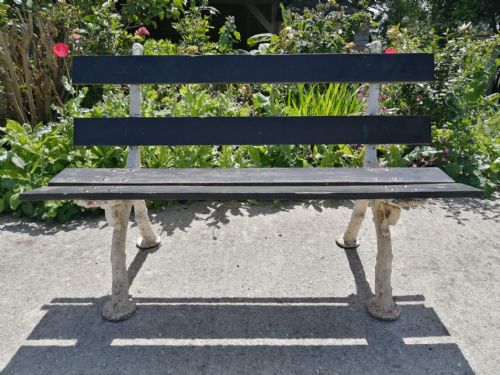
- Imitation of wood grain rendered in a hard material such as cast iron. This decorative finish mimics natural timber on Victorian garden seats.
- Wirework
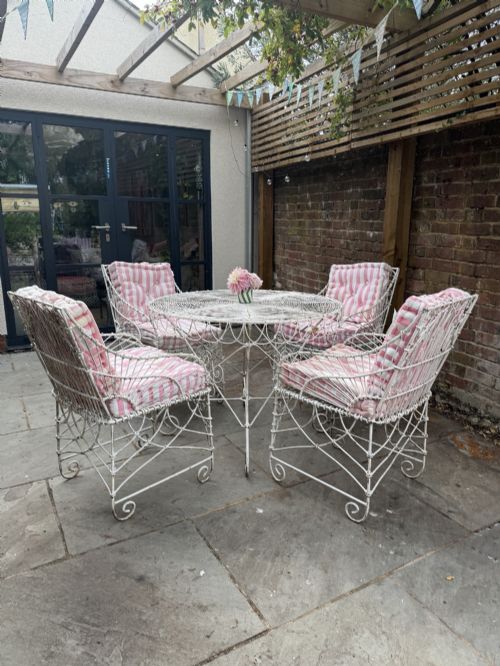
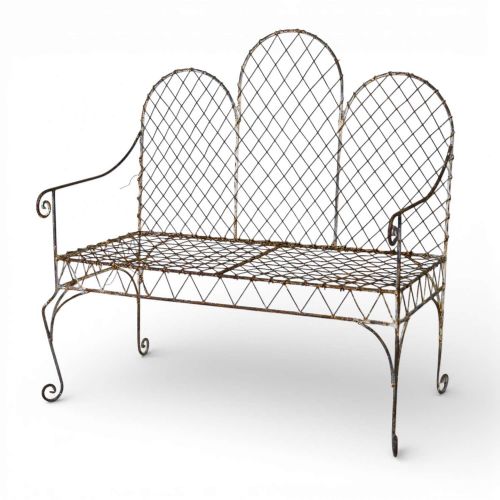
- Metal rods or wire manipulated into open latticework structures. It is commonly associated with garden arbours and plant supports.
- Gothic Revival
- An architectural and decorative style inspired by medieval forms. It frequently manifests in pointed arches and ornate tracery on iron garden chairs.
- Daybed
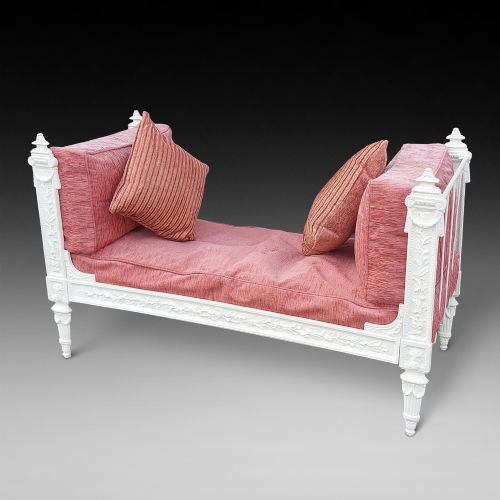
- A long seat designed for reclining, featuring a backrest and sometimes one raised end. Late Victorian examples were produced in cast iron for outdoor use.
White Metal Seat: Frequently Asked Questions
How do I care for a vintage metal garden seat?
Historic metal garden seats benefit from gentle cleaning to preserve existing paint layers and prevent further oxidation.
Storing them under cover during harsh winter months protects the structural integrity of the iron and any timber components.
Were these seats made for indoor or outdoor use?
The majority of these pieces were manufactured specifically for exterior placement in nineteenth and twentieth-century gardens, parks, and conservatories.
Cast iron and wrought iron provided the necessary weather resistance required for permanent outdoor display.
How can I tell a Regency seat from a Victorian one?
Regency designs typically exhibit restrained strapwork and linear metal frames. Victorian pieces tend towards heavier, highly ornate castings, faux bois, and Gothic Revival motifs.
Examining the construction methods and decorative flourishes reveals the stylistic shift between the eras.
Are painted finishes on these seats original?
Painted surfaces often show layers of historic application accumulated over decades of exposure to the elements. Determining originality requires examining how the paint adheres to the underlying cast metal or wrought iron.