


White Gold Halo Ring
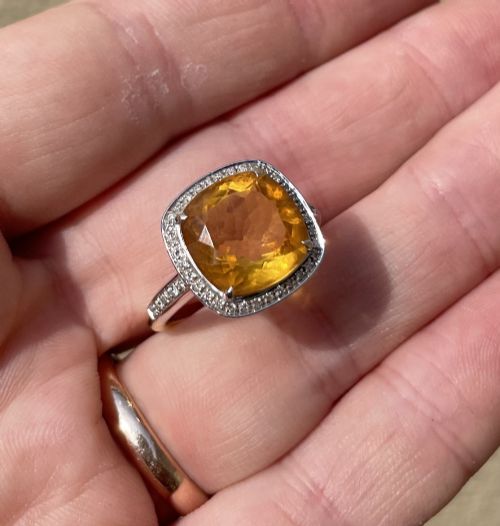
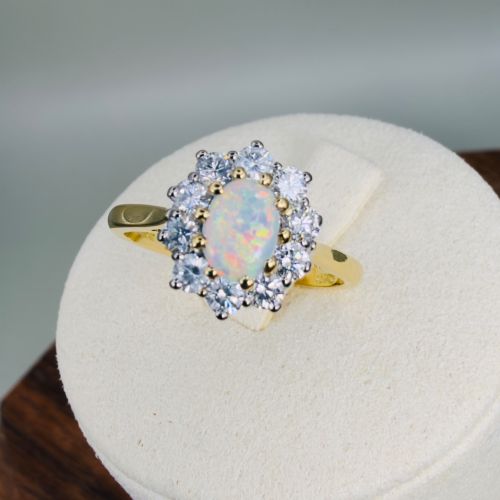
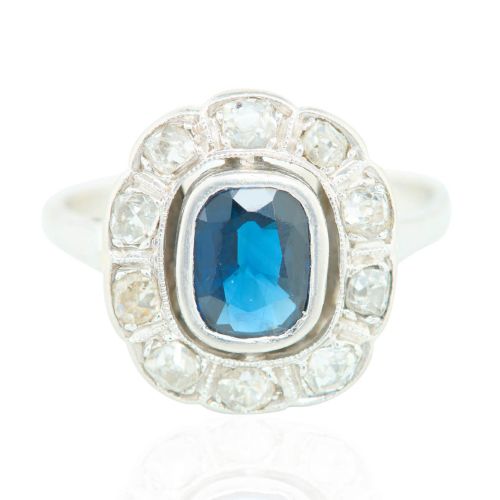
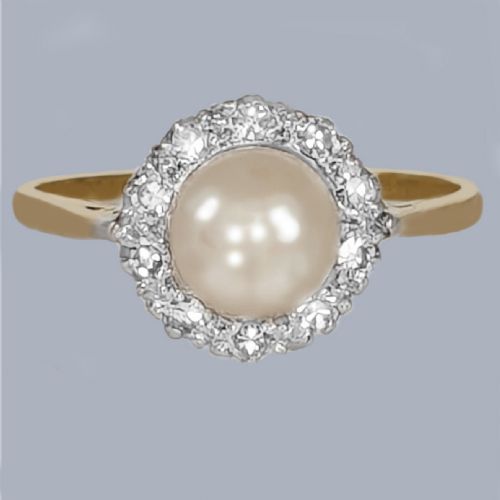
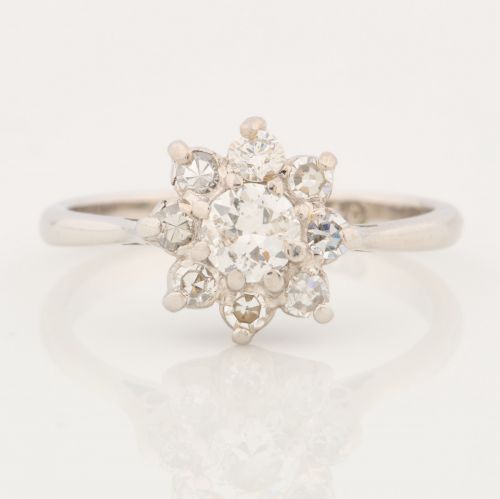
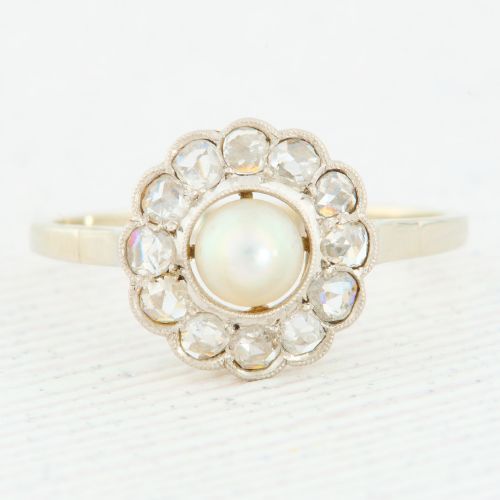
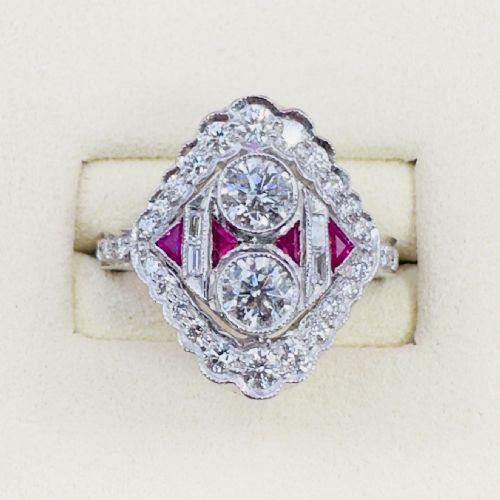
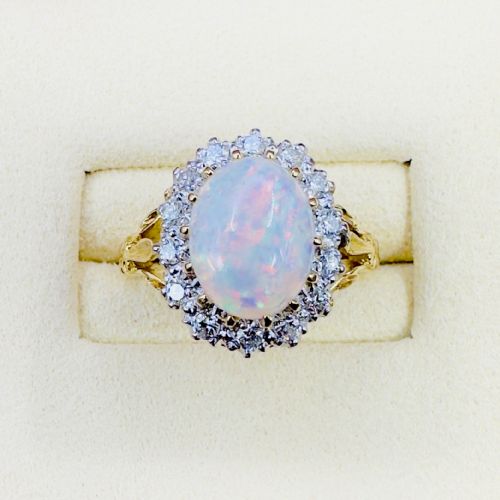
A white gold halo ring centres a central stone within a bright border of smaller diamonds, creating a sparkling frame that draws the eye.
White Gold Halo Ring
A white gold halo ring brings together a bright central gemstone, often a diamond, sapphire, ruby, emerald or opal, encircled by a border of smaller accent stones. These pieces appear frequently in styles spanning the Edwardian period, the Art Deco era, and mid-century design, offering diverse silhouettes from traditional daisy clusters to geometric navette and target forms.
Buyers exploring this selection encounter rings fashioned primarily in 18ct white gold and platinum settings that enhance the icy brilliance of the metal. The central focus shifts across decades, trading the geometric precision of 1920s work for the bolder proportions of 1950s cocktail rings and cleaner modern classic lines.
How they were made
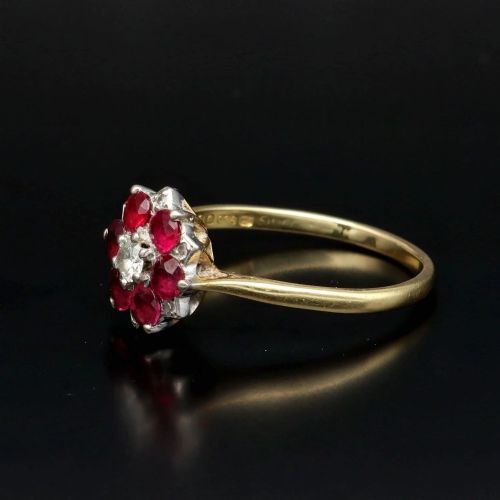
Goldsmiths shaped these mountings using 18ct white gold and platinum, often pairing yellow gold shanks with white metal heads to accentuate the stones. Gems were secured using claw settings, bezel mounts, or intricate calibre cutting that required precise stone-to-stone fitting.
Master jewellers employed old cut, cushion cut, and brilliant cut diamonds alongside calibre cut sapphires and emeralds, arranging them tightly to maximise light return within the halo frame.
Several rings conceal their age beneath clever sizing adjustments, allowing centuries-old diamonds to sit comfortably on modern fingers.
What varies in quality
Quality rests upon the proportion and matching of the central gem to the surrounding border, ensuring neither element overwhelms the other. Fine examples display careful stone selection where every accent stone matches in colour, cut, and clarity.
The finesse of the metalwork defines the finer pieces, seen in delicate pierced galleries and secure, even claw work that holds each stone without excess metal obscuring the profile.
The White Gold Halo Ring Glossary
- Halo
- A ring design featuring a central gemstone encircled by a border of smaller accent stones. This arrangement maximises the apparent size and brilliance of the middle gem.
- Cluster ring
- A jewellery form where multiple stones are grouped closely together to form a floral or geometric pattern. They provide substantial finger coverage compared to solitaire designs.
- Calibre cut
- Gemstones specifically shaped and cut to fit tightly against one another without visible metal between them. This technique is typical of precise Art Deco geometric work.
- Navette
- A boat-shaped mounting that tapers to pointed ends at the top and bottom. The elongated silhouette flatters the hand and accommodates multiple stones.
- Old cut
- A traditional diamond cutting style featuring a small table, high crown, and large open culet. These stones catch candlelight warmly rather than flashing modern brilliant fire.
- Target ring
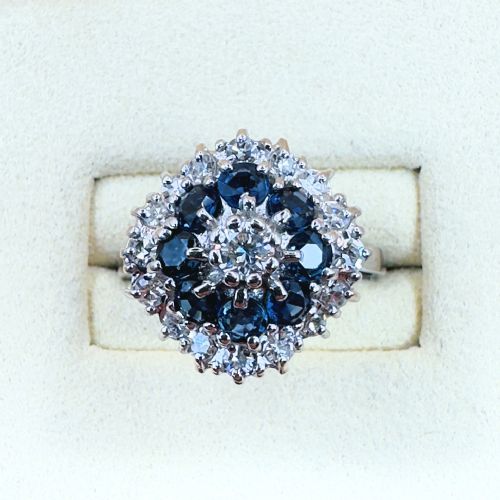
- A concentric circular cluster design where contrasting rows of coloured stones and diamonds create bullseye patterns. The style gained popularity during the Art Deco period.
White Gold Halo Ring: Frequently Asked Questions
What is a white gold halo ring?
A white gold halo ring is a piece of jewellery featuring a central gemstone surrounded by a perimeter of smaller diamonds. The pale metal complements the colour of the stones and provides a bright, uniform background.
These designs appear across multiple decades, taking forms from delicate Edwardian flower clusters to bold mid-century cocktail rings.
How do I date an antique halo ring?
Dating relies on examining the cut of the diamonds, the mounting style, and any hallmarks stamped inside the shank. Old cut stones and fine millegrain work typically point towards Edwardian or Art Deco origins.
Later mid-century pieces often introduce heavier white gold settings, broader bands, and distinct geometric or atomic-inspired shapes.
Are these rings suitable for everyday wear?
Many of these pieces serve well for daily wear, provided the settings are checked regularly by a professional jeweller. Robust metals like 18ct gold and platinum offer good durability for daily use.
More delicate antique designs with intricate openwork galleries or softer gems like opals require gentle care and should be removed during heavy manual tasks.