


Fine Ruby Diamond Jewellery
Fine ruby diamond jewellery delivers the vibrant contrast of crimson stones and white diamonds, spanning Victorian, Edwardian, Art Deco, and mid-century designs.
Fine Ruby Diamond Jewellery
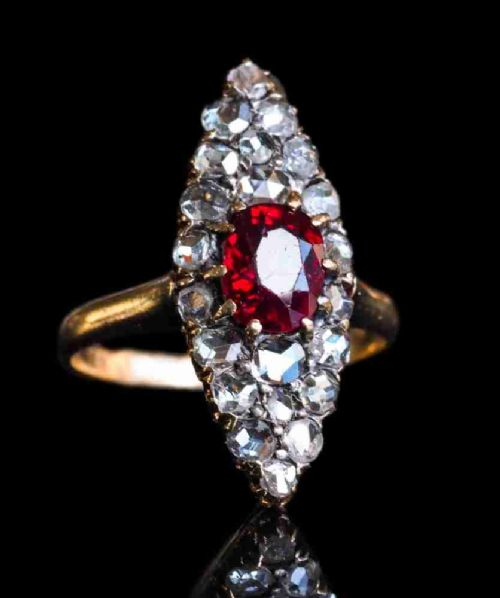
Fine ruby diamond jewellery comprises rings, brooches, necklaces, and bangles originating from periods including Victorian, Edwardian, 1900, 1920, and 1950. Buyers examining these pieces encounter clusters, navette rings, bar brooches, and multi-gem settings.
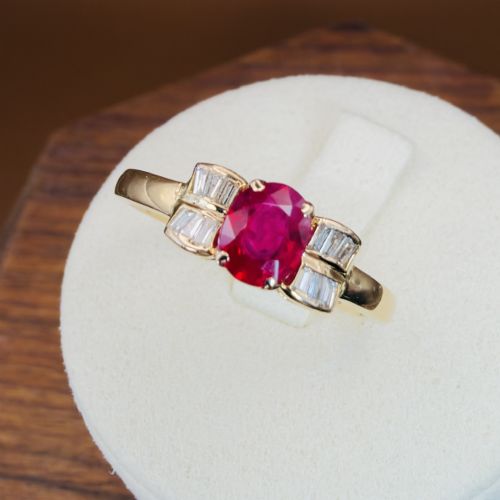
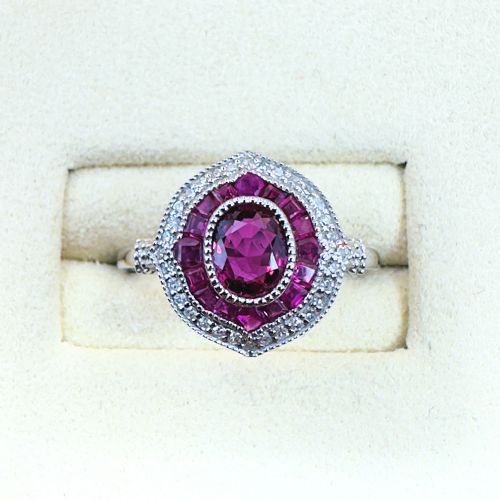
The most common form met on this page is the cluster ring, typically pairing an oval cut ruby with diamond accents in 18ct gold or white gold. Brooches and necklaces also appear, incorporating sapphires, emeralds, and pearls alongside the core pairing of rubies and diamonds.
How they were made
Metals employed in these pieces span 18ct gold, 18ct yellow gold, 18k gold, 18ct white gold, and platinum, providing secure settings for the stones.
Lapidary techniques shape rubies into oval cuts while diamonds appear in configurations including baguette cuts, supporting cluster, band, and navette arrangements.
Listings feature 18ct gold, 18k gold, 18ct white gold, and platinum across rings, brooches, necklaces, and bangles.
What varies in quality
Quality differences lie in the scale and provenance of the central stones, distinguishing standard commercial output from signature workshop creations.
The precision of the metalwork, such as platinum settings or intricate gold bar brooches, defines the upper tier of the range.
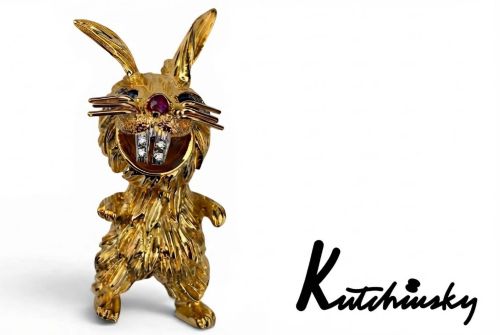
Kutchinsky·Gubelin
The Fine Ruby Diamond Jewellery Glossary
- Navette
- Boat-shaped ring design featuring pointed ends that lengthen the appearance of the finger. This silhouette appears frequently in antique French pieces.
- Cluster ring
- Central stone surrounded by a border of smaller gems, typically rubies framed by diamonds. This configuration maximises visual impact.
- Baguette cut
- Rectangular step-cut diamond shape used for linear accents in geometric settings. These stones flank central rubies in mid-century rings.
- Belle Epoque
- Design period around 1900 characterised by delicate platinum and white gold work. Pieces from this era often incorporate intricate openwork.
- Bar brooch
- Horizontal pin format popular in the early twentieth century. These items display gemstones arranged linearly across a central metal bar.
Fine Ruby Diamond Jewellery: Frequently Asked Questions
What periods do these pieces span?
The selection includes items from the Victorian and Edwardian eras, alongside 1900, Art Deco 1920, and mid-century 1950 and 1960 examples.
These varied origins reflect changing jewellery tastes across decades, from delicate navette rings to bold cocktail pieces.
Which metals house the stones?
Settings utilise 18ct gold, 18ct yellow gold, 18k gold, 18ct white gold, and platinum.
Platinum and white gold frequently appear in earlier 1900 pieces, whereas yellow gold dominates mid-century designs.
Are necklaces and brooches available?
Beyond rings, the selection incorporates bar brooches, animal brooches, bangles, and pearl necklaces with gemstone clasps.
Multi-gem configurations in these items often combine sapphires, emeralds, and pearls with rubies and diamonds.
How do cluster rings differ from band rings?
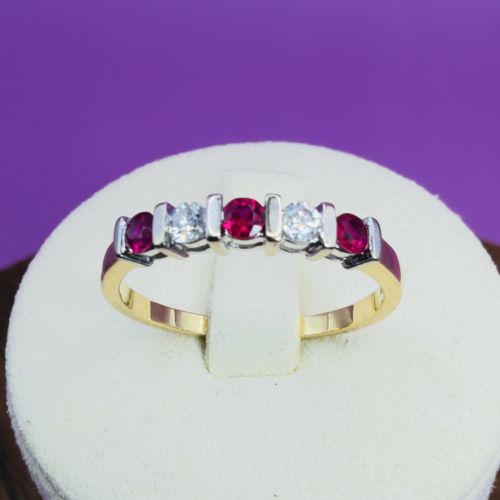
Cluster rings centre on a prominent ruby framed by a border of diamonds, creating a wide profile on the hand. Band rings distribute stones linearly across the finger in a uniform row.
Both forms utilise 18ct gold and platinum mountings.