





White Flower Still Life
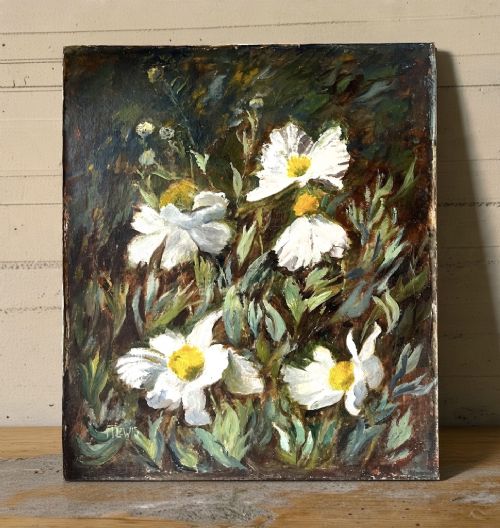
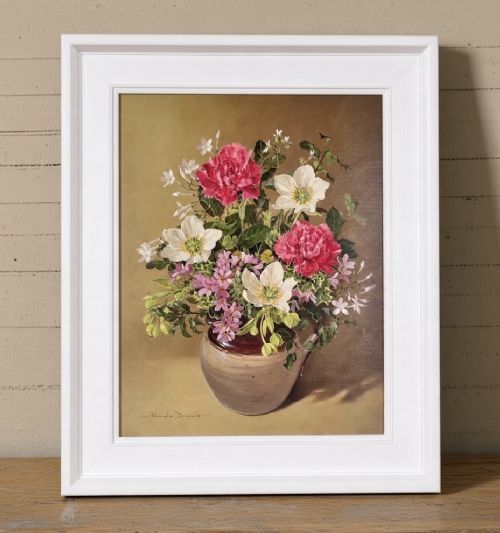
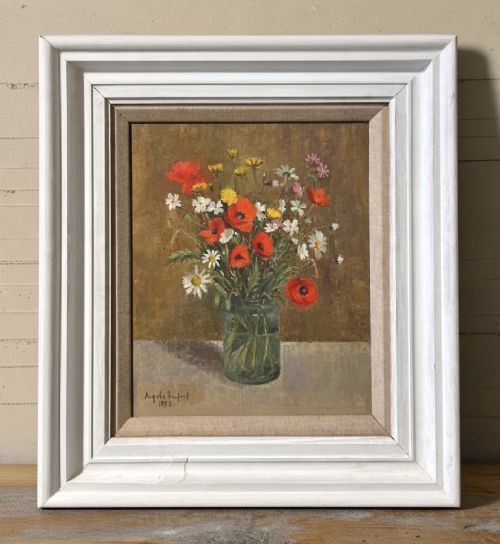
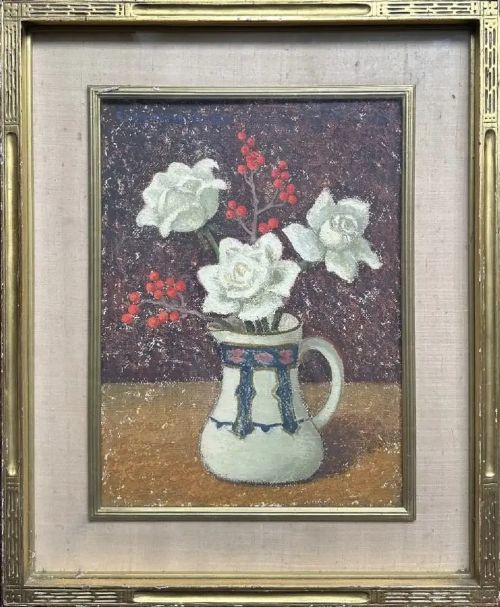
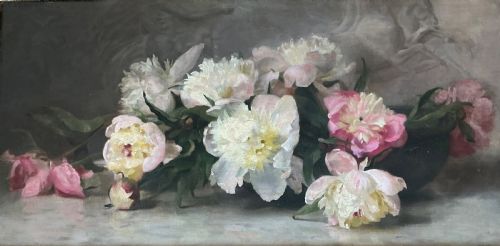
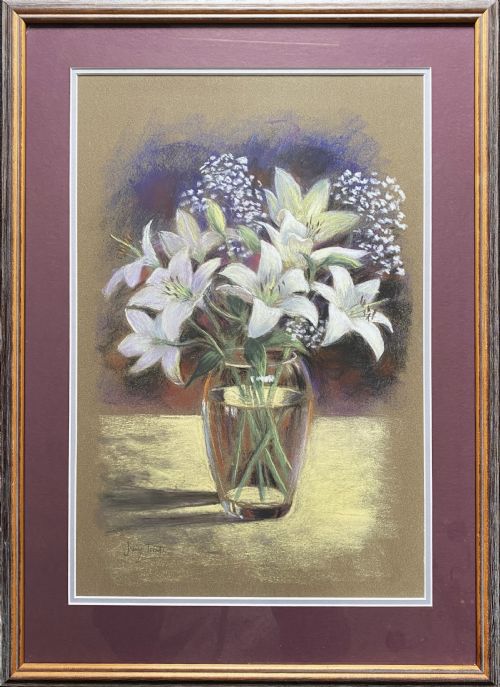
White flower still life paintings capture domestic calm through delicate petals rendered in oil, watercolour, and gouache.
White Flower Still Life
When you search for a white flower still life, you encounter works spanning from the Edwardian era through the mid twentieth century. These pieces record botanical subjects arranged simply in jugs, baskets, or vases, executed by named painters and studio artists.
The selections on this page rely heavily on mid century modern and traditional still life approaches. You will find works created across the decades from nineteen hundred to nineteen sixty, capturing blooms like roses, lilies, and chrysanthemums.
How they were made
Artists painted these floral studies using oil on canvas, metal panel, and paper supports. Watercolour pigment and gouache were also applied to paper surfaces to capture softer botanical tones.
Frames made of wood often enclose the artwork, sometimes accompanied by glass or gilt finishes to protect the pigment and complement the composition.
White Flower Still Life Retail Price Guide 2026
Typical asking prices for white flower still life among the pieces listed under this phrase on Sellingantiques today, from the lower quarter to the upper quarter. They describe what is for sale here now, not the wider market.
Materials recorded in these listings include paper, wood, oil on canvas, oil paint, watercolour pigment, glass, and gilt.
What varies in quality
The strength of the composition and the handling of light define the upper tier of these works. Brushwork executed with confidence elevates a study above a rigid botanical illustration.
The choice of medium and the preservation of the original paper or canvas influence the integrity of the piece over time. Balanced placement of the floral subject within the domestic vessel marks the more accomplished paintings.
Emma Fordyce MacRae·Gertrude Hayes·Kershaw Schofield·Robin MacKertich·Edith Barrow·Stuart Armfield·Jennifer Toombs·Marion Broom·Annie Mary Youngman·Isabelle Cohen·M Clay·L E Hole·Tom Whitehead·Olive Higginbottom
The White Flower Still Life Glossary
- Oil on Canvas
- Pigment mixed with drying oil applied to a woven fabric stretched across a wooden frame. This medium allows for rich texture and deep colour layering.
- Watercolour Pigment
- Finely ground colour mixed with a water-soluble binder, applied in translucent washes to paper. It creates a luminous effect suited to delicate petals.
- Gouache
- An opaque water-based medium containing pigment and a binding agent, often chalk. It yields solid, matte areas of colour compared to transparent watercolour.
- Tempera
- A permanent fast-drying painting medium consisting of coloured pigment mixed with a water-soluble binder medium such as egg yolk. It produces a durable flat surface.
- Gilt
- A thin layer of gold leaf applied to wood or metal framing. It adds a reflective border to enhance the framed artwork.
White Flower Still Life: Frequently Asked Questions
What periods do these pieces come from?
The listings span from the early twentieth century through the nineteen sixties. You will find works originating from the nineteen hundreds, nineteen tens, nineteen twenties, and mid century decades.
Each period brings distinct stylistic choices, moving from traditional botanical rigidity towards mid century modern interpretations.
What flowers appear in these works?
Common botanical subjects include roses, lilies, peonies, azaleas, and chrysanthemums. Artists also painted cosmos, pelargoniums, gladioli, and mock orange flowers.
These blooms are typically arranged in domestic vessels such as jugs, bowls, baskets, and vases.
What mediums were used by the artists?
Painters worked in oil on canvas, oil on metal panel, and tempera. Others utilised watercolour pigment, gouache, and pastel on paper supports.
These varied mediums allowed artists to capture either the luminous transparency of petals or the heavy texture of blooms.
How are the artworks framed?
Many pieces retain their original wooden frames, which sometimes feature gilt or painted finishes. Some works on paper are protected beneath glass.
These surrounds help preserve the fragile paper and canvas surfaces from environmental wear.