


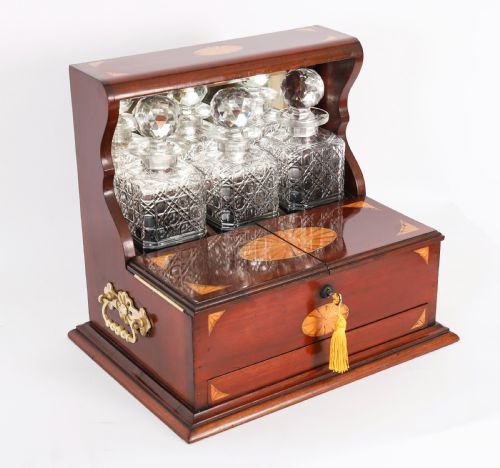


Whisky Decanter Bottle
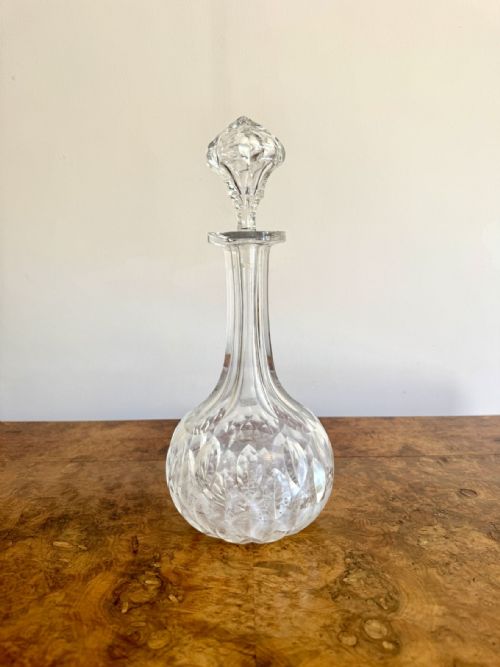
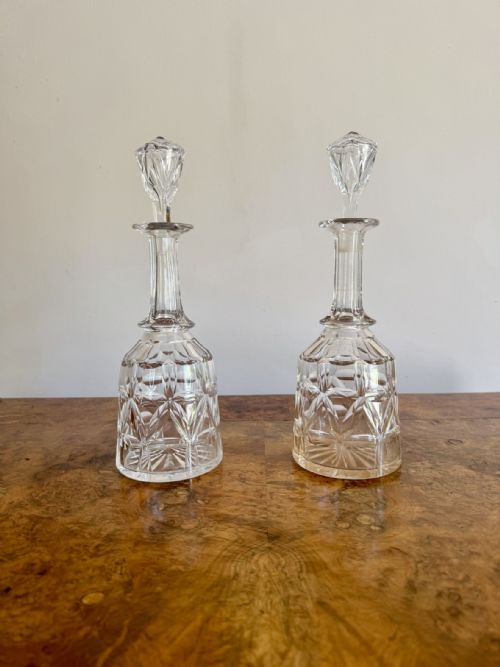
A whisky decanter bottle holds spirits in style, and these examples range from crystal and glass vessels to oak tantaluses.
Whisky Decanter Bottle
When searching for a whisky decanter bottle, buyers encounter a variety of forms designed to hold and pour spirits, spanning periods from the nineteenth century through the Edwardian era and George V period.
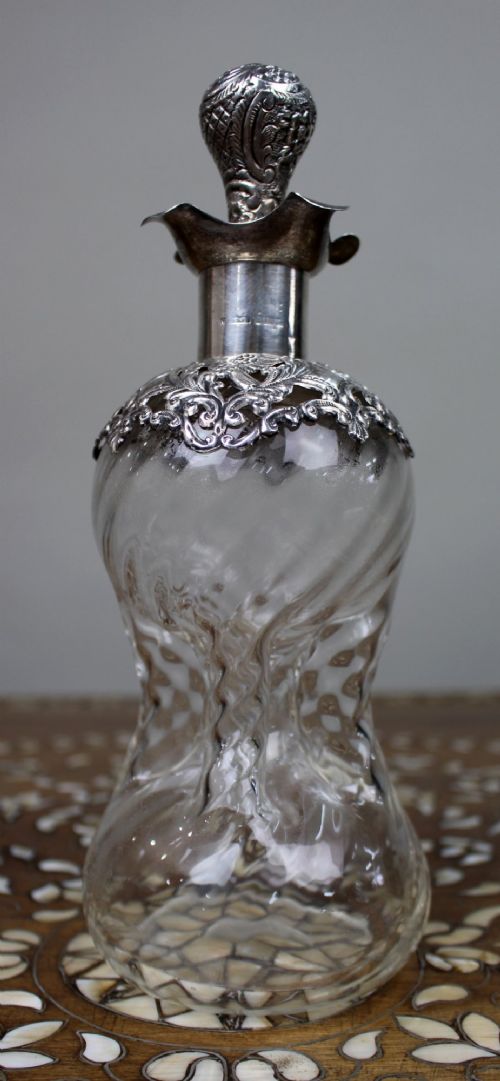
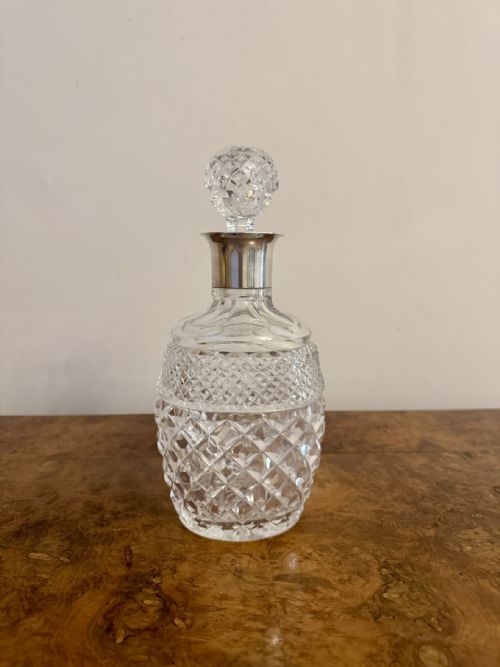
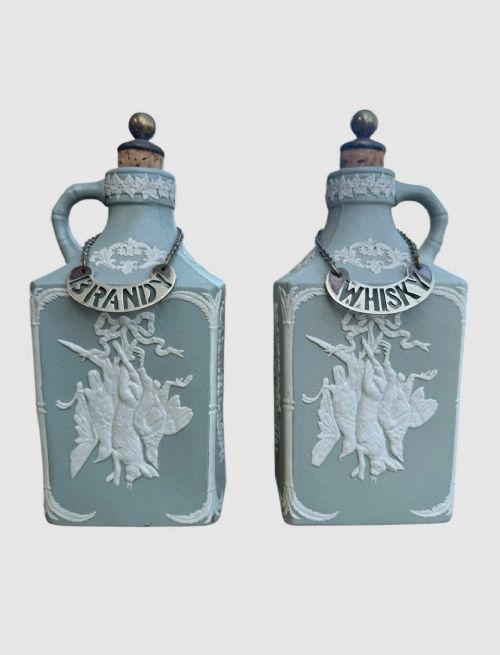
The most common versions met on this page include cut glass and crystal decanters with silver collars or mounts, alongside oak and silver-plated tantaluses, whisky noggins, and ceramic flasks.
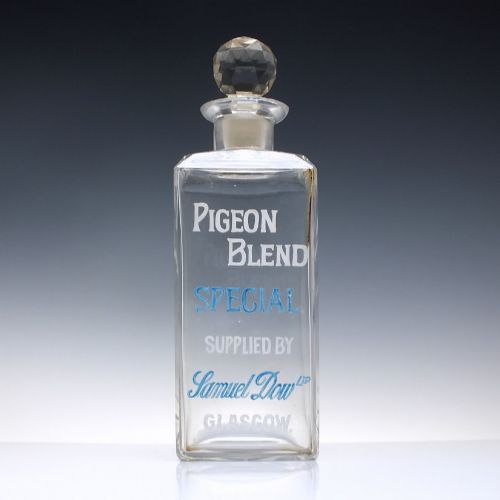
Origins include English and Irish production, with specific regional pieces taking the form of enamel-labelled Scottish glass bottles and brown glazed stoneware flasks.
How they were made
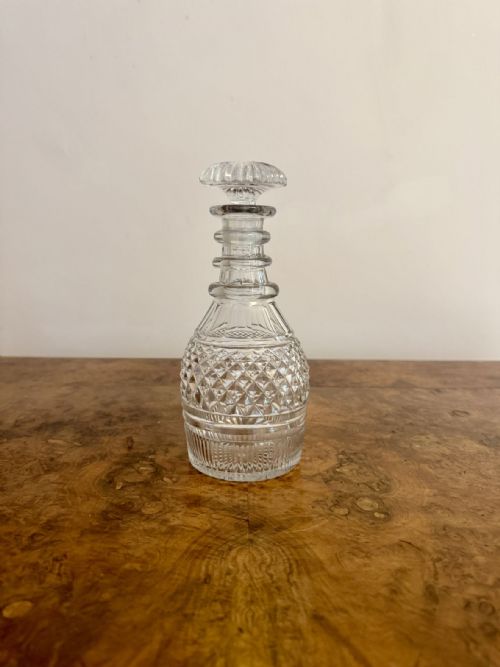
Makers shaped vessels using cut glass, lead crystal, and plain glass, often employing optical blowing techniques and hand-painting or enamelling for specific spirit labels and motifs.
Mounts, collars, and handles utilise sterling silver and silver plate, frequently bearing hallmarks that indicate the workshop and year of production.
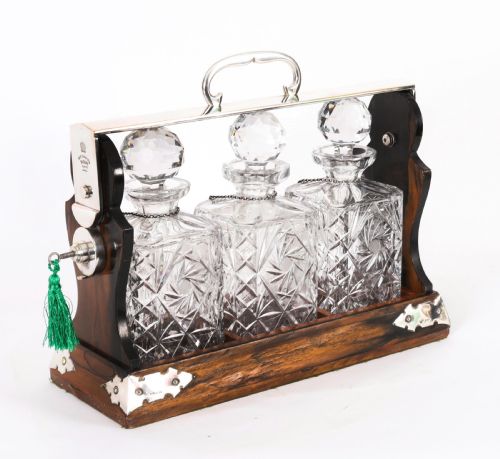
Housing structures such as tantaluses and games boxes combine oak, coromandel, satinwood, and brass mounts to secure the glass bottles safely.
The archive includes specialised spirit containers such as Irish whiskey mell decanters, Scottish enamelled bottles, and golf-themed stoneware flasks.
What varies in quality
The depth and crispness of the glass cutting separate standard bottles from finer pieces, alongside the clarity and weight of the lead crystal used.
Mounts made from solid sterling silver with clear hallmarks elevate a piece above those fitted with basic silver plate or brass hardware.
The sophistication of auxiliary elements, such as inlaid wood in tantaluses, fitted games compartments, and matching spirit labels, distinguishes the finer examples.
Betjemann·Royal Doulton·James Powell·Sampson Mordan
The Whisky Decanter Bottle Glossary
- Tantalus
- A locking wooden frame that holds decanters securely to prevent unauthorized drinking while displaying the bottles.
- Noggin
- A small vessel or mug used for serving a single measure of spirits, often fitted with a silver mount and handle.
- Mell decanter
- A specific rounded bottle shape historically used for Irish whiskey, frequently featuring hand-painted decoration.
- Spirit flagon
- A larger container designed to hold liquor, often produced in sets of multiple bottles within nineteenth-century collections.
- Hallmark
- An official stamp applied to silver mounts indicating the standard of purity, assay office, and year of manufacture.
Whisky Decanter Bottle: Frequently Asked Questions
What is a tantalus?
A tantalus is a locking wooden frame designed to hold spirit decanters securely while allowing the contents to remain visible. The locking mechanism prevents unauthorized access to the liquor.
These frames typically accommodate two or three glass bottles and appear in materials like oak with silver-plated or brass mountings.
How do I identify a whisky noggin?
A whisky noggin is a small, single-serving decanter or jug, usually fitted with a silver collar and handle. They often accompany a small silver label denoting the spirit.
These pieces were standard barware items during the Edwardian period and provide an intimate scale compared to larger table decanters.
Are these decanters lead crystal?
Many of the decanters and bottles listed utilise cut glass or lead crystal, which contributes weight and refractive clarity to the vessel. The material helps distinguish finer nineteenth-century and Edwardian pieces.
Testing weight and examining the sharpness of the facets helps confirm the presence of crystal rather than standard moulded glass.
How do I date a silver mounted decanter?
Silver collars and mounts frequently bear hallmarks that record the assay office and the exact year of manufacture. Examining these metal stamps offers the most reliable dating evidence.
The overall style, whether Victorian, Edwardian, or George V, further supports the period of the complete piece.