





Whiskey Decanter Pair
A whiskey decanter pair brings symmetry to a sideboard, pairing cut glass and silver for serving spirits in style.

Whiskey Decanter Pair
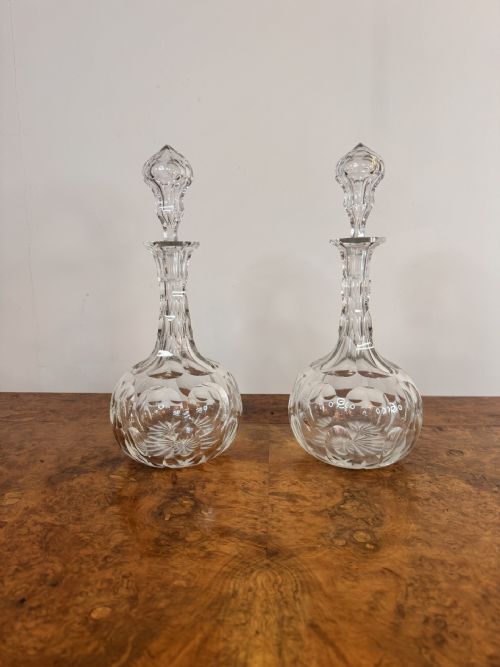
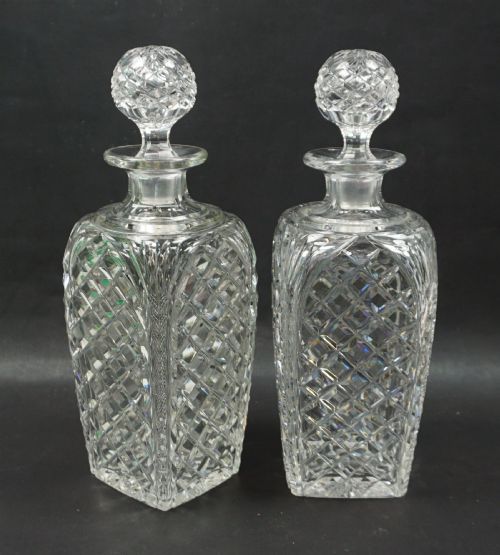
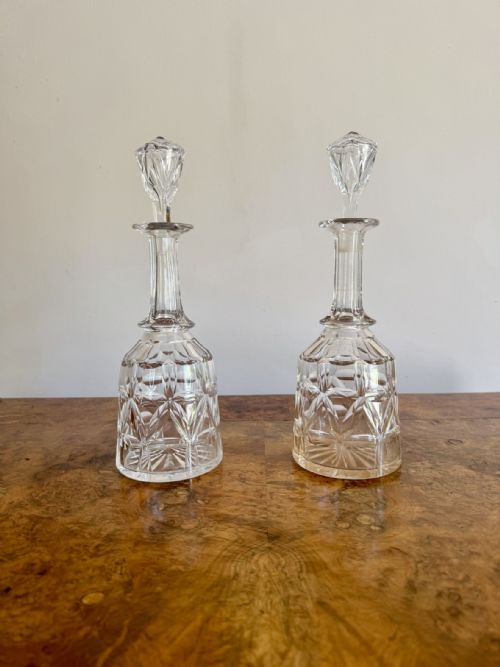
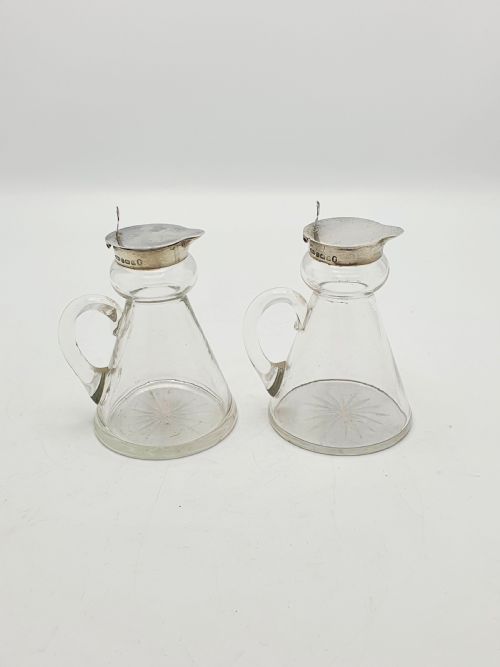
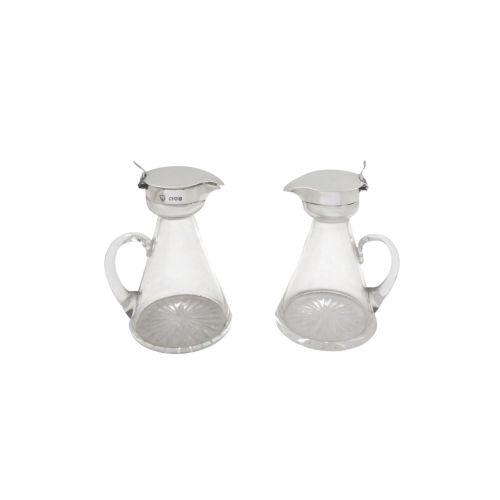
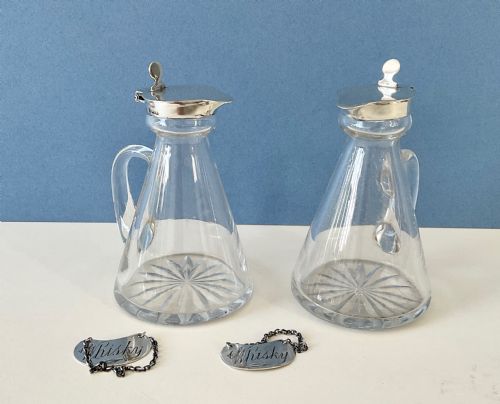
A whiskey decanter pair comprises matched vessels designed to hold and serve spirits together, most frequently encountered as Edwardian cut glass decanters or smaller whiskey noggins mounted in sterling silver. These sets span periods from the eighteenth century through to the mid-twentieth century, capturing shifts in domestic entertaining and barware design.
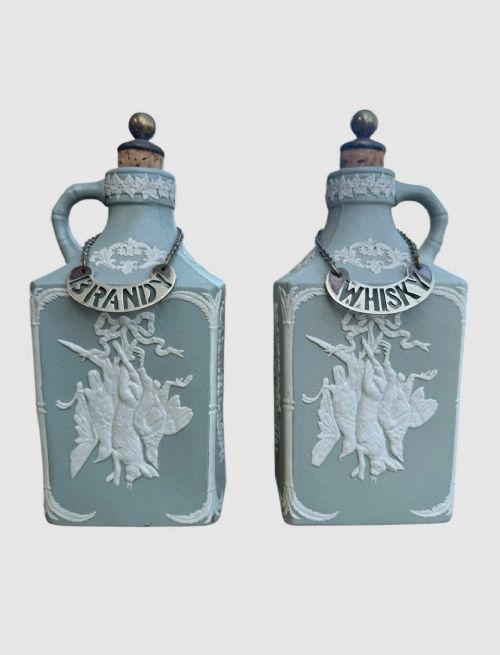
The forms range from square section tapered crystal bottles to optically blown vessels engraved with specific spirit labels like whisky and brandy. Buyers will frequently find Edwardian and Victorian examples utilising heavy cut crystal alongside smaller spirit jugs fitted with silver mounts and stoppers.
How they were made
Makers shaped the glass bodies of a whiskey decanter pair through blowing and cutting techniques, utilising clear crystal, glass, and lead crystal to achieve brilliance and weight. Many nineteenth and twentieth-century examples incorporate hand-cut geometric facets that catch the light.
Silver components, including mounts, caps, and the associated noggins, were worked in sterling silver, often bearing hallmarks from silversmiths such as Hukin & Heath or Mappin & Webb. These metal mounts were securely fitted to the glass necks, frequently accompanied by matching stoppers.
Whiskey Decanter Pair Retail Price Guide 2026
Typical asking prices for whiskey decanter pair among the pieces listed under this phrase on Sellingantiques today, from the lower quarter to the upper quarter. They describe what is for sale here now, not the wider market.
Certain tiny noggins were built small enough that a gentleman could pour precisely one generous measure without spilling a drop.
What varies in quality
The clarity and weight of the glass set apart finer examples, with lead crystal and heavy cut glass offering a more substantial feel in the hand than standard moulded glass. Precision in the hand-cutting of facets and the crispness of engraved lettering dictate the visual refinement of the pair.
The quality of the metalwork also defines the piece, where hallmarks, substantial sterling silver mounts, and intact, original stoppers indicate superior craftsmanship. Maker attributions to established firms add distinction to the silver elements.
James Powell·Hukin & Heath·Mappin & Webb
The Whiskey Decanter Pair Glossary
- Noggin
- A small mug or jug used for serving spirits, particularly whiskey. These vessels often feature a single silver mount and a star-cut base.
- Sterling silver
- An alloy of silver containing 92.5% pure silver and 7.5% other metals, typically copper. This standard metal was utilised for the caps, mounts, and labels on nineteenth and twentieth-century barware.
- Lead crystal
- Glass containing lead oxide, which increases the weight, clarity, and refractive index of the material. It allowed Victorian and Edwardian glassmakers to cut deep, sharp facets.
- Optically blown
- A glassblowing technique where molten glass is inflated inside a ribbed or patterned mould to create uniform internal optical effects. This method produced subtle texture in the walls of the vessel.
Whiskey Decanter Pair: Frequently Asked Questions
What is a whiskey noggin?
A whiskey noggin is a small, single-serving spirit jug fitted with a handle and a silver rim or cap. They were designed for individual portions during formal dining and entertaining.
These pieces often appear in pairs on this page, accompanied by their original stoppers and silver hallmarked mounts.
How do I date an Edwardian decanter?
Edwardian decanters date from the reign of King Edward VII between 1901 and 1910. They frequently display heavy cut glass patterns and polished pontil marks.
Silver mounts on these pieces often carry date letters and hallmarks that confirm the exact year of manufacture.
Are the stoppers original to the decanters?
Stoppers were individually ground to fit each specific decanter neck during manufacture. Matching numbers or identical cut patterns usually indicate they belong together.
Checking the fit and the matching frost on the ground glass stem helps confirm originality.
How should I clean antique glass decanters?
Antique glass requires gentle cleaning with warm water and mild detergent, avoiding sudden temperature changes to prevent cracking. Silver mounts should be polished separately with a soft cloth to avoid touching the glass.
Harsh abrasives and modern dishwashers can permanently damage the historic surfaces.