
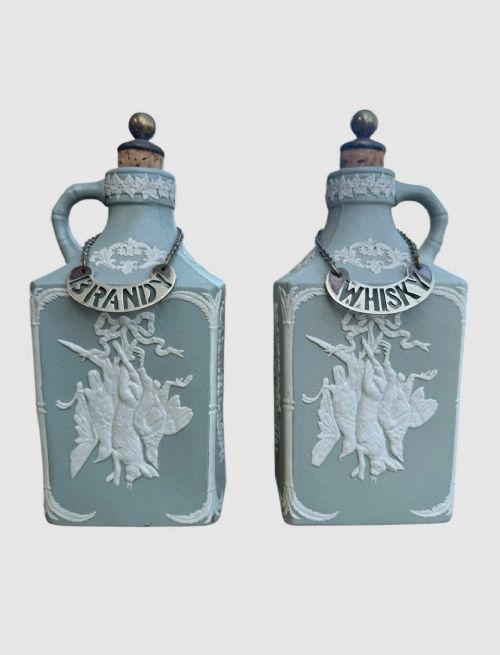


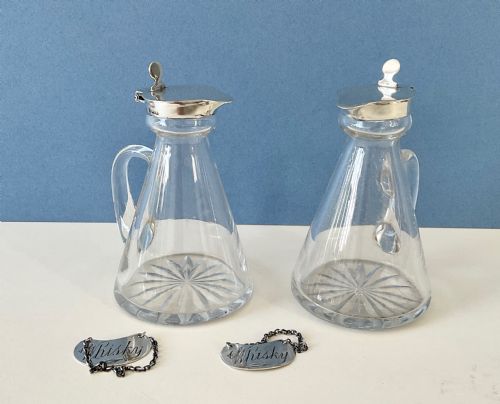


Whiskey Decanter Label
These whiskey decanter label pieces are small identifiers hung around bottle necks to name the spirit inside, crafted in silver and ceramic.
Whiskey Decanter Label
A whiskey decanter label identifies the contents of a bottle or jug, hanging from the neck by a chain or collar. These items range from single tags to pairs and sets, often accompanying noggins, tots, and larger flagons.
The versions met most frequently on this page date from the nineteenth century through the Edwardian period and the nineteen-thirties, extending to mid-century designs. They appear in sterling silver, silver, enamel, and jasperware.
Many items form part of a matched pairing with a glass whiskey noggin or jug, while others survive independently as standalone pieces of barware. Collectors find them associated with traditional British drinkware forms across several decades.
How they were made
Makers shaped sterling silver and other metals through piercing, stamping, and casting, forming the borders and lettering characteristic of the period. Hallmarks stamped directly onto the metal record the assay office and date of manufacture.
Some examples incorporate glass, ceramic stoneware, and jasperware bodies, fitted with silver mounts and cork stoppers. Enamel adds colour to the face of mid-century pieces, contrasting with polished metal surfaces.
Listings feature Edwardian, Victorian, and mid-century periods, alongside George V and Art Deco styles in silver and glass.
What varies in quality
Quality rests in the crispness of the pierced or embossed lettering and the weight of the metal used for the label and its suspension chain. Thicker gauge silver retains its shape better around the neck of a decanter.
The presence of clear hallmarks adds substance to a piece, providing verifiable markers of origin and date. Matching sets and labels paired with their original noggins or jugs demonstrate greater integrity than assembled groupings.
Elkington
The Whiskey Decanter Label Glossary
- Noggin
- A small vessel used for serving spirits, typically holding a single measure. These glass jugs frequently accompany silver whiskey decanter labels.
- Tot
- A small drinking cup or miniature decanter designed for a single measure of liquor. They often appear alongside matching spirit labels.
- Jasperware
- A fine stoneware developed with a matte surface, used for the body of certain spirit flagons and decanter components. It provides a contrasting background for applied classical motifs.
- Hallmark
- A series of official marks stamped on precious metals indicating purity, maker, and year of assay. These stamps help date silver decanter labels accurately.
- Tantalus
- A wooden frame holding decanters securely behind a locking bar to prevent unauthorized access. They are frequently fitted with matching spirit labels.
Whiskey Decanter Label: Frequently Asked Questions
What is a whiskey decanter label used for?
These small tags hang around the neck of a decanter, jug, or noggin to identify the specific spirit held inside. They prevent confusion when multiple bottles sit together on a sideboard.
In traditional settings, they form a functional part of the barware service, ensuring guests know whether the vessel contains Scotch or Irish whiskey.
How do I hang a decanter label?
Most labels suspend from a metal link chain that loops easily around the narrow neck of a glass decanter or jug. The length of the chain allows the tag to rest against the shoulder of the vessel.
Ensure the chain is loose enough not to bind the glass but secure enough to remain in place when pouring.
Can I use these labels on modern bottles?
The chain length and ring size of antique and vintage labels suit traditional decanters, noggins, and smaller spirit bottles. They may fit the necks of certain modern glass decanters depending on the bottle design.
Checking the diameter of the suspension loop helps determine whether a label will hang properly on a specific bottle.
How do I date a silver label?
Dating relies primarily on the assay office hallmarks stamped into the metal, which include date letters corresponding to specific years of production. Stylistic elements such as Art Deco geometry or Edwardian scrollwork also point to particular eras.
Comparing the form and lettering style to documented pieces helps narrow down the period of manufacture.