



Glass Whiskey Bottle
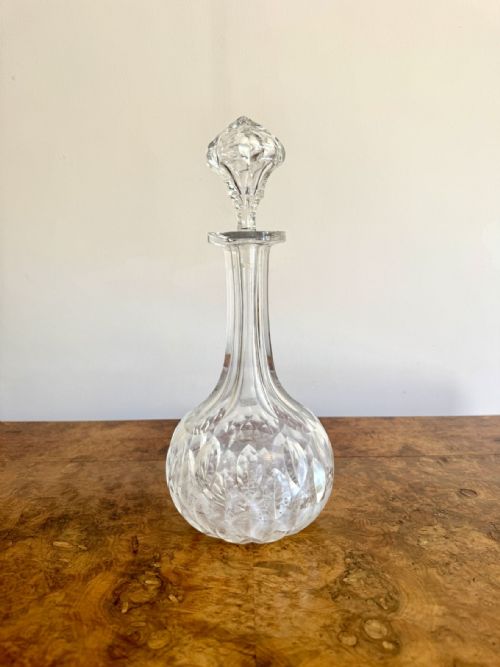
A glass whiskey bottle brings weight and clarity to the sideboard, holding spirits behind cut glass, silver collars, and oak frameworks.
Glass Whiskey Bottle
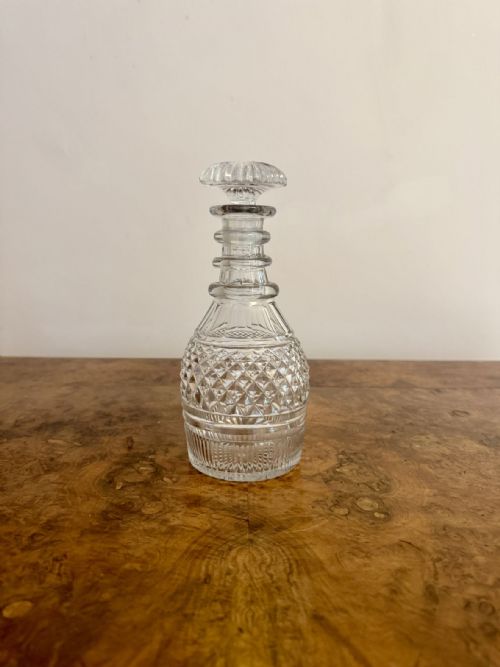
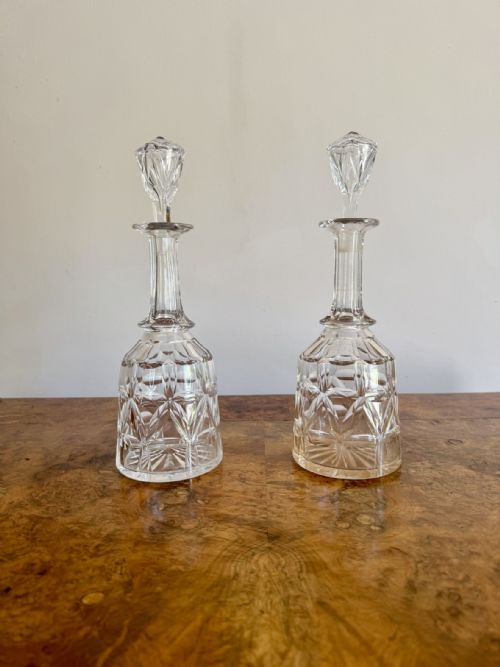
A glass whiskey bottle encompasses everything from single spirit jugs and noggins to elaborate multi-bottle tantaluses and decanters. Buyers searching for a glass whiskey bottle will frequently encounter Edwardian and Victorian examples shaped from heavy lead crystal and glass.
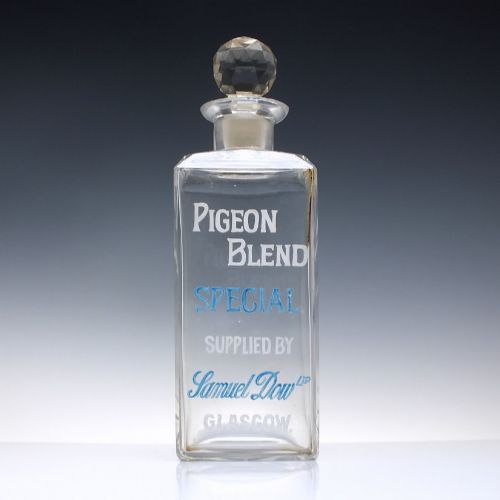
The selection ranges from Georgian Bristol blue mell decanters to late Victorian oak-framed tantaluses mounted in brass and silver plate. Many pieces incorporate silver collars, hallmarked mounts, or bespoke enamel labeling indicating specific Scottish blends and regional houses.
Materials and Technique
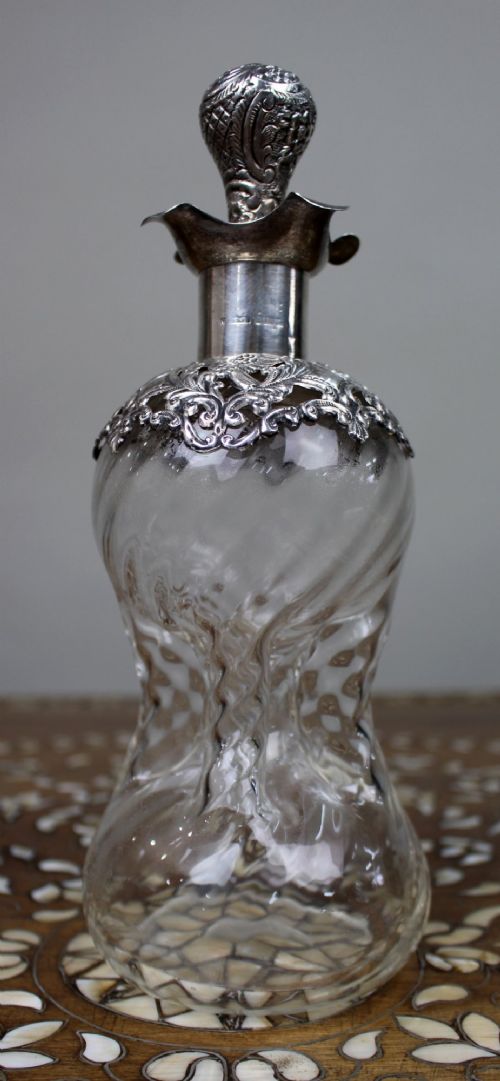
The primary bodies utilise clear or coloured glass and lead crystal, shaped through blowing and intricate cutting techniques that create prismatic light refractions across the surface. Artisans applied optical blowing and hand-painting to produce specific forms like bell shapes, noggins, and flagon decanters.
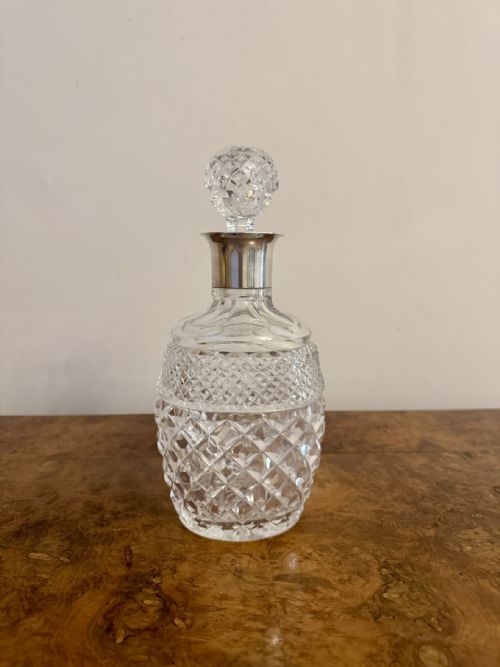
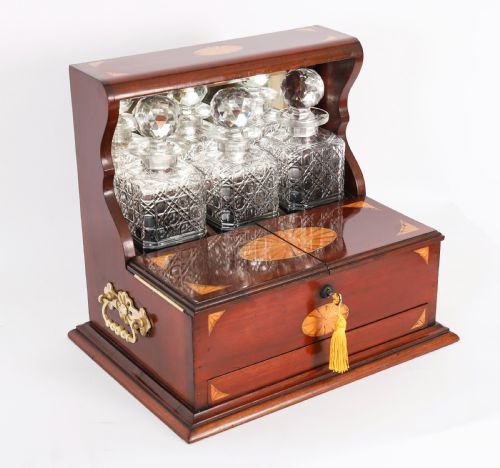
Mounts and security frames combine sterling silver, silver plate, brass, and timber species such as oak, coromandel, and satinwood. Silver collars and hallmarked hardware are secured directly to the glass necks, whilst locking tantalus mechanisms utilise fitted timber cabinetry.
Several Scottish whiskey decanters preserve cheerful enamel lettering advertising long-forgotten blends like Pigeon Bell and Cattos Vosh.
Craftsmanship and Distinction
Quality rests in the depth of the glass cutting and the crispness of the facets, where sharper wheel-cut details reflect superior tactile and visual execution. The integration of the hardware, from fully hallmarked silver collars to tightly fitted timber tantalus frames, separates standard utility vessels from bespoke exhibition pieces.
Makers such as James Powell and retailers like Betjemann demonstrate superior material selection through flawless optical blowing, hand-engraved labeling, and robust cabinetry. The presence of matching stoppers, original silver labels, and intact enamel brand lettering elevates an ordinary vessel into a notable example.
Betjemann·James Powell
The Glass Whiskey Bottle Glossary
- Tantalus
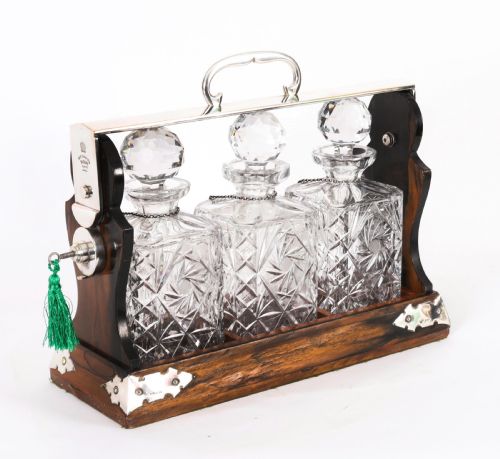
- A locking wooden cabinet fitted with a metal bar that holds decanters securely in place, preventing removal without a key. This device originated in the Victorian era to deter unauthorized access to expensive spirits.
- Noggin
- A small vessel or jug designed for holding a single serving of whiskey or spirits. These frequently feature silver mounts and dedicated spirit labels.
- Mell Decanter
- A mallet-shaped bottle characterised by a tapered body and a flat base, popular during the Georgian period. This profile provided stability during maritime and domestic transport.
- Lead Crystal
- Glass containing a high proportion of lead oxide, which increases weight, brilliance, and acoustic resonance. This material allows for deeper and sharper cutting without fracturing.
- Optically Blown
- A glassmaking technique where molten metal is inflated inside a ribbed mould to impart swirling optical patterns into the vessel wall. This creates subtle texture and dimension within the clear glass.
Glass Whiskey Bottle: Frequently Asked Questions
How do I secure a tantalus?
A tantalus utilises a hinged metal locking bar that drops over the stoppers of the decanters, securing them inside a timber frame. Turning the key engages a mechanism that locks the top bar in place.
This prevents the bottles from being lifted out, allowing the host to control access to the contents while displaying the glassware.
What is a whiskey noggin?
A whiskey noggin is a small, single-serve pouring jug typically fitted with a silver rim, handle, and a matching spirit label. These were designed for individual use at the dinner table or study.
They frequently date to the Edwardian period and offer a more intimate alternative to large multi-bottle decanters.
How do I date an old decanter?
Dating relies on examining the manufacturing traits of the glass, such as pontil marks on the base, stopper styles, and the shape of the body. Georgian pieces often display mallet forms, while Victorian and Edwardian examples show heavier cut crystal and fitted silver collars.
Silver hallmarks on collars or mounts provide the most precise date reference, recording the exact year and assay office of the metalwork.
Are stoppers usually original?
Many decanters retain their original stoppers, which were ground to fit the specific neck of each individual bottle during production. Matching the number etched on the base to the bottom of the stopper helps confirm authenticity.
Replacements do occur due to breakage over time, so checking the fit and glass tone ensures consistency.