







Whatnot Shelving Unit
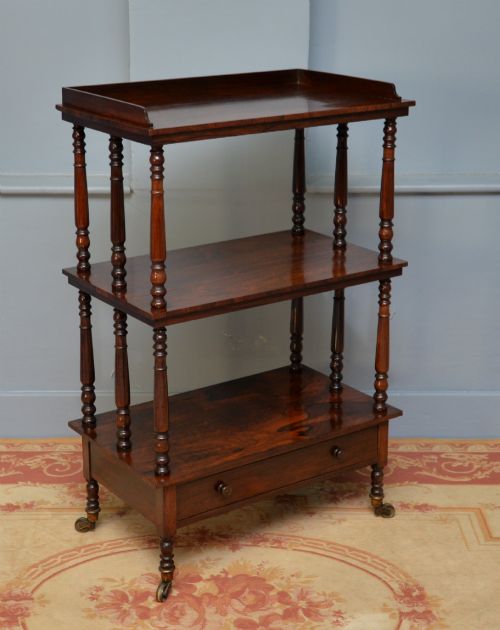
A whatnot shelving unit offers tiered display space in timber such as mahogany, rosewood and walnut, bringing open shelving to period rooms.
Whatnot Shelving Unit
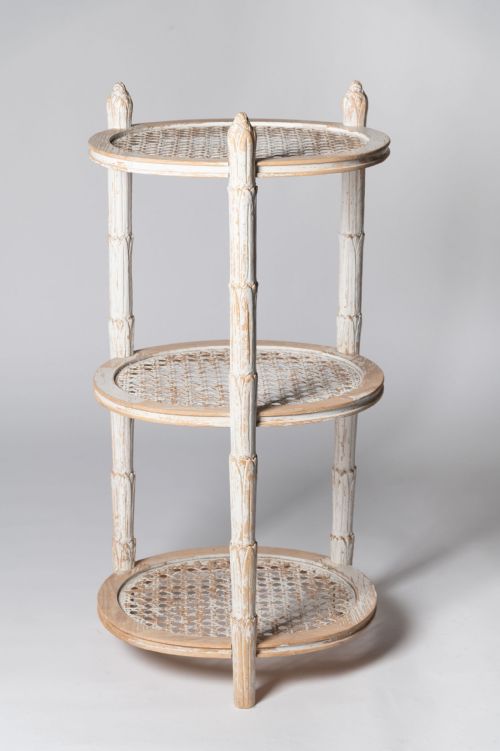
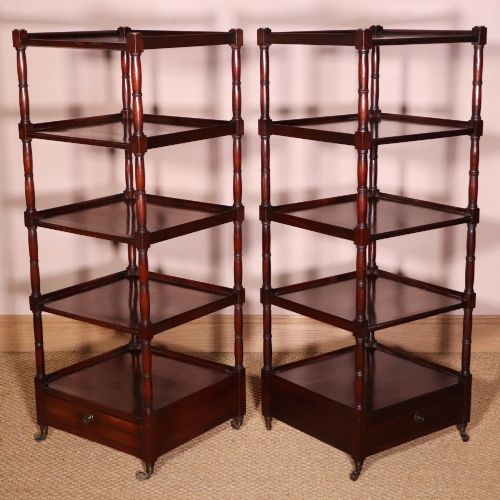
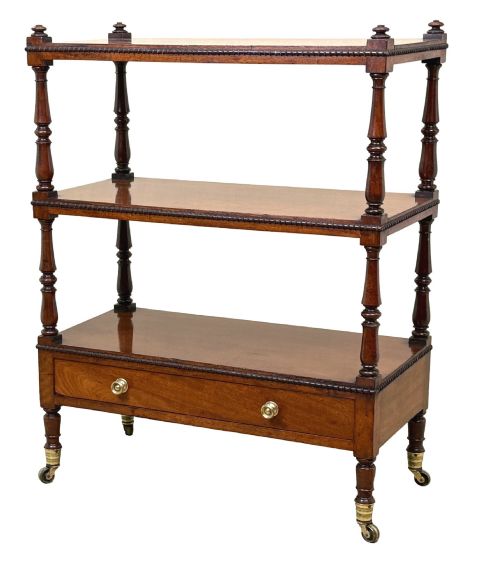
A whatnot shelving unit provides multiple tiers of open surfaces designed for displaying objects, books and ornaments in domestic interiors. When searching for a whatnot shelving unit, buyers encounter tiered stands spanning the Georgian, Regency and Victorian eras.
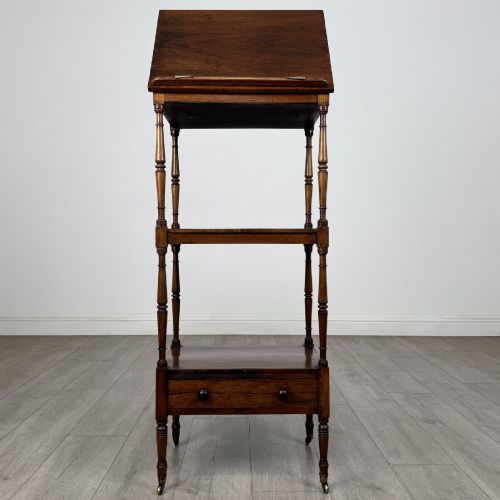
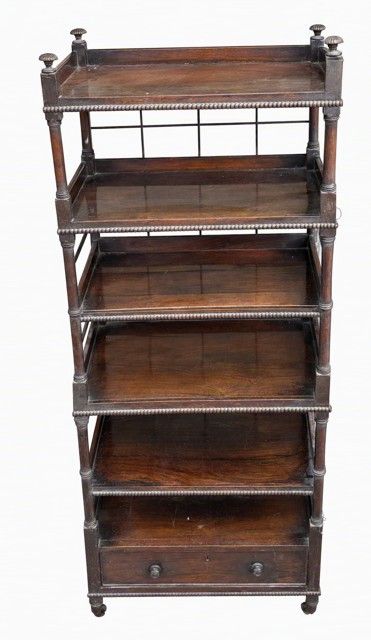
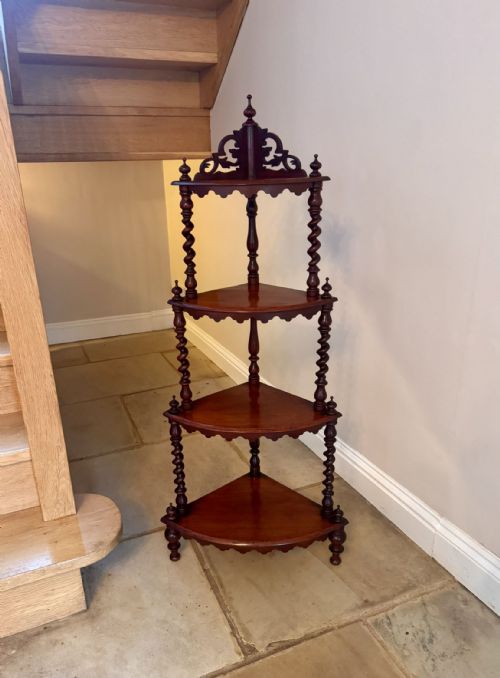
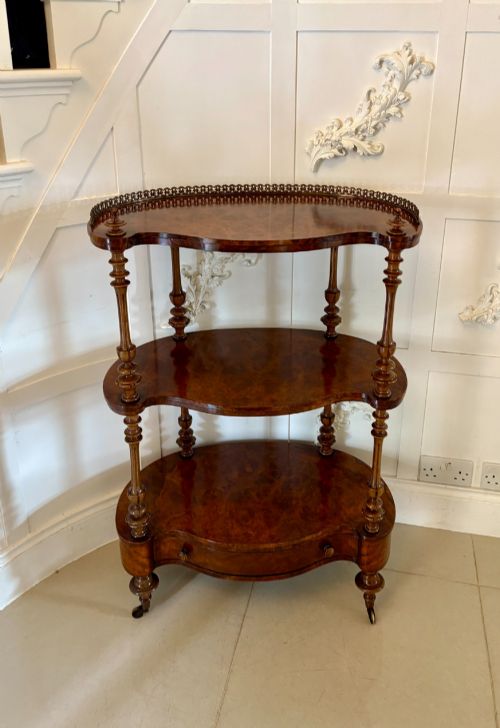
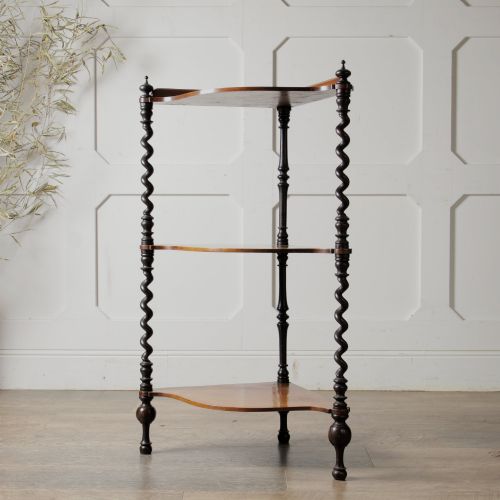
The pieces appearing on this page take various forms, including freestanding multi-tier rectangular stands, corner units, and designs incorporating drawers or mirrors. Rosewood, mahogany and burr walnut dominate the selection, often complemented by brass galleries or turnings.
Materials and construction
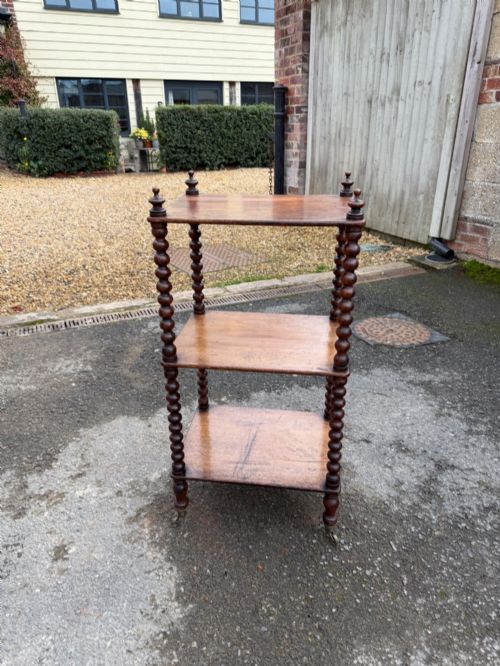
Cabinetmakers constructed these tiered pieces using dense timbers such as mahogany, rosewood, padauk and walnut, frequently selecting burr walnut or birdseye maple for figured surfaces. Individual shelves are supported by turned uprights, barley twist columns or corner posts.
Many examples feature brass galleries along the shelf edges to secure items, while other versions incorporate lower drawers, mirrors or carved serpentine shapes into the timber framework.
Whatnot Shelving Unit Retail Price Guide 2026
Typical asking prices for whatnot shelving unit among the pieces listed under this phrase on Sellingantiques today, from the lower quarter to the upper quarter. They describe what is for sale here now, not the wider market.
What determines quality
The distinction between standard examples and superior pieces rests upon the choice of timber and the precision of the turnings and joinery. Finer specimens utilise richly figured burr walnut, rosewood or padauk rather than plain secondary woods.
Additional refinements such as integrated brass galleries, serpentine shaped shelves, fitted drawers and well-proportioned tiered heights elevate the standing of an individual piece.
The Whatnot Shelving Unit Glossary
- Whatnot
- A piece of furniture consisting of a set of open shelves for displaying small objects. These tiered stands gained popularity during the Georgian and Victorian periods.
- Etagere
- A piece of furniture with a set of open shelves for displaying ornaments. The term is frequently used interchangeably with whatnot in nineteenth-century cabinetmaking.
- Brass gallery
- A low metal railing fitted around the edge of a shelf. This feature prevents items from sliding off upper tiers.
- Barley twist
- A type of column or upright turned in a spiral resembling a twisted rope. This decorative turning appears frequently on nineteenth-century supports.
Whatnot Shelving Unit: Frequently Asked Questions
What is a whatnot shelving unit used for?
These tiered stands were originally designed for displaying ornaments, ceramics and books in nineteenth-century drawing rooms and parlours.
Today, they serve a similar function in contemporary homes, providing vertical display space without heavy enclosed cabinetry.
How do I identify a Victorian whatnot?
Victorian examples often utilise walnut, burr walnut or mahogany, and frequently feature turned columns, barley twist supports or lower drawers.
Many pieces from this era also incorporate mirror backs or shaped serpentine shelving tiers.
What is the difference between an etagere and a whatnot?
The terms describe very similar multi-tiered open shelving furniture, though etagere often implies a lighter French-influenced display piece.
Both forms offer stacked horizontal surfaces supported by vertical columns or uprights.
Are all whatnot shelving units freestanding?
Most traditional pieces stand independently on the floor as rectangular multi-tier units designed to sit against a wall.
Other versions are specifically constructed as corner shelves to fit neatly into room angles.