




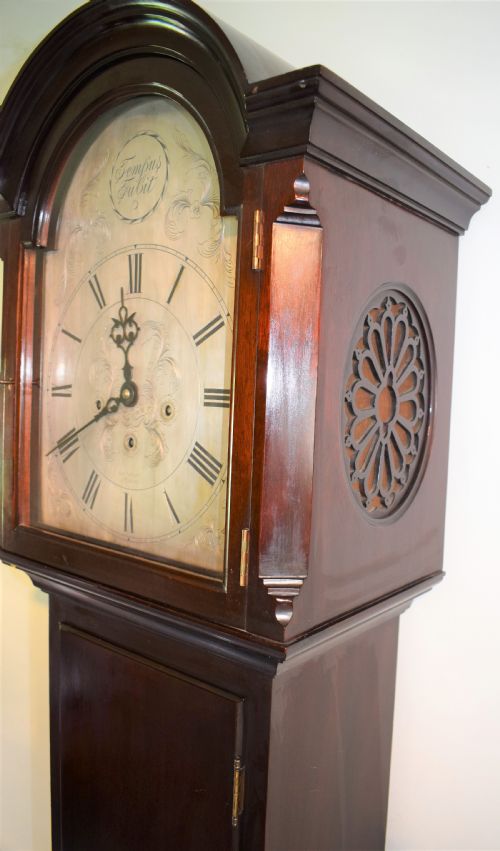


Westminster Chiming Clock
A westminster chiming clock brings the classic four-note quarter-hour melody into a room, spanning wall clocks, bracket models, and tall case formats.
Westminster Chiming Clock
A westminster chiming clock is a horological piece defined by its capability to sound the familiar four-note quarter-hour chime melody. When searching for a westminster chiming clock, buyers encounter formats ranging from compact mantel and wall versions to tall longcase grandfather and grandmother clocks.
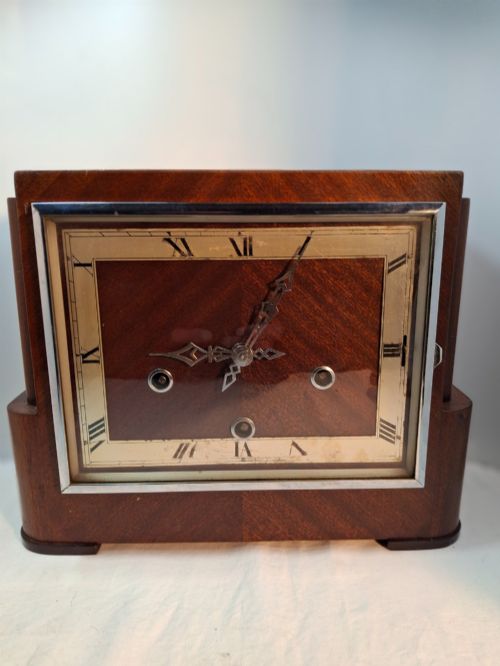
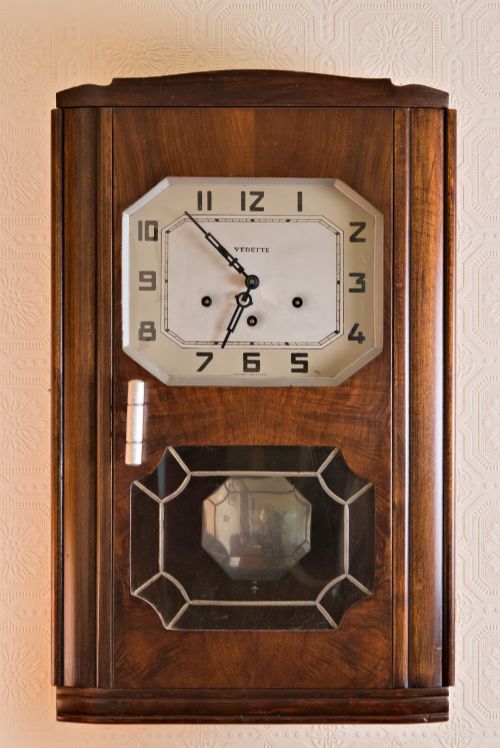
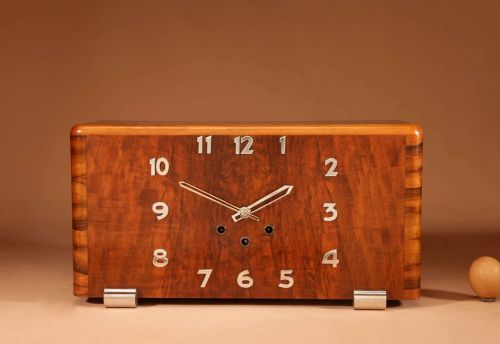
The pieces on this page span the Victorian and Edwardian eras alongside the 1920s, 1930s, and 1940s. Styles stretch from traditional British and Georgian revival to distinct Art Deco designs.
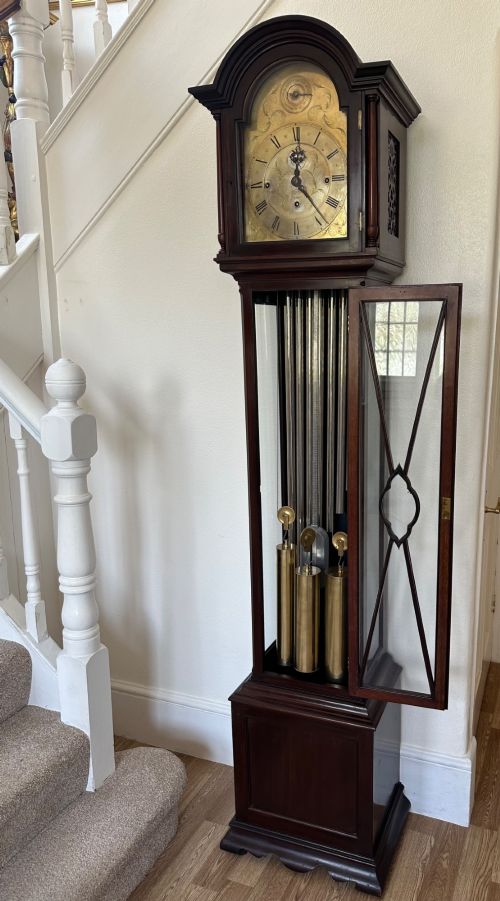
Mantel and bracket clocks appear frequently alongside taller longcase clocks housed in oak, mahogany, or walnut. Makers and retailers such as Mappin & Webb, Winterhalder, and Camerer Cuss mark various examples across the periods.
Materials and Construction
Cases utilise solid and veneered timbers including oak, mahogany, walnut, and ebonised wood, sometimes accented with brass, bronze, or ormolu mounts and glass panels. Movement mechanisms incorporate complex gear trains and tubular bells to drive the quarter chimes and hour strikes.
Cabinetmakers constructed tall longcase and smaller bracket bodies using traditional joinery methods suited to house heavy mechanical movements. Metal components rely on cast brass and bronze work for dials, bezels, and internal chime blocks.
Westminster Chiming Clock Retail Price Guide 2026
Typical asking prices for westminster chiming clock among the pieces listed under this phrase on Sellingantiques today, from the lower quarter to the upper quarter. They describe what is for sale here now, not the wider market.
Case materials recorded across the selection include brass, glass, mahogany, oak, walnut, chrome, ebonised wood, and metal.
Quality and Execution
Quality separates through the precision of the mechanical movement and the depth of the chime sound produced by the gongs or tubular bells. Heavier fusee movements and complex triple-train mechanisms represent higher tiers of horological output.
Cabinetwork fidelity dictates distinction at the top of the range, seen in burr walnut veneers, detailed ormolu mounts, and chinoiserie decoration rather than plain secondary timber carcasses. Dial legibility, crisp engraving, and intact bevelled glass complete the measure of a superior piece.
Mappin and Webb·Winterhalder·Camerer Cuss and Co·Geo Tarratt of Leicester·JJ Elliot
The Westminster Chiming Clock Glossary
- Bracket clock
- A portable clock originally designed to sit on a bracket against a wall, though later forms functioned as large mantel clocks. They often feature elaborate wooden cases with carrying handles.
- Grandmother clock
- A slim, scaled-down version of a longcase or grandfather clock, standing shorter in height. These domestic timepieces fit smaller rooms while retaining full chiming mechanical movements.
- Fusee
- A conical pulley connected to the mainspring by a chain or cord, designed to equalise the driving force as the spring unwinds. This mechanism maintains consistent power delivery to improve timekeeping accuracy.
- Chinoiserie
- European imitation and adaptation of Chinese and East Asian artistic motifs, frequently applied as painted or lacquered decoration on clock cases.
- Ormolu
- Gilded bronze ornamentation applied to clock cases and mounts. The technique involves creating a mercury-gilt finish on cast bronze elements.
Westminster Chiming Clock: Frequently Asked Questions
What is a westminster chiming clock?
A westminster chiming clock is a timekeeper that plays the four-note melody every quarter of an hour before striking the full hour. These pieces include wall clocks, mantel versions, and tall longcase grandfather clocks.
Such clocks rely on mechanical movements driven by weights or springs. The melody originates from hammers striking a set of tuned rods, bells, or tubular gongs inside the case.
How do I wind a chiming clock?
Winding requires a dedicated key inserted into the winding holes on the dial face. Most chiming movements utilise multiple spring barrels or weight chains to power the timekeeping, hour strike, and quarter chime separately.
Careful attention ensures the springs or weights are not overwound. Each train of the movement must receive its proper turns to maintain accurate time and melody execution.
Where should I place a longcase clock?
Longcase clocks require a stable, level floor against a solid interior wall to maintain a steady beat. Placing them away from direct sunlight, dampness, and major temperature fluctuations protects the wooden case and internal movement.
Sufficient clearance is necessary around the case door for pendulum swing and weight descent. Positioning the clock where the chime can be heard clearly enhances its domestic presence.
How do I distinguish Victorian from Art Deco models?
Victorian models typically exhibit ornate wood carvings, heavy mouldings, and traditional dial surrounds in oak or mahogany. Their styling draws upon Gothic revival, 17th-century revival, and Victorian aesthetic tastes.
Art Deco models feature streamlined geometries, chrome accents, glass panels, and walnut veneers characteristic of the 1920s and 1930s. The dial layouts and numerals on these later pieces reflect modernist design principles.