



Welsh Potboard
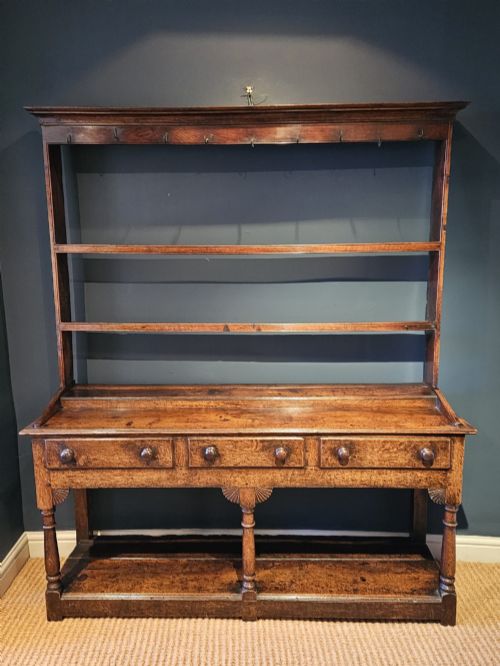
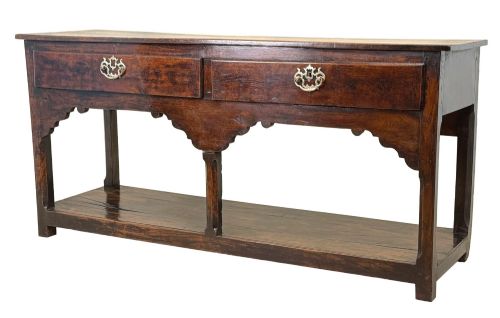
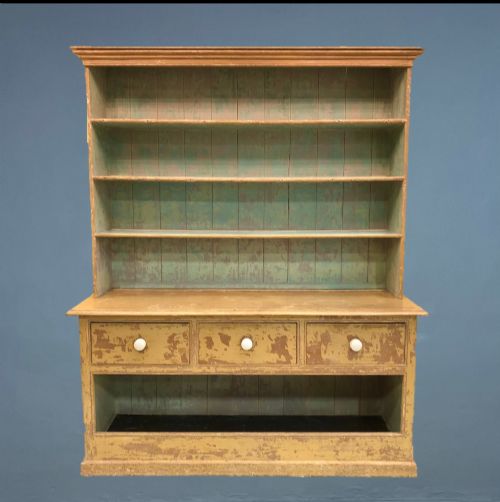
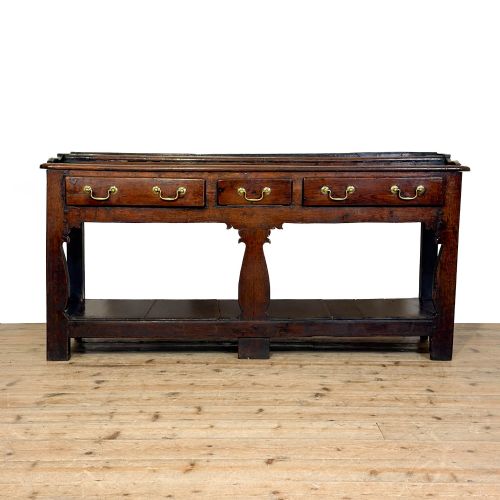
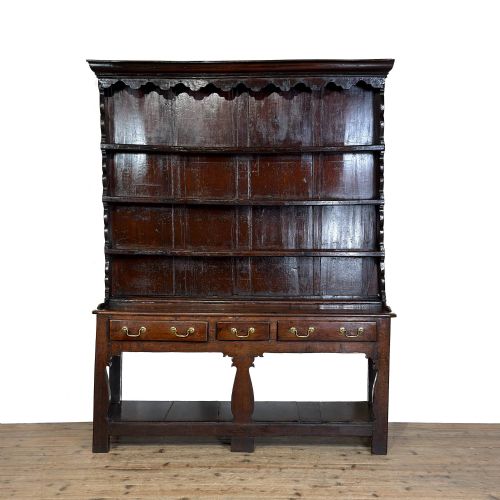
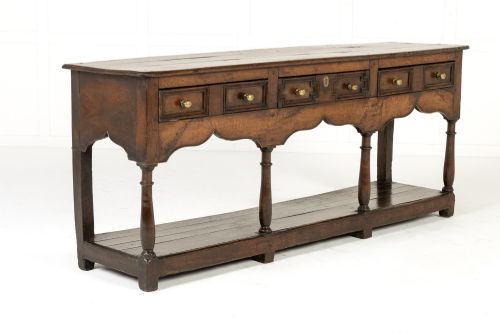
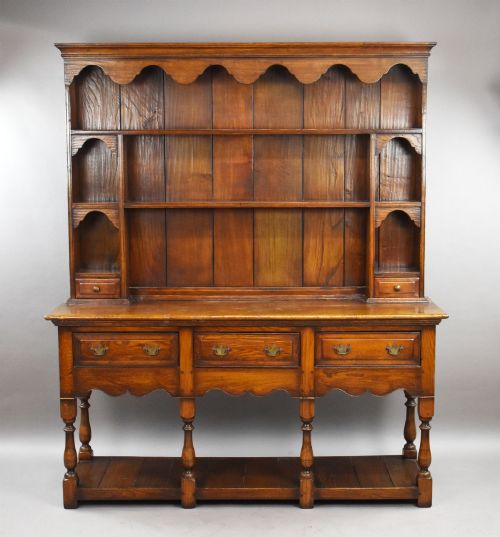
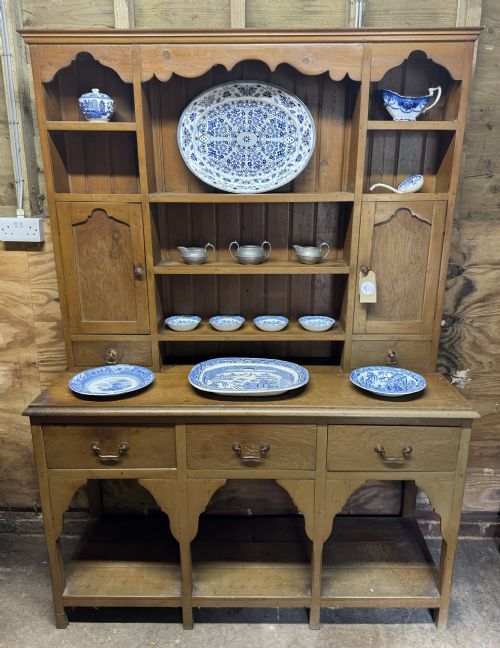
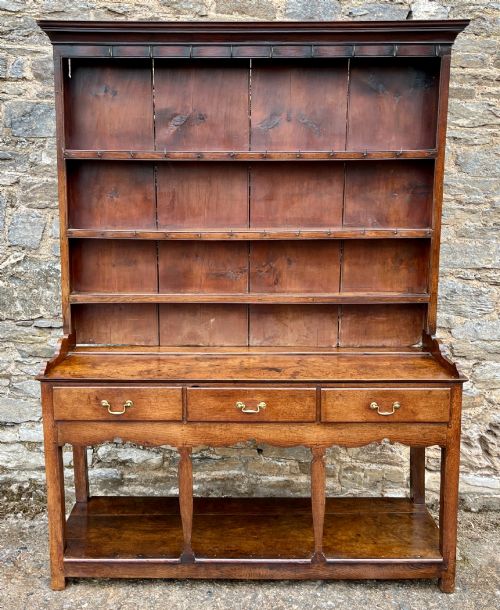
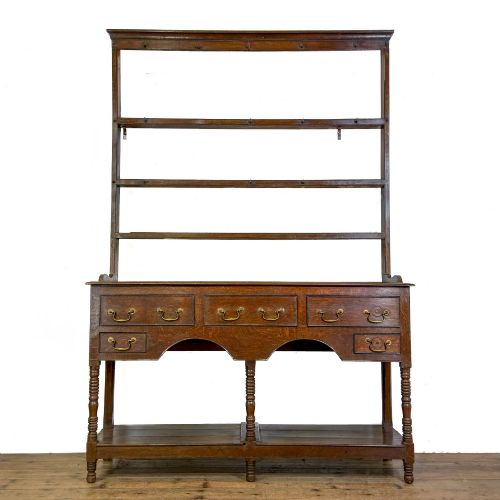
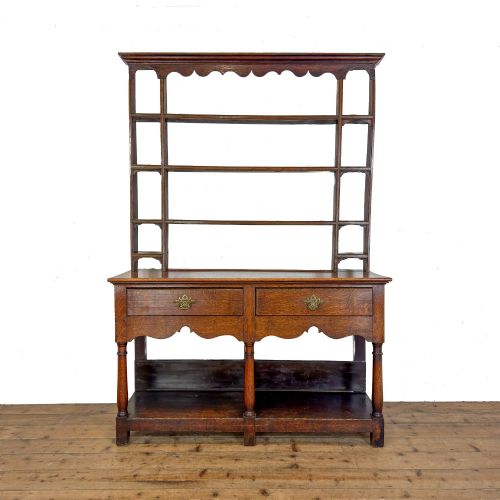
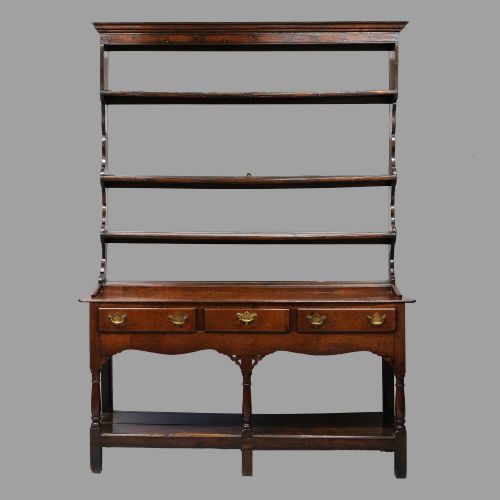
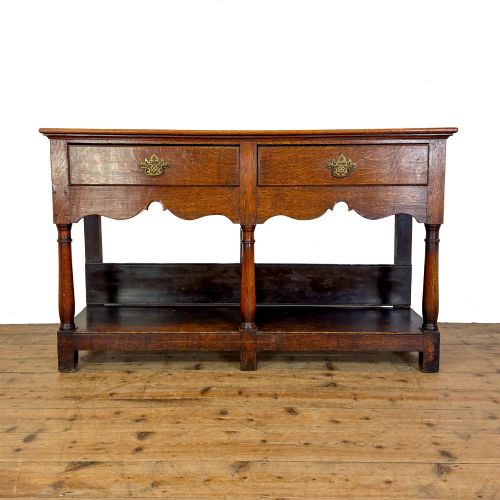
These welsh potboard pieces are sturdy oak and pine storage items carrying open lower shelves, offering practical utility and rustic character.
Welsh Potboard
A welsh potboard is a traditional form of dresser or dresser base featuring a low open shelf beneath the main body, historically utilised for storing pots and kitchen utensils. The items appearing here emerge chiefly from the eighteenth and nineteenth centuries, spanning Georgian and Victorian periods.
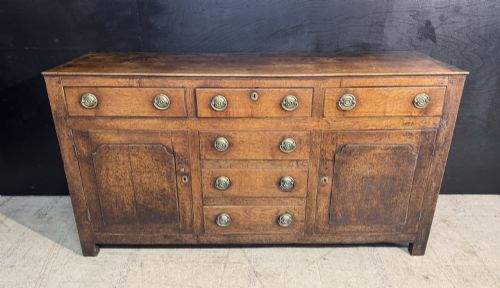
Most examples found on this page consist of regional English and Welsh country pieces constructed in native timber. Buyers regularly encounter bases fitted with multiple drawers alongside complete assemblies that retain their original plate racks.
Factors That Separate Examples
Quality rests upon the preservation of original surfaces, patinas, and timber integrity rather than surface decoration. Pieces displaying untouched regional characteristics from specific areas like Montgomeryshire or Glamorgan command greater attention.
Proportion and scale dictate the desirability of surviving items, with smaller cottage variants and pieces retaining their original potboards and racks representing the upper tier of craftsmanship.
Welsh Potboard Retail Price Guide 2026
Typical asking prices for welsh potboard among the pieces listed under this phrase on Sellingantiques today, from the lower quarter to the upper quarter. They describe what is for sale here now, not the wider market.
The Welsh Potboard Glossary
- Potboard
- The low open shelf positioned near the floor between the lower legs of a dresser base. This flat platform provides open storage space for heavy kitchen items.
- Dresser Base
- The lower sideboard portion of a dresser, featuring drawers and cupboards without the upper plate rack. Many examples survive as standalone bases.
- Plate Rack
- The timber shelving unit mounted to the upper back of a dresser, designed to display plates upright. These racks frequently feature plate grooves and shaped friezes.
- Patina
- The surface sheen and colour developed by timber over long periods through handling, polishing, and ageing. Original patinas show natural wear rather than modern refinishing.
- Vernacular
- Furniture built by local country joiners using regional traditions and native materials rather than following formal urban design patterns.
Welsh Potboard: Frequently Asked Questions
What is a potboard base used for?
These bases served as principal work tables and storage units in traditional kitchens. The lower shelf held heavy pots, pans, and utilitarian earthenware away from table surfaces.
Today, they function as sideboards in dining rooms or entrance halls, providing surface space for lamps and decorative objects alongside enclosed drawer storage.
How do I date a welsh potboard?
Dating relies on construction methods, timber choice, and hardware styles. Eighteenth-century pieces frequently utilise hand-sawn oak boards, pegged joinery, and simpler drawer linings.
Nineteenth-century examples often incorporate pine elements, machine-cut components, and later brass or iron pulls. Regional characteristics also help narrow down the period of manufacture.
Are all potboard dressers from Wales?
While the form is strongly associated with Welsh country workshops, similar potboard dressers were built across English rural regions. Regional variations appear in drawer arrangements and timber selection.
Welsh examples frequently display distinctive local proportions and are often constructed from native Welsh oak found in valleys such as the Conway.
How should I care for an antique oak dresser?
Maintain timber surfaces by applying natural beeswax sparingly to preserve the wood and its historic patina. Avoid placing antique furniture near direct heat sources or strong sunlight.
Keep humidity levels stable in the room to prevent timber movement, and clean dust gently using a dry or slightly damp soft cloth.