






Welsh Potboard Base
A welsh potboard base provides sturdy utility and grounded rustic character, anchoring a room with centuries of timber craftsmanship.
Welsh Potboard Base
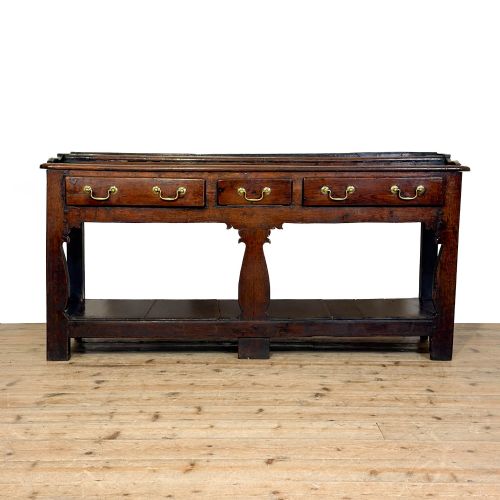
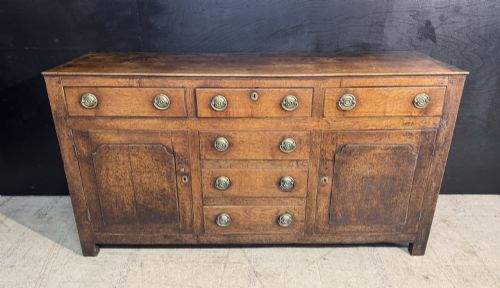
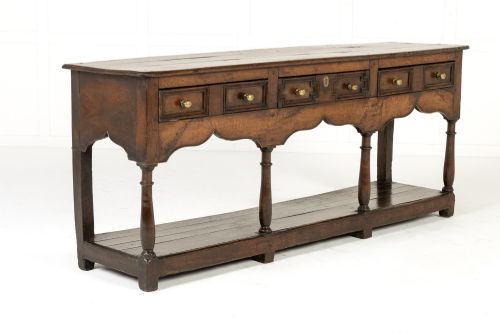
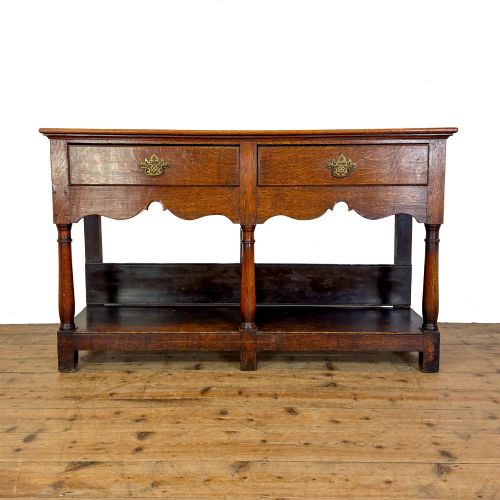
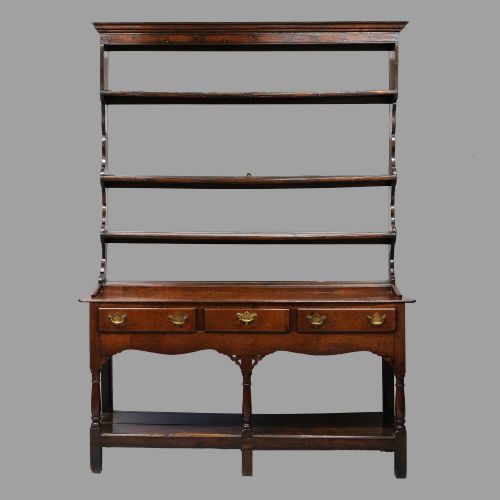
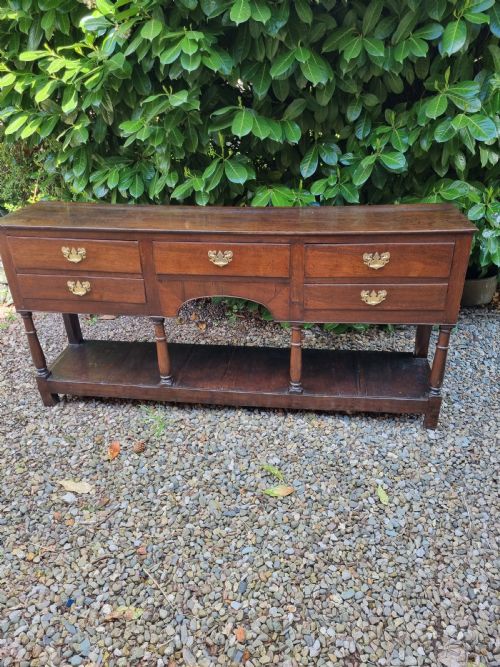
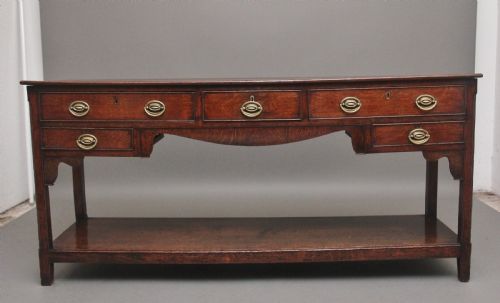
A welsh potboard base is a low sideboard or dresser base featuring an open lower shelf beneath the drawers and work surface. These pieces serve as functional furniture designed originally for displaying and storing heavy kitchen pottery and household utensils.
Most examples found here date from the eighteenth and nineteenth centuries, spanning Georgian and Victorian periods. Native oak dominates the construction, reflecting the vernacular cabinet-making traditions of Welsh and English country workshops.
Materials and Construction
Makers utilised solid native oak for the primary frames, drawers, and boards, occasionally incorporating pine or painted wood in secondary areas. Brass and iron hardware such as handles and escutcheons secure the drawer assemblies and doors.
Cabinet-makers constructed these units using traditional framing joints and pegged tenons designed to bear heavy weight on the lower potboard tier. Surfaces show the rich patination of age, shaped through decades of domestic use and simple polishing.
Welsh Potboard Base Retail Price Guide 2026
Typical asking prices for welsh potboard base among the pieces listed under this phrase on Sellingantiques today, from the lower quarter to the upper quarter. They describe what is for sale here now, not the wider market.
Many a potboard has spent centuries listening to kettles whistle and boots dry by the hearth.
Factors That Separate Examples
The degree of original surface patination and timber selection dictates visual merit. Pieces retaining their unaltered boarded top, deep drawers, and heavy potboard without extensive timber replacement stand at the upper end of the range.
Proportion and scale also separate standard utility items from finer vernacular commissions. Smaller dimensions and balanced drawer arrangements, such as five or six drawer configurations, display greater refinement in regional country furniture.
The Welsh Potboard Base Glossary
- Potboard
- An open lower shelf fitted between the legs of a dresser base, traditionally used for storing pots and pans. This lower tier defines the lower section of the furniture.
- Dresser Base
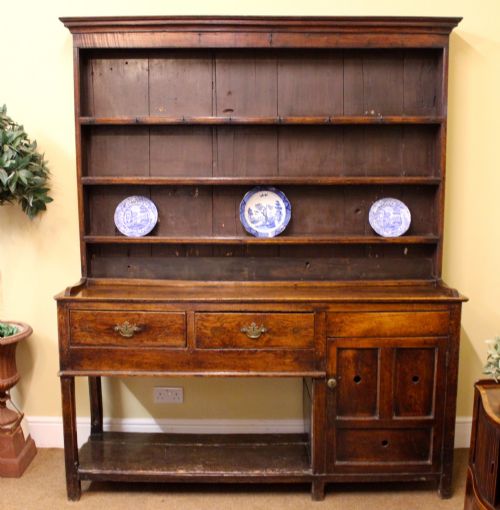
- The lower portion of a Welsh dresser, functioning independently as a sideboard with drawers and cupboards. It provides a flat working surface above storage compartments.
- Vernacular
- Furniture made by regional craftsmen following local traditions rather than metropolitan academic designs. These pieces prioritise practical utility and local timber supplies.
- Patina
- The surface sheen and colour acquired by wood over centuries through handling, waxing, and ageing. A deep patina indicates long-term unvarnished wear.
- Escutcheon
- A protective plate surrounding a keyhole, usually fashioned from brass or iron. It prevents the timber around the lock from splitting with repeated use.
Welsh Potboard Base: Frequently Asked Questions
What is a potboard base used for?
These low sideboards provide a practical working surface and substantial drawer storage for modern dining rooms or kitchens. The open lower shelf accommodates large decorative platters, baskets, or books.
Historically, they held heavy earthenware and metal pots within easy reach of the hearth. Today, they function as versatile sideboards that bring warmth and historic character to a room.
How do I date an oak dresser base?
Dating relies on examining construction methods, drawer linings, and timber characteristics. Eighteenth-century examples often feature hand-planed boards, pegged joints, and vernacular moulding profiles specific to regional workshops.
Later nineteenth-century pieces may display machine-sawn timber elements or standard Victorian brassware. Comparing the drawer construction and overall wear patterns helps clarify the period of manufacture.
Are all potboard bases from Wales?
While many originate from Welsh rural workshops, similar vernacular furniture was produced across English country houses and farming regions. Regional variations appear in timber selection, drawer counts, and leg turning styles.
Pieces originating from mid-Wales often share specific construction traits with English border furniture. The term encompasses both Welsh vernacular styles and broader Georgian country house traditions.
How do I care for antique oak?
Antique oak benefits from simple maintenance using natural beeswax applied sparingly with a soft cloth. Avoid placing timber furniture near direct heat sources or strong sunlight to prevent splitting.
Regular gentle dusting preserves the historic surface patination without stripping the accumulated character. Breathable room environments keep the timber stable over time.