

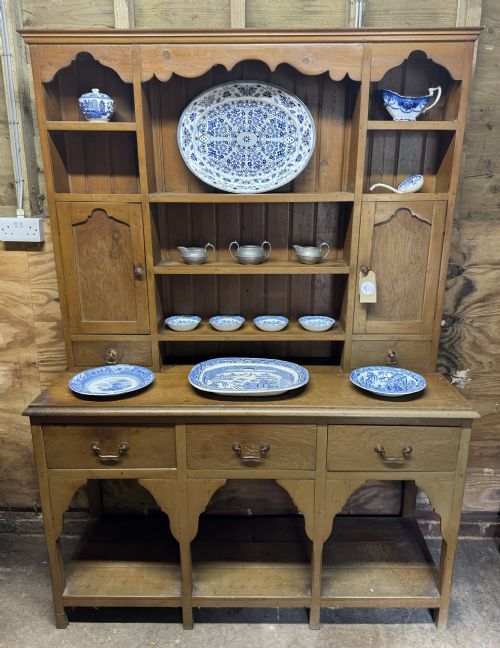
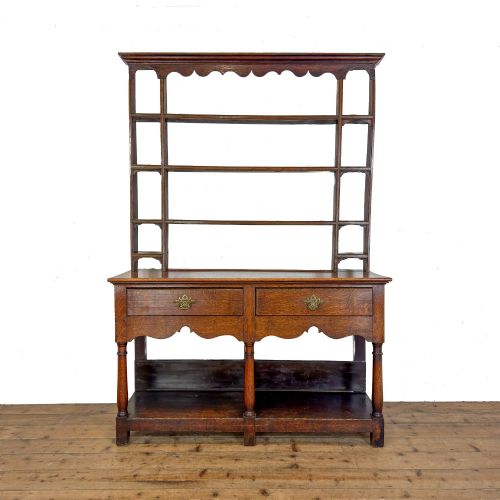
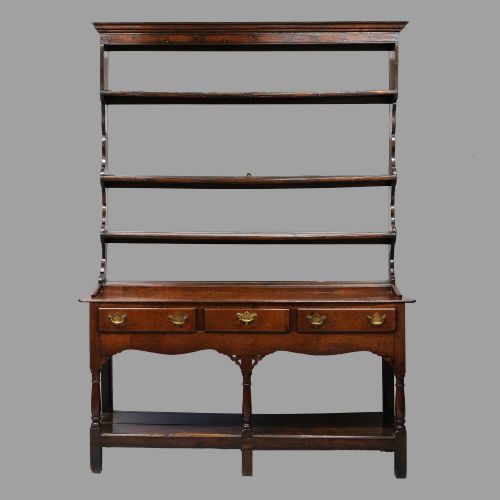
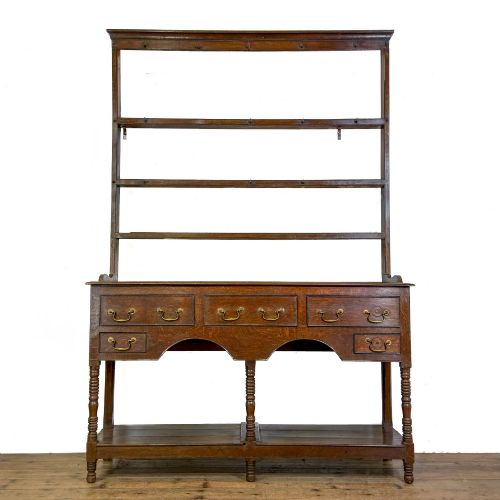
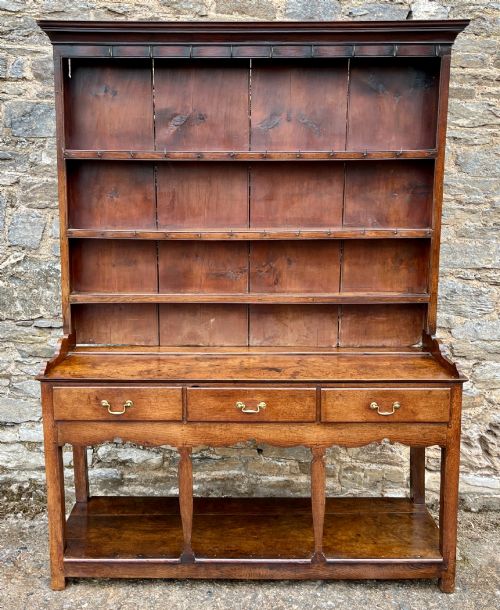

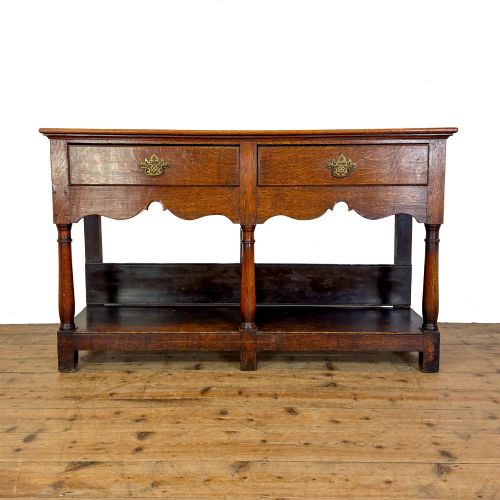

Welsh Dresser with Potboard
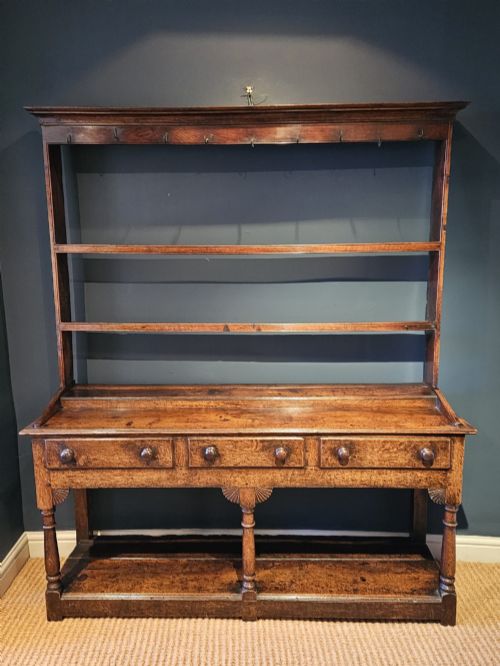
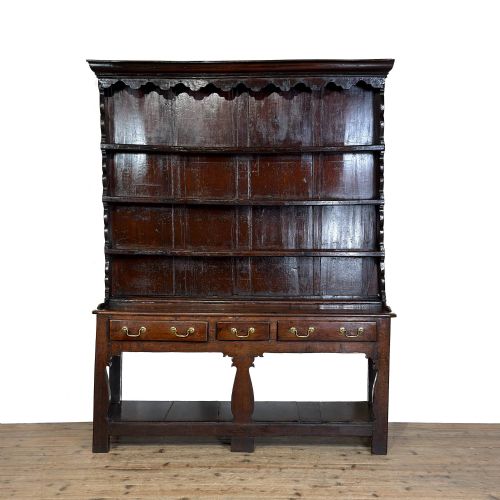
A welsh dresser with potboard offers timeless country utility, combining deep display shelving with a sturdy open lower shelf for everyday storage.
Welsh Dresser with Potboard
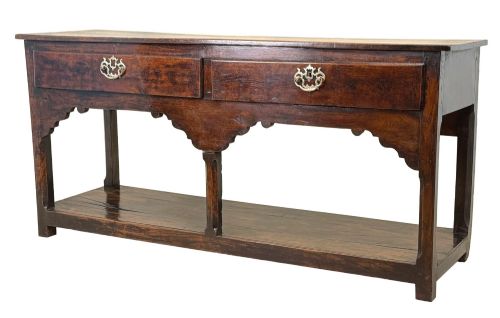
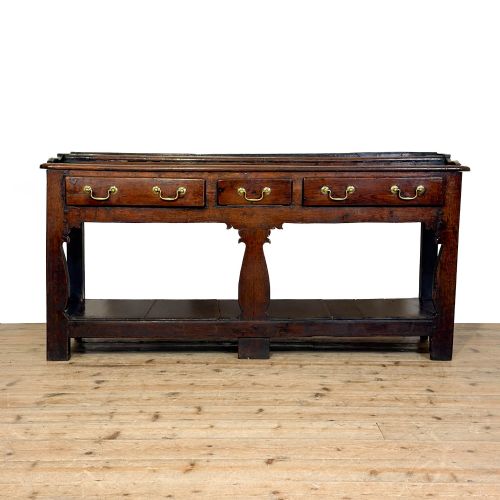
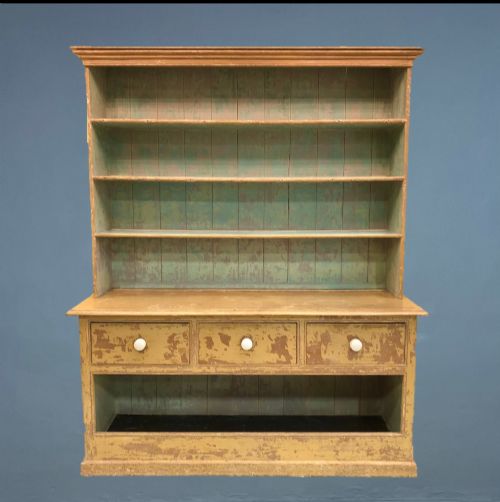
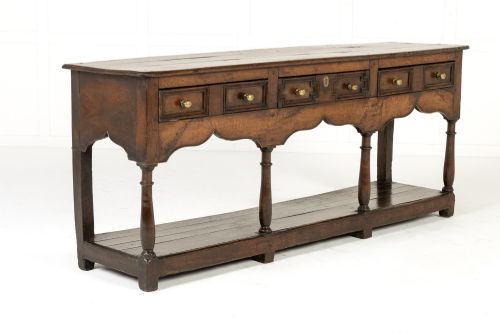
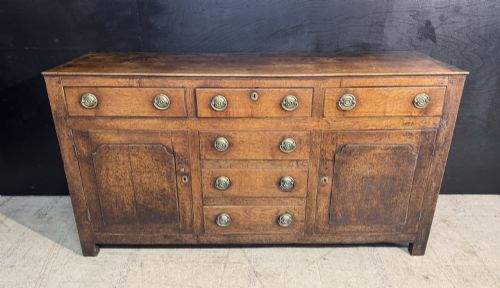
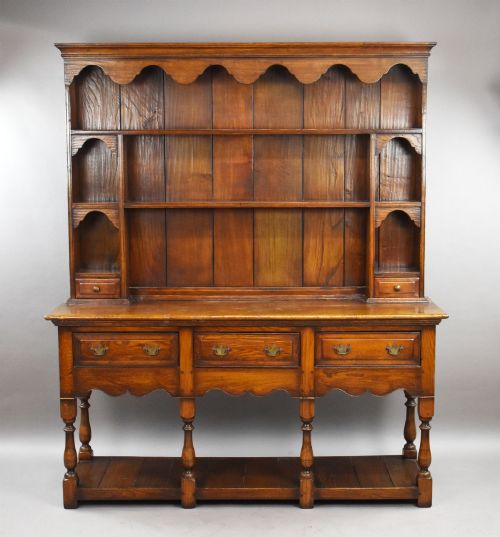
A welsh dresser with potboard is a substantial timber storage piece featuring open plate racks above and a characteristic low slatted or boarded base shelf. These items belong to the broader tradition of country house and vernacular furniture, spanning the eighteenth and nineteenth centuries.
The pieces you encounter here range from mid eighteenth century George III examples down to nineteenth century pine and cottage iterations. Native timbers dominate the selection, showing the practical domestic needs of earlier Welsh and English rural households.
How They Were Made
Makers relied on native hardwoods and softwoods, predominantly oak and pine, supplemented by elm and occasional burr walnut veneers. Joinery prioritised strength and daily utility, using thick boards for the potboard base and pegged joints for structural stability.
Surfaces exhibit original patinas, hand-carved geometric details, and painted finishes applied over generations of domestic use. Iron and brass hardware secure the drawers and doors, completing the vernacular construction.
Welsh Dresser with Potboard Retail Price Guide 2026
Typical asking prices for welsh dresser with potboard among the pieces listed under this phrase on Sellingantiques today, from the lower quarter to the upper quarter. They describe what is for sale here now, not the wider market.
What Varies in Quality
Quality rests in the integrity of the timber, the depth of the original patina, and the preservation of the potboard base. Earlier pieces from the seventeen-fifties and seventeen-nineties display finer native oak grain and traditional joinery methods.
Proportions and regional vernacular details distinguish standard cottage furniture from elevated country house examples. The presence of untouched surface finishes and period hardware elevates the standing of an individual dresser.
The Welsh Dresser with Potboard Glossary
- Potboard
- The open lower shelf of a dresser base, originally designed to hold heavy pots, pans, and ceramics.
- Vernacular
- Furniture built by regional craftsmen for local domestic use, prioritising practical function over high-style metropolitan fashion.
- Patina
- The surface sheen and colour developed by timber over centuries through handling, polishing, and natural ageing.
- Rack
- The upper shelving unit attached to or set upon the dresser base, used for displaying plates and serving dishes.
Welsh Dresser with Potboard: Frequently Asked Questions
What is a potboard base?
The potboard base is the solid or slatted lower shelf positioned just above the floor on a traditional dresser. It provided early households with accessible storage space for heavy kitchen crocks and metalware.
Over time, this open shelf became a defining structural feature of regional Welsh and English country furniture, distinguishing these pieces from enclosed sideboards.
How do I tell an 18th-century dresser from a later one?
Eighteenth-century dressers typically feature native oak construction with hand-planed surfaces, pegged joinery, and deep natural patinas built up through generations. Regional vernacular traits and Georgian proportions also help identify these earlier pieces.
Nineteenth-century examples often utilise pine or softer woods, sometimes featuring painted finishes or different structural proportions reflecting changing domestic fashions.
Where should I place a dresser in my home?
These dressers function naturally in large kitchens or dining rooms where their open racks can display ceramics, glassware, and kitchenalia. Their deep lower bases and drawers provide substantial everyday storage for table linen and dinnerware.
Ensure the room has adequate wall space to support the combined height and weight of both the dresser base and its upper rack.
Are these dressers made of solid wood?
Yes, the listings comprise pieces constructed from solid native timbers such as oak, pine, and elm, alongside occasional burr walnut veneers. Traditional makers used heavy boards to withstand the demands of daily rural life.
This solid wood construction accounts for the enduring weight and structural survival of these items across centuries.