





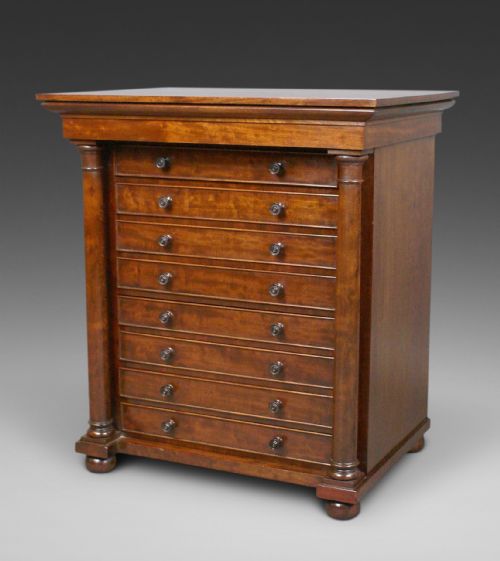
Wellington Desk
A wellington desk brings slender proportions and a hinged locking side-stile to any study, offering a clever answer to compact writing needs.
Wellington Desk
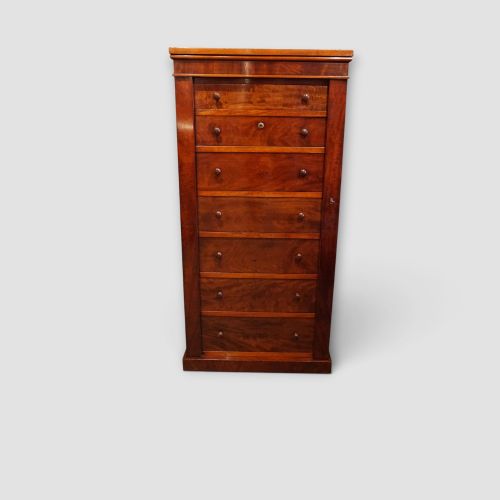
A wellington desk takes the form of a tall, narrow chest of drawers fitted with a hinged vertical locking flap that secures all the internal drawers at once. Buyers seeking this form encounter examples predominantly from the nineteenth century, including Victorian and Regency periods, alongside walnut, mahogany, and rosewood timbers.
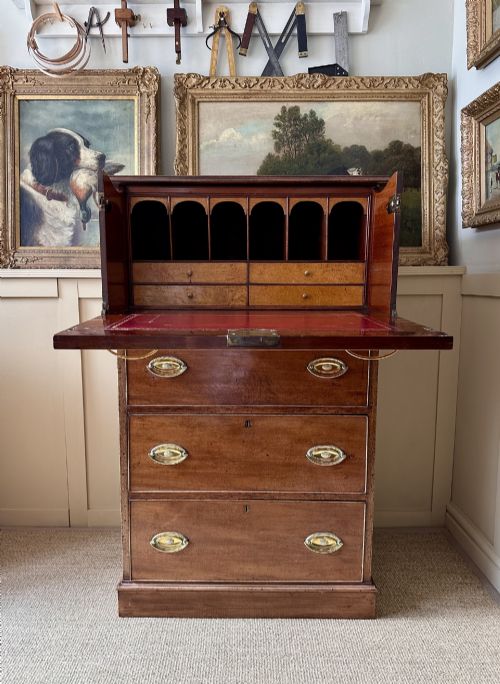
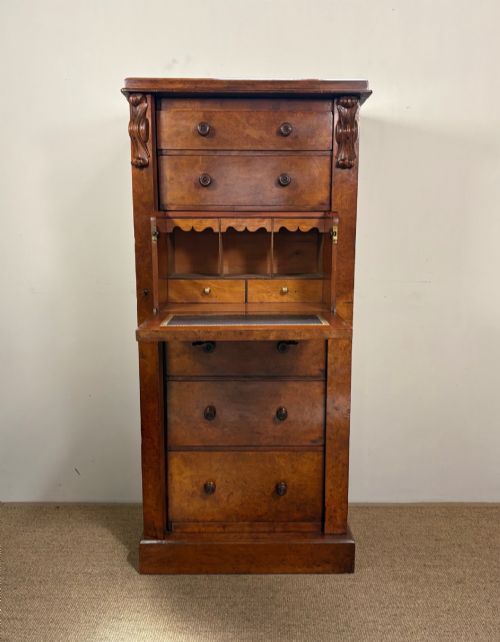
The layout typically incorporates a pull-out secretaire drawer that drops down to form a writing surface fitted with small pigeonholes and subsidiary compartments. Alongside full-size examples, variations such as miniature chests and associated desk ornaments appear within the selections.
Makers and retailers such as Druce & Co. contributed to the production of these pieces during the Victorian era. The distinct silhouette remains popular for smaller rooms where traditional kneehole desks demand too much floor space.
How they were made
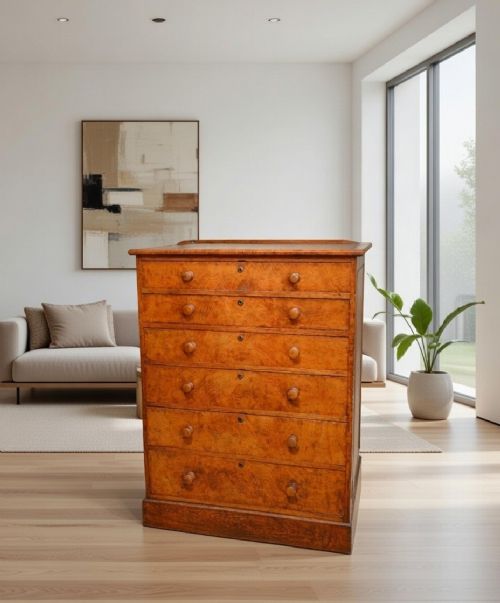
Cabinet makers utilised dense hardwoods including mahogany, rosewood, walnut, and pollard oak, often applying flame mahogany veneer to drawer fronts to create rich figured surfaces. Secondary timbers provide sturdy interior framing while brass hardware secures handles and locking mechanisms.
Writing compartments frequently incorporate inset leather surfaces to provide a durable writing plane within the pull-out secretaire drawer. The signature locking flap operates on discrete hinges, secured by a functional side-mounted keyhole that bars access to every drawer simultaneously.
Wellington Desk Retail Price Guide 2026
Typical asking prices for wellington desk among the pieces listed under this phrase on Sellingantiques today, from the lower quarter to the upper quarter. They describe what is for sale here now, not the wider market.
Listings span the nineteenth century, featuring Victorian and Regency styles executed in mahogany, rosewood, walnut, and brass.
What varies in quality
Quality rests in the precision of the timber selection and the crispness of the secondary veneers, where book-matched flame mahogany demonstrates superior workshop practice. The smoothness of the locking flap mechanism and the snug fit of the internal pigeonholes further separate standard utility pieces from finer cabinet work.
Subtle details like patination on the timber and original brass mounts elevate a piece, whereas poorly aligned drawers or replacement hardware diminish the integrity of the design.
Druce & Co.
The Wellington Desk Glossary
- Secretaire
- A drawer engineered to drop open and reveal a fitted writing surface with small compartments. This feature transforms a tall chest into a functional bureau.
- Locking flap
- A hinged vertical stile on the side of the chest that pivots over the drawer edges and secures with a key. This mechanism locks every drawer in the stack simultaneously.
- Flame mahogany veneer
- Thin slices of mahogany cut from where branch junctions meet the trunk, yielding a fiery, patterned grain. Cabinet makers applied these to primary display surfaces.
- Pollard oak
- Timber taken from pollarded oak trees, displaying a clustered knot formation and rich texture. It yields distinctive decorative surfaces on nineteenth century case furniture.
- Satinwood
- A pale, hard exotic timber used for contrasting stringing and interior details. It brings a luminous yellowish tone to Regency and Victorian cabinet work.
Wellington Desk: Frequently Asked Questions
What defines a wellington desk?
A wellington desk is a tall, narrow chest of drawers featuring a hinged locking flap on one side that secures the entire stack. It usually incorporates a pull-out secretaire drawer with a fitted writing surface.
This distinct configuration allows the piece to function as both a tallboy and a compact writing desk, saving floor space while keeping documents secure.
How does the locking flap work?
The locking flap is a vertical wooden bar hinged to the side of the carcase, overlapping the outer edges of the drawer fronts. When closed and secured with a key, it prevents any drawer from being opened.
This singular locking action made the form popular for private correspondence and valuable papers in nineteenth century households.
Which woods were commonly used?
Cabinet makers relied heavily on dense tropical hardwoods such as mahogany, rosewood, and walnut for their durability and rich grain. Figured veneers like flame mahogany and pollard oak were applied to drawer fronts for decorative impact.
Secondary woods like pine or oak were typically used for drawer linings and internal framing.
How do I care for the leather writing surface?
Leather writing surfaces benefit from occasional light dusting and conditioning with appropriate leather balms to prevent drying and cracking. Avoid using harsh chemical cleaners or excess moisture near the surrounding timber veneers.
Keeping the room at a stable humidity level protects both the leather insert and the underlying wood construction.