

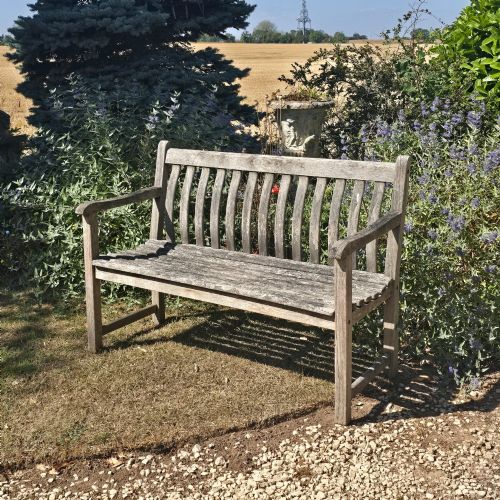
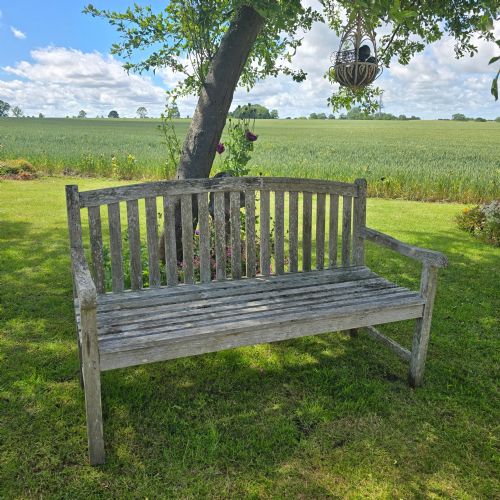
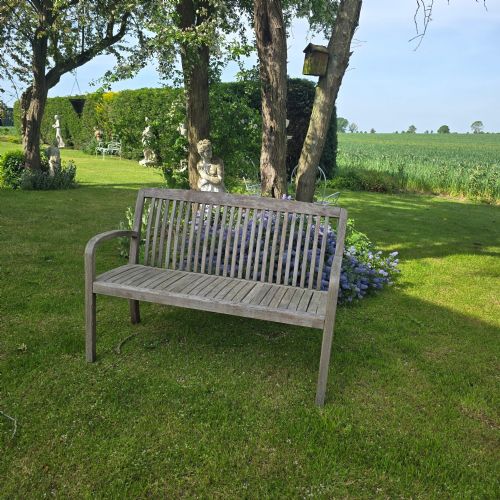
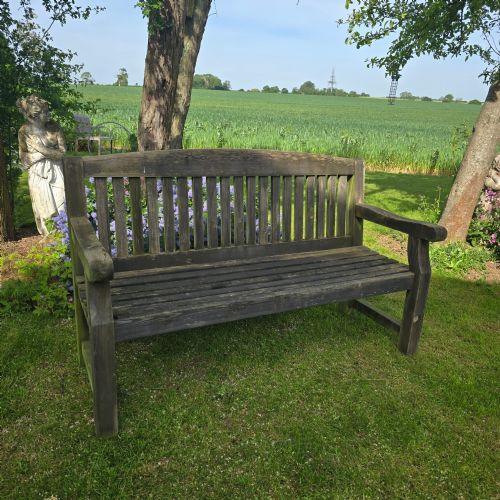


Weathered Teak Garden Bench
These weathered teak garden bench examples bring enduring timber seating to outdoor spaces, offering classic proportions that settle gracefully into natural surroundings.
Weathered Teak Garden Bench
A weathered teak garden bench provides sturdy outdoor seating shaped by decades of exposure to the elements. These pieces originate from periods including the Edwardian era, the 1920s, and the 1930s, reflecting traditional English garden aesthetics.
Most examples found here feature robust slatted timber construction designed for landscape placement. Styles range from simple utilitarian forms to specific regional expressions like the English country garden seat.
How they were made
Makers constructed these garden pieces using dense timbers such as teak and wood, chosen for their natural resilience against outdoor moisture. Joinery techniques prioritized strength to withstand continuous exterior use across changing seasons.
Surface finishes evolved through natural ageing, developing characteristic silvered patinas rather than relying on applied coatings. Selected pieces incorporate occasional paint remnants alongside weathered wood textures.
Weathered Teak Garden Bench Retail Price Guide 2026
Typical asking prices for weathered teak garden bench among the pieces listed under this phrase on Sellingantiques today, from the lower quarter to the upper quarter. They describe what is for sale here now, not the wider market.
What varies in quality
Quality differences lie in the depth of the silvered patina and the preservation of the timber's original structural integrity. Examples retaining crisp joinery and substantial slat thickness stand apart from heavily worn alternatives.
Proportional harmony and regional design details also distinguish standard utilitarian seating from finer period pieces. The uniformity of the weathered surface reflects the specific conditions and duration of outdoor exposure.
The Weathered Teak Garden Bench Glossary
- Teak
- A dense, durable tropical hardwood prized for outdoor furniture due to its natural oils. It resists moisture and weathering exceptionally well.
- Weathered
- The natural silver-grey surface colour acquired by timber after prolonged exposure to sunlight and rain. This patina indicates considerable age outdoors.
- Edwardian
- The historical period spanning from 1901 to 1910, characterised in garden furniture by traditional craftsmanship and comfortable proportions. Pieces from this era often display refined joinery.
- Slatted
- A construction method utilising narrow strips of timber arranged with spaces between them. This design allows rainwater to drain quickly from the seat surface.
Weathered Teak Garden Bench: Frequently Asked Questions
How do I care for a weathered teak garden bench?
These outdoor seats require very little maintenance because the natural oils in the timber protect against decay. Leaving the surface untreated allows the wood to maintain its characteristic silvered patina.
Cleaning the bench occasionally with water and a soft brush removes dirt and debris without harming the aged finish. Storing the piece under cover during extreme winter weather helps preserve the structural joints.
Can I leave my teak bench outside all year?
Teak furniture is specifically built to withstand permanent outdoor placement through all four seasons. The dense grain and natural oil content prevent moisture penetration and rotting.
Placing the feet on small stones or paving slabs prevents ground moisture from seeping into the base of the legs. This simple precaution ensures the timber remains sound for decades.
What causes teak to turn silver grey?
Ultraviolet light from the sun breaks down the surface cells of the wood, bleaching the natural brown pigment. Rain and wind then wash away these loose surface fibres.
This natural weathering process creates a protective silvered layer that seals the deeper timber. The resulting hue is a hallmark of genuine age and outdoor exposure.
How can I date an older garden bench?
Dating relies on examining construction methods, timber thickness, and specific design motifs like heart cutouts. Edwardian and early twentieth-century examples often feature heavier section timber and traditional joinery.
Comparing the hardware, such as fixings or bolts, also provides clues regarding the manufacturing period. Catalogues and stylistic comparisons help narrow down the decade of production.