


Weathered Stone Garden Sculptures
Weathered stone garden sculptures bring character to outdoor spaces through classical figures, animals, and architectural ornaments carrying decades of patina.
Weathered Stone Garden Sculptures
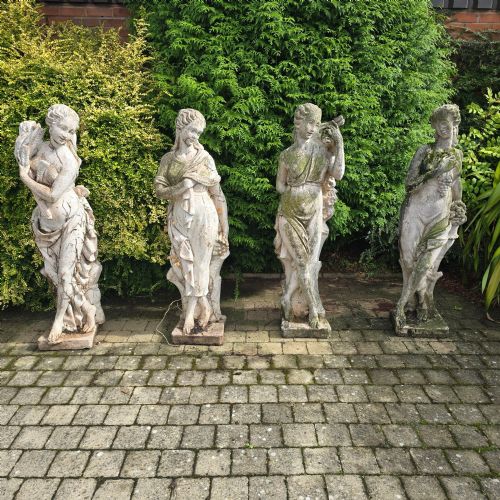
Weathered stone garden sculptures encompass a wide range of outdoor ornaments, from grand figures and mythological beasts to rustic agricultural items. Buyers exploring this selection encounter pieces originating from the eighteenth century through to the mid-twentieth century, reflecting diverse tastes across generations. The most common examples on this page date from the nineteen-thirties and nineteen-fifties, capturing mid-century garden design alongside older survivals.
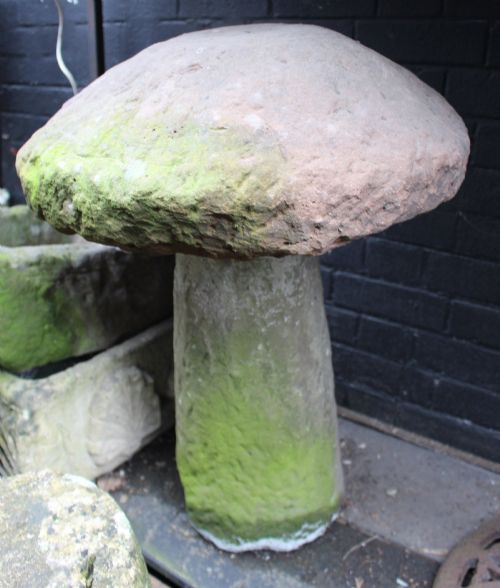
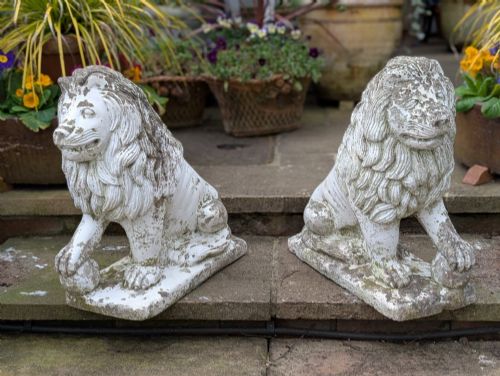
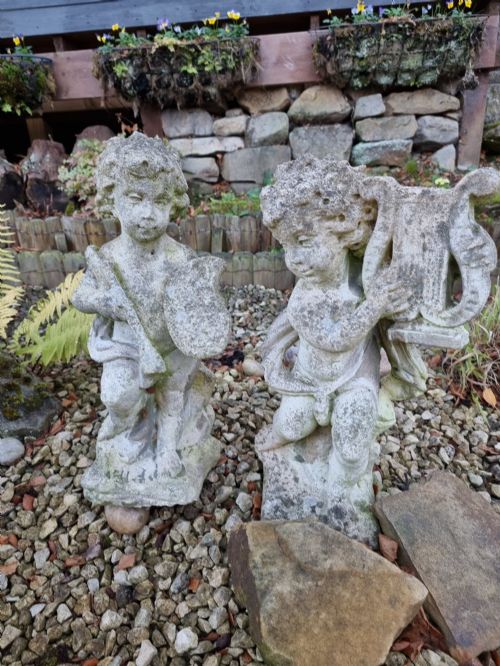
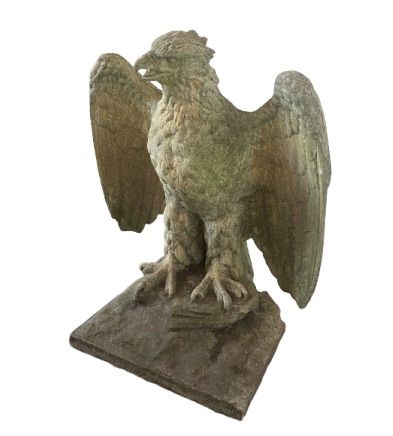
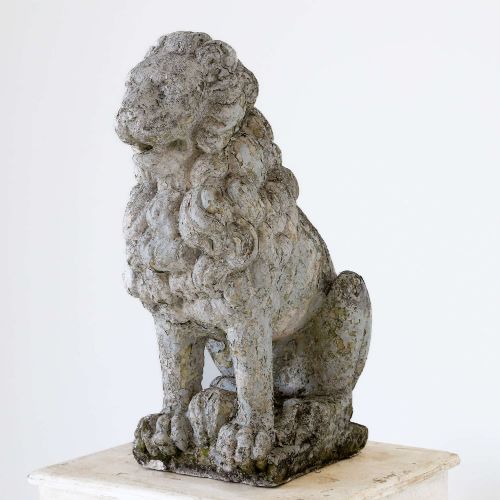
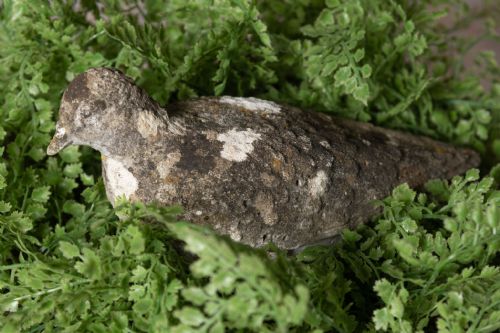
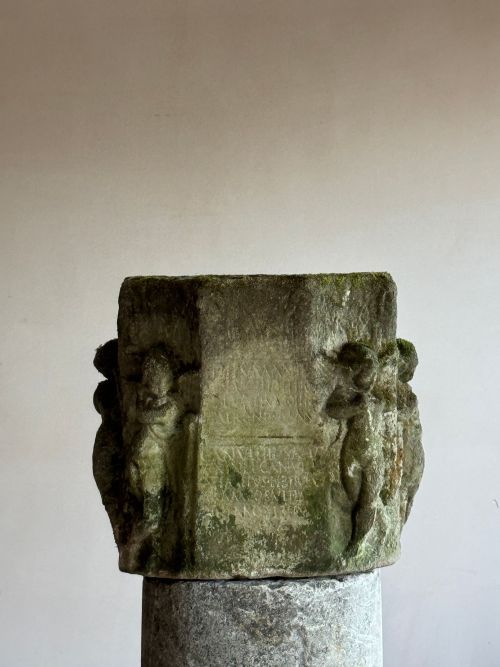
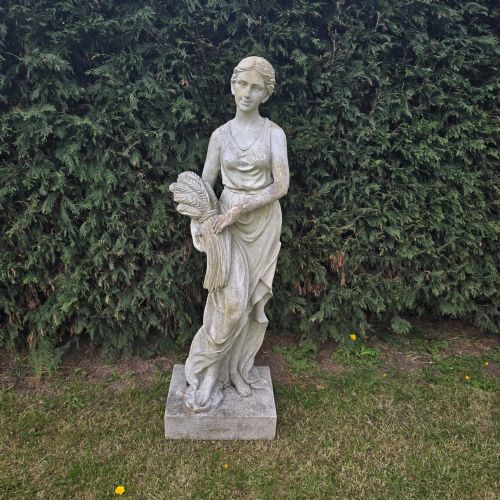
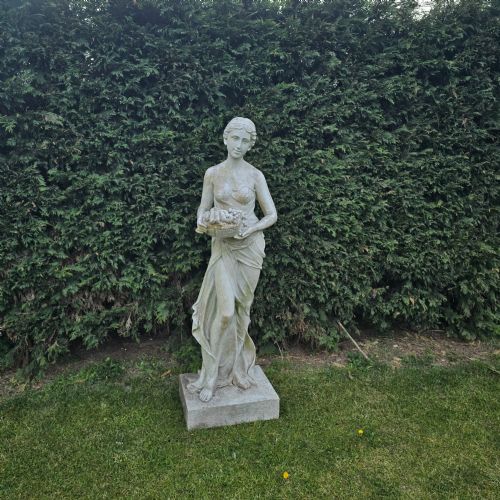
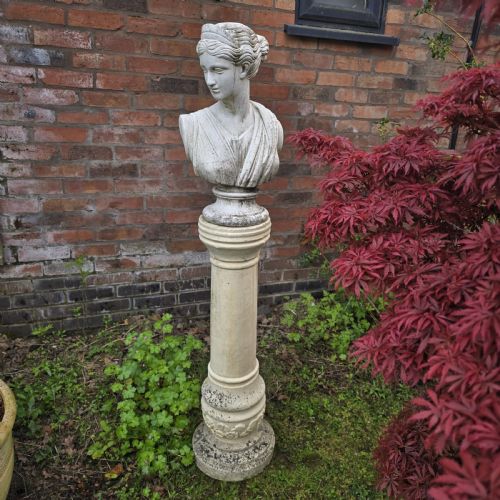
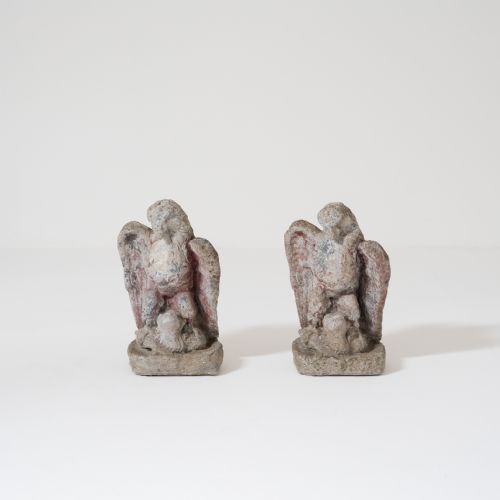
Forms span life-sized seasonal allegories, classical deities such as Venus and Athena, and architectural elements including pier finials and staddle stones. Animals appear frequently, particularly pairs of lions acting as guardians, alongside eagles, pigs, and pigeons. Many statues arrive mounted upon matching pedestals or plinths, designed to elevate the figures within herbaceous borders or on formal lawns.
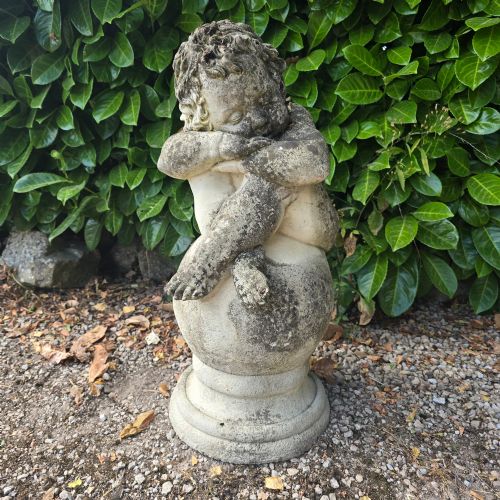
Stylistic influences draw heavily on classical revival, neoclassical traditions, and rustic vernacular design, suiting both formal English country houses and cottage gardens. Pieces range from modest cherubs to massive Italian marble or sandstone compositions that anchor a landscape. Each item bears the physical marks of exposure to the elements, developing distinct textures over the years.
Materials and construction
Construction methods rely heavily on cast materials, with reconstituted stone, composite stone, and cast stone appearing across the majority of pieces. Artisans poured mixtures of aggregate and binding agents into moulds to replicate the appearance of quarried rock efficiently. Some examples retain traces of original paint or flaky surface finishes applied decades ago.
Traditional masonry sits alongside these cast compositions, represented by carved stone, sandstone, and Italian marble worked by hand. Stoneware and heavy composite mixes provided durable alternatives capable of withstanding frost and rain over centuries. Structural supports occasionally incorporate iron stands, particularly for torsos and architectural fragments designed for display.
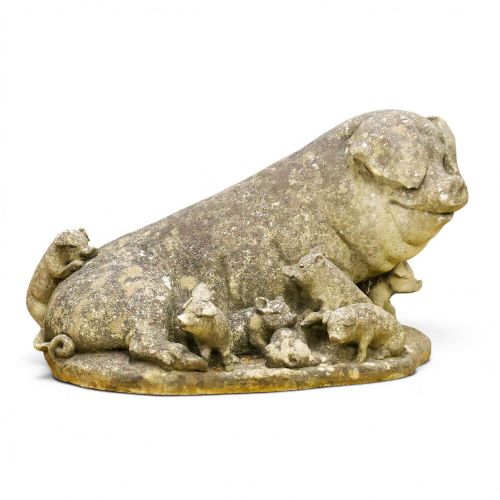
A large sow with seven piglets stands ready to root among the flowerbeds.
Assessing quality
The nature of the weathering itself contributes to the appeal, with genuine organic lichen growth and mineral staining outperforming uniform artificial ageing. Heavier, denser stone compositions generally indicate superior structural integrity and longevity in exposed outdoor positions. The presence of matching original plinths or pedestals further enhances the coherence of a piece.
The Weathered Stone Garden Sculptures Glossary
- Reconstituted stone
- A manufactured material created from crushed stone aggregate mixed with cement or other binders and poured into moulds. It offers the appearance of natural quarried rock while allowing complex sculptural forms to be duplicated.
- Staddle stone
- A mushroom-shaped stone support originally used to elevate granaries and grain ricks above the ground to deter vermin and damp. They now serve popular roles as decorative garden pedestals and architectural ornaments.
- Pier finial
- An architectural ornament placed on top of a gate pier, wall end, or pillar for decorative emphasis. Common motifs in this category include eagles and heraldic animals.
- Cast stone
- A refined form of precast concrete manufactured to resemble natural cut stone. It became widely utilised for garden statuary and architectural dressings during the nineteenth and twentieth centuries.
- Neoclassical revival
- An artistic movement drawing inspiration from the classical art and culture of ancient Greece and Rome. This aesthetic heavily influences the figures of goddesses, emperors, and mythical beasts found in period gardens.
Weathered Stone Garden Sculptures: Frequently Asked Questions
How do I clean a weathered stone sculpture?
Gentle brushing with water usually suffices to remove loose dirt without disturbing delicate surface lichens or aged paint. Avoid aggressive pressure washing or chemical detergents that strip away the historical patina built up over decades.
Allow the stone to dry naturally after cleaning. Preserving the weathered surface ensures the sculpture retains its historic character within the garden setting.
How do I secure a heavy garden statue?
Large sculptures and figures mounted on pedestals require a level, stable foundation to prevent shifting or tipping over time. Heavier pieces often rely on their own substantial weight, but pinning them to plinths with metal dowels offers additional security.
Positioning statues away from busy pathways or areas prone to accidental impacts protects both the sculpture and the surrounding landscaping. Consulting a professional installer is advisable for massive marble or sandstone works.
What is the difference between reconstituted stone and carved stone?
Carved stone involves hand-chiselling blocks of natural material like sandstone, limestone, or marble directly into a form. Reconstituted and cast stones are moulded products created by pouring aggregate mixtures into forms.
Carved pieces show tool marks and unique variations inherent to natural rock. Cast and reconstituted items display uniform textures shaped by the original pattern maker's mould.