


Waterfall Crystal Pendant Lamp
A waterfall crystal pendant lamp brings cascading prisms and focused overhead light into a room, offering both brilliance and historic character.
Waterfall Crystal Pendant Lamp
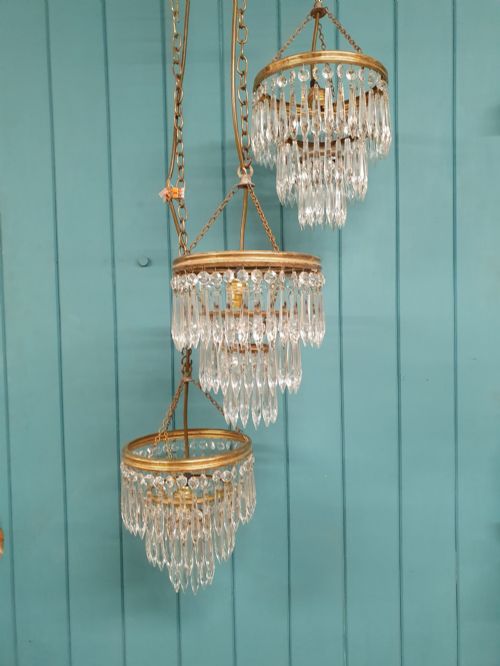
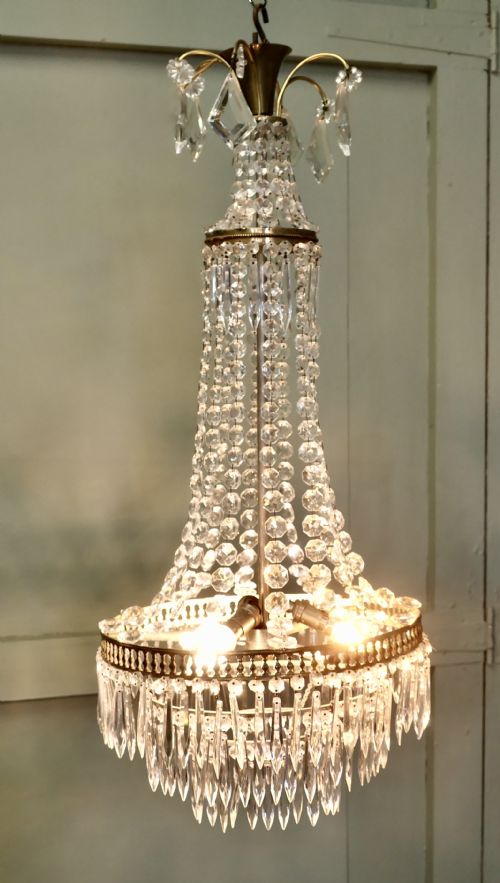
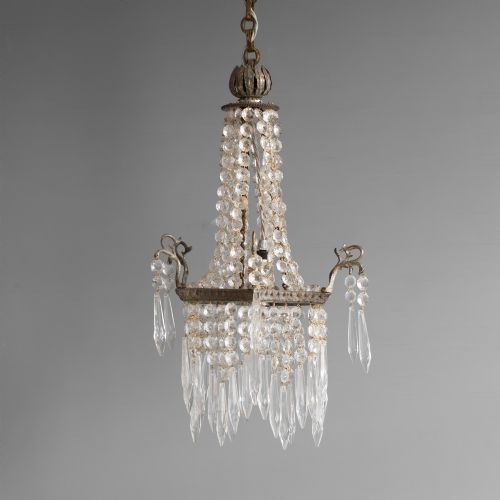
A waterfall crystal pendant lamp encompasses ceiling lights, pendant lights, and chandeliers structured to drop light through tiers of glass and crystal. These fixtures appear primarily across the Edwardian era, the 1920s, and the 1930s, alongside French Empire and Art Deco styles.
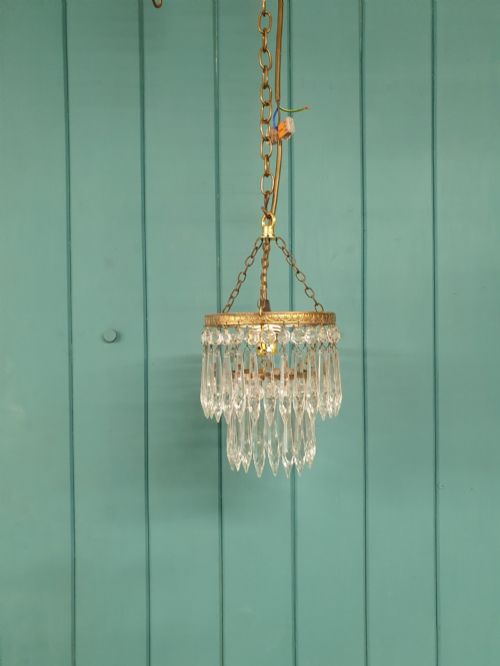
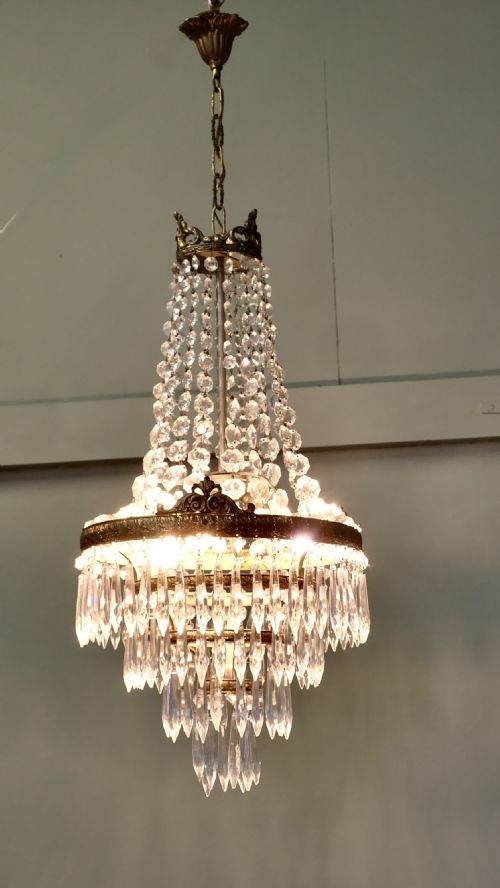
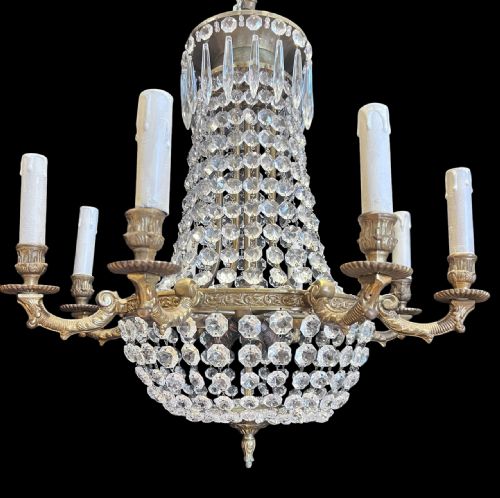
The most common formats on this page include spike chandeliers, tent and bag arrangements, and multi-tier glass designs. Pieces range from small single-light brass mounts to substantial multi-light French Empire installations.
Origins stretch from English workshops to French chateau interpretations, utilising brass, gilt brass, and metal frames to support intricate arrangements of cut glass drops and prisms.
Materials and construction methods
Makers constructed the structural frames of these lamps using brass, gilt brass, and various metals to support heavy glass components. These metal mounts often feature detailed casting or simple wiring depending on the period.
The optical elements rely on crystal, glass, and cut crystal shaped into drops, beads, lustres, and prisms. Artisans suspended these glass pieces in tiers, tents, and waterfall cascades to maximise light refraction.
Some early twentieth-century examples feature unexpected blue prisms nestled at the top and centre to tint the cascade.
Distinctions in quality and execution
Quality reveals itself in the precision of the cut glass and crystal prisms, where deeper facets create sharper light refraction. The weight and finish of the brass or gilt metal mounts also indicate the care taken during manufacture.
The complexity of the assembly, such as multi-tiered bead strands and coordinated blue prisms, separates standard domestic lighting from finer decorative pieces.
The Waterfall Crystal Pendant Lamp Glossary
- Waterfall chandelier
- A lighting fixture featuring cascading tiers of crystals that resemble falling water. This form creates dense light refraction across the room.
- Tent and bag chandelier
- A style where upper strings of beads form a triangular tent shape above a gathered bag of crystal drops below. This design originated in neoclassical periods and persisted into the twentieth century.
- Spike chandelier
- A fixture characterised by an arrangement of downward-pointing crystal spikes or prisms surrounding the central light source. These often appear in smaller Edwardian and 1930s formats.
- Lustre
- A cut glass pendant or drop hung from a chandelier to catch and scatter light. Lustres vary in size from small beads to large hanging prisms.
Waterfall Crystal Pendant Lamp: Frequently Asked Questions
Where should I hang a waterfall crystal pendant lamp?
These lamps suit spaces with adequate ceiling height where the cascading crystals can catch natural and artificial light effectively. Common placements include hallways, dining spaces, and principal rooms.
Ensure the drop length complements the room proportions so the lower prisms remain clear of everyday circulation.
How do I identify an Art Deco piece from an Edwardian one?
Art Deco pieces often utilise tiered crystal glass arrangements and geometric structures typical of the 1920s and 1930s. Edwardian examples tend to favour traditional brass mounts paired with delicate cut glass drops and swag formations.
Examining the metalwork and the geometry of the glass tiers reveals the stylistic shift between the eras.
What maintenance do these crystal fixtures require?
Routine upkeep involves gentle dusting of the metal frame and individual glass drops to maintain optimal light reflection. Heavier cleaning requires mild soapy water applied carefully to each crystal before drying with a soft cloth.
Keeping the original brass mounts free from harsh chemical cleaners preserves the historic surface finish.
Can these pendant lamps serve as a room's main light source?
Many multi-light configurations provide substantial illumination through their clustered bulbs and reflective crystal prisms. Single-light variants function better as accent lighting or task illumination in compact areas.
Reviewing the number of lights and the scale of the frame helps determine the illumination capacity for your space.