



Amber Crystal Ceiling Light
An amber crystal ceiling light brings a warm, atmospheric glow to a room through richly tinted glass and traditional metalwork.
Amber Crystal Ceiling Light
An amber crystal ceiling light is typically encountered as a chandelier or hanging hall fixture dating from the late nineteenth century through the art deco period. These pieces originate primarily from French, Italian and English workshops, spanning styles from Edwardian elegance to French provincial and grand regency.
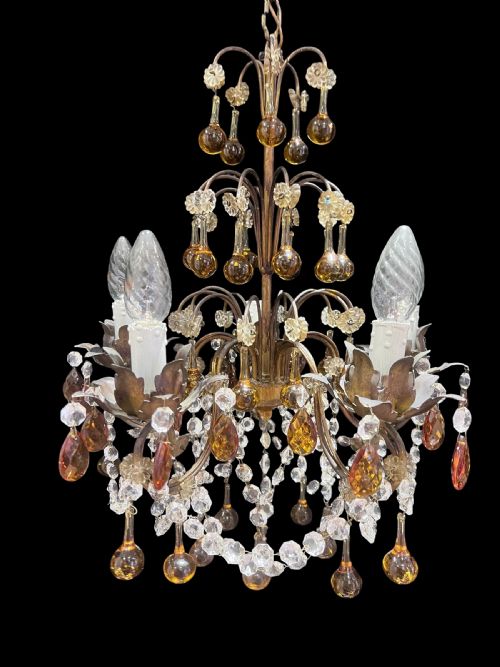
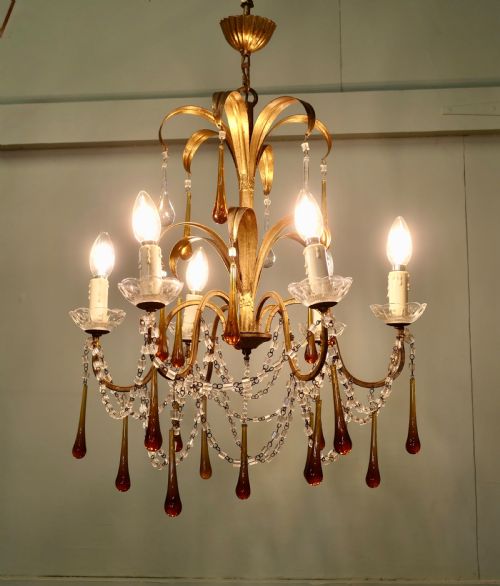
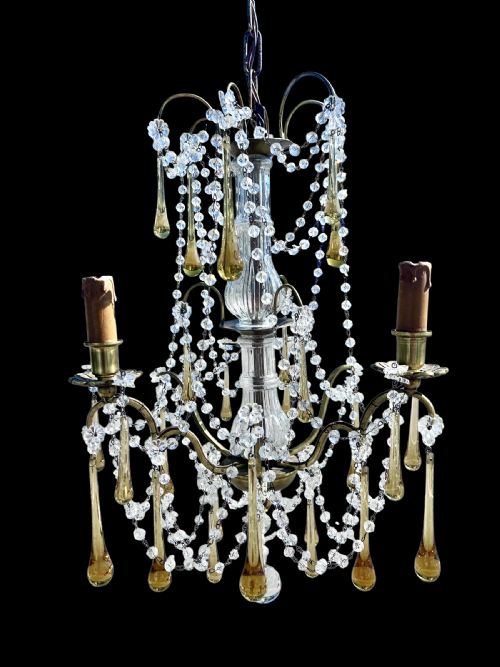
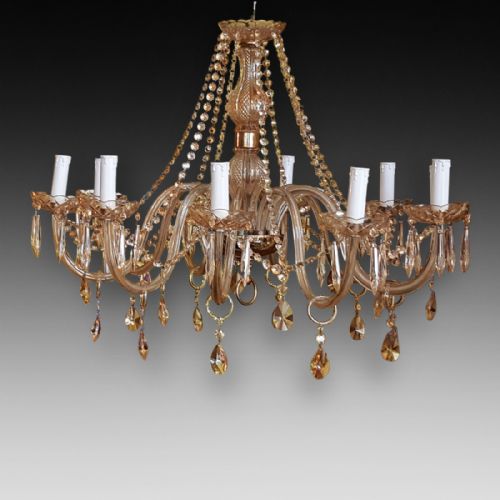
Buyers looking for this amber crystal ceiling light encounter forms ranging from basket chandeliers and multi-armed fixtures to single-tier designs hung with coloured crystal teardrops or fruit motifs. The selection encompasses smaller bedroom lights as well as monumental architectural installations.
The aesthetic impact relies heavily on the interplay between metal frames and tinted glass, casting distinctive amber and orange hues across the interior space. Dating generally from eighteen-ninety to nineteen-thirty, these fixtures reflect the ornate decorative tastes of their respective eras.
How they were made
Makers constructed the structural framework of these fixtures using brass, gilt metal and painted toleware to support the weight of the glass elements. These metallic components were cast, shaped and gilded to complement the visual warmth of the suspended drops.
The hanging components consist of lead crystal, cut glass and mirrored glass, often shaped into specific forms such as teardrops and fruits. Artisans cut and polished these glass elements to maximise light refraction from the internal candle arms or electric bulbs.
Materials documented across the inventory include lead crystal, mirrored glass, and painted toleware combined with gilt metal frameworks.
What varies in quality
Quality in these fixtures is distinguished by the depth and clarity of the crystal components and the hand-finished detail of the metal armature. Superior pieces exhibit precise facet cutting on the glass drops and more intricate casting work on the brass or gilt metal frames.
The overall compositional balance and the integration of coloured glass elements separate standard production pieces from exceptional examples. Monumental scale and complex multi-tiered configurations further elevate the execution of the design.
The Amber Crystal Ceiling Light Glossary
- Toleware
- Painted or enamelled metalware, frequently utilised in French chandelier frames to add decorative colour and surface texture. This technique provides a contrasting matte finish against reflective crystal drops.
- Basket chandelier
- A lighting form shaped like an inverted dome or basket, densely hung with crystal beads and drops that conceal the internal frame. This style directs illumination through a tightly woven cascade of glass.
- Cut glass
- Glass shaped and patterned by abrasive grinding, creating sharp facets that enhance light refraction. It differs from mould-pressed glass by possessing crisper edges and greater optical clarity.
- Gilt metal
- Metal treated with a thin layer of gold or gold-coloured finish to simulate solid or fire-gilt bronze. This treatment imparts a durable decorative sheen to the structural body of the light.
Amber Crystal Ceiling Light: Frequently Asked Questions
How do I date an amber crystal ceiling light?
Dating relies on examining the construction methods of the metal armature, the style of the glass cutting, and the wiring or mounting hardware. Pieces from the Victorian and Edwardian eras typically feature heavy brass or toleware frames paired with hand-cut crystal drops.
Later examples moving into the nineteen-thirties adopt distinct geometric styling associated with the art deco movement. Comparing the drop shapes and metal patination against documented period examples helps confirm the decade of manufacture.
Where were these ceiling lights historically used?
These fixtures were traditionally hung in principal reception rooms, grand hallways, and dining spaces where atmospheric illumination was desired. Smaller basket chandeliers and single-bulb variants were also suited for bedrooms and secondary landings.
The warm tinted glass was selected to soften the harshness of early electric lighting and gaslight conversions, creating a welcoming ambience in domestic interiors.
How do I care for crystal drops?
Maintenance involves gentle cleaning of the glass components using a mild solution and a soft cloth to remove dust without disturbing the hanging wires. Many owners prefer to clean the drops in situ rather than dismantling the entire fixture.
Care must be taken with gilt metal and brass frames to avoid abrasive cleaners that might strip the original surface finish.
Can these antique lights be rewired safely?
Most surviving period fixtures require professional rewiring to meet modern electrical safety standards before installation in a contemporary home. Qualified restorers can replace perished internal cables while preserving the original lampholders and structural integrity.
This process ensures the heavy brass and crystal assemblies can be safely mounted to standard ceiling joists.