
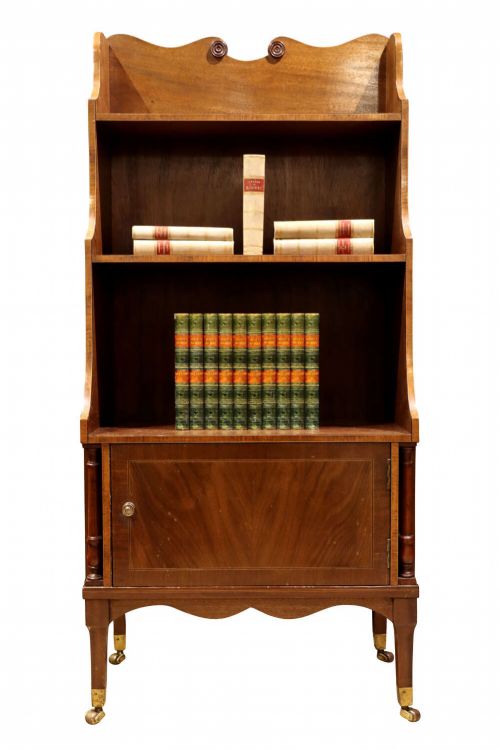


Waterfall Bookshelf Unit
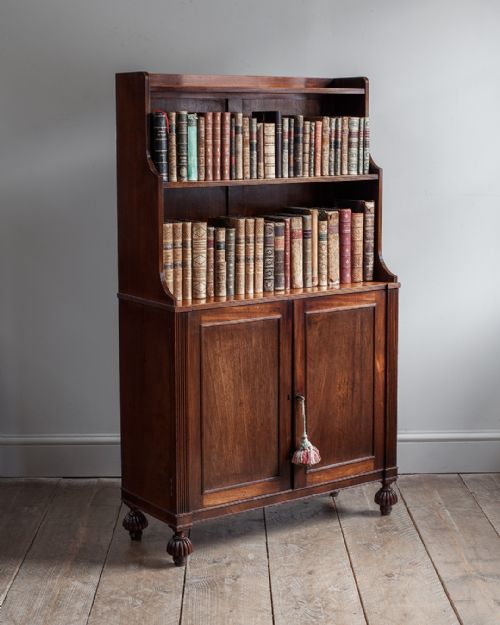
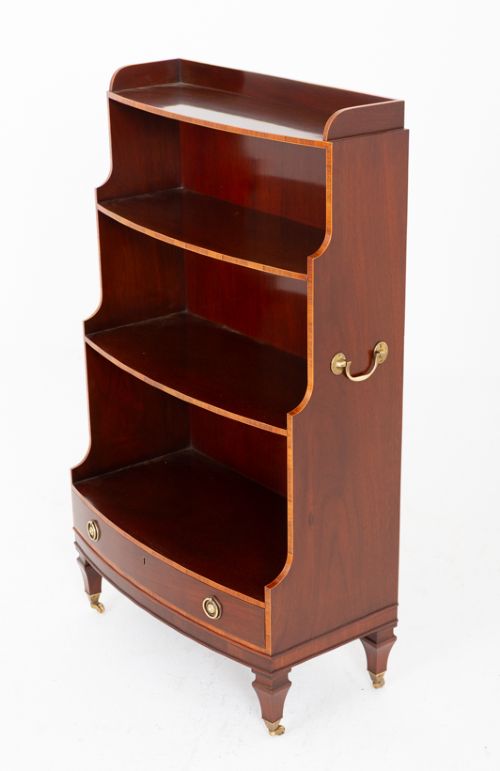
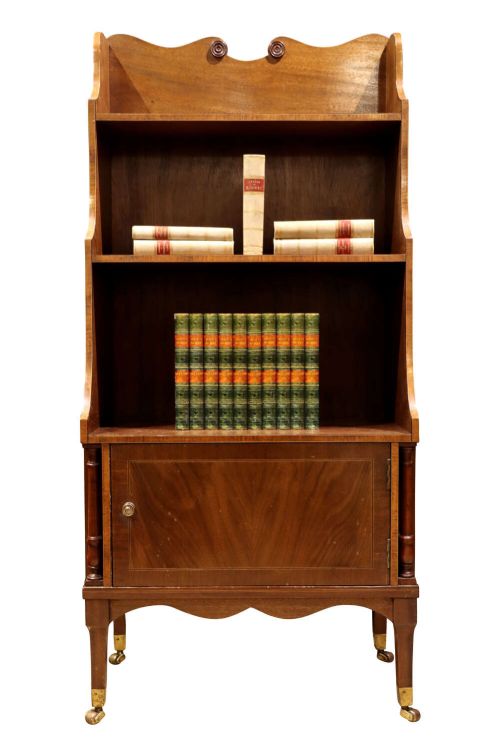
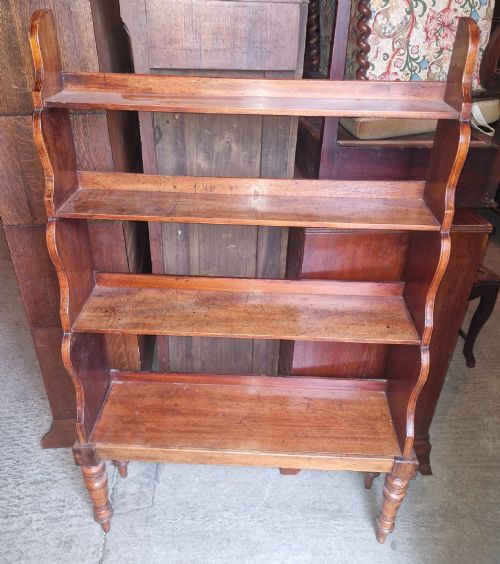
These waterfall bookshelf unit examples bring tiered, graduated shelving to a room, offering practical display space with distinctive stepped profiles.
Waterfall Bookshelf Unit
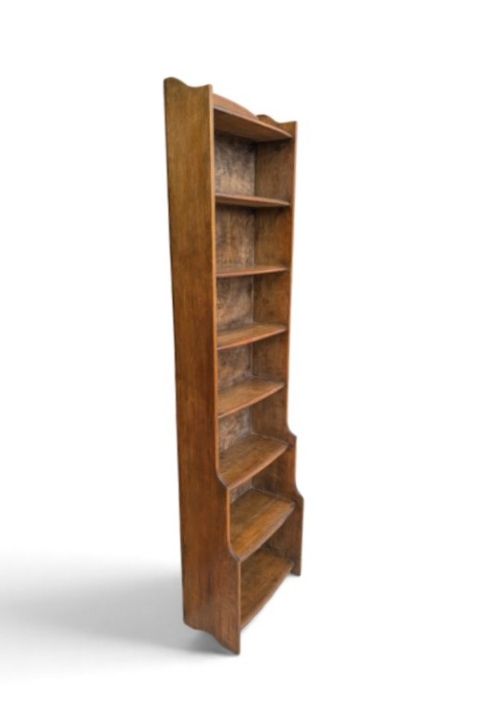
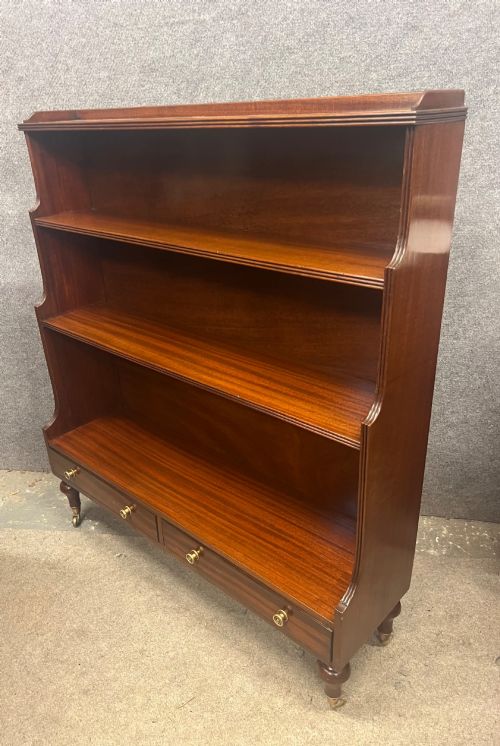
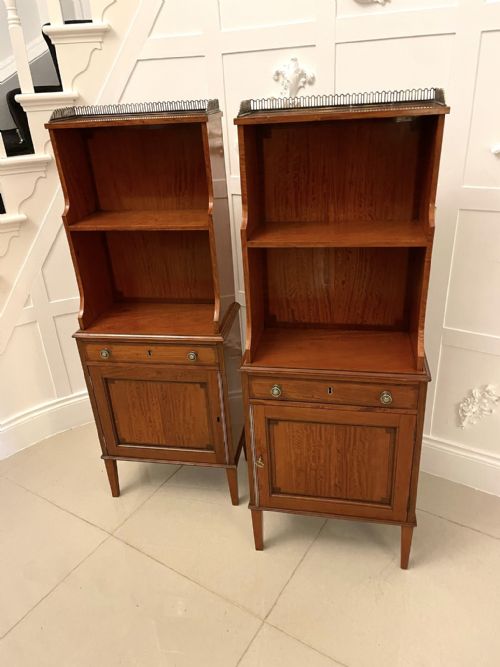
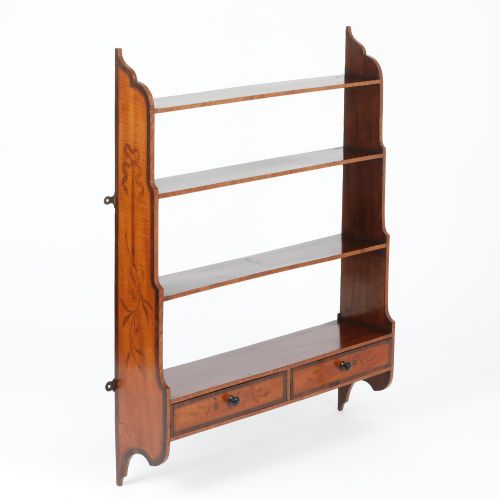
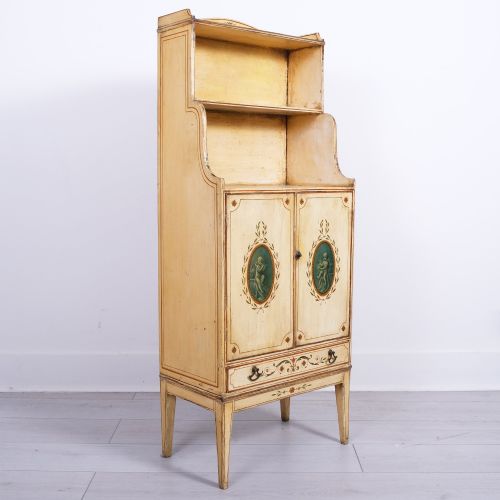
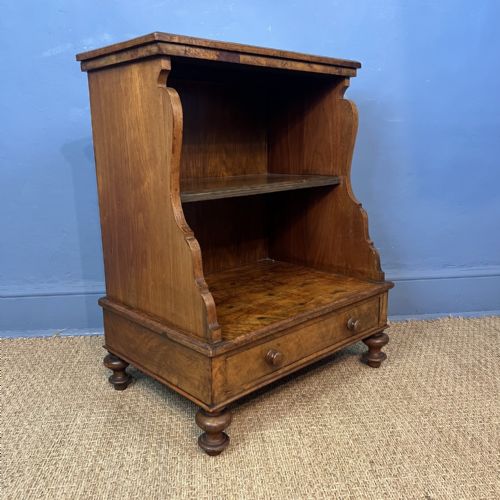
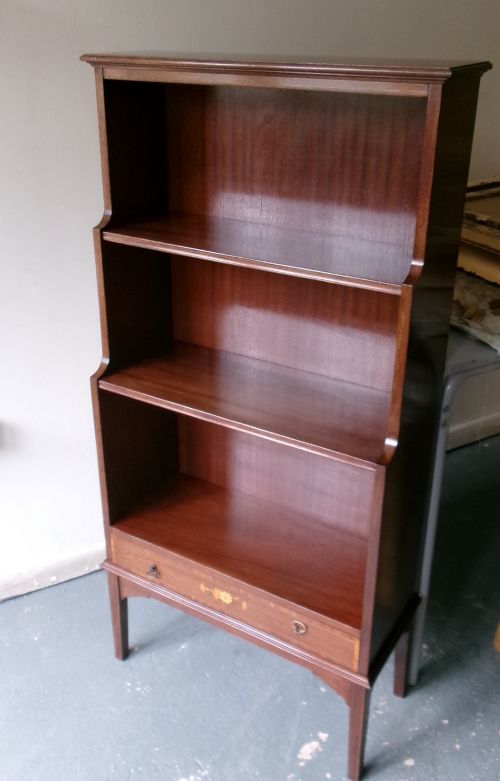
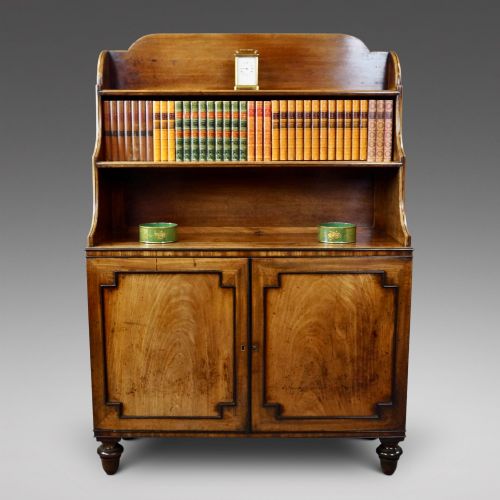
A waterfall bookshelf unit presents a distinctive tiered silhouette where each higher shelf steps back from the one below it, creating a cascading profile designed for books and display items. These items appear in various forms, ranging from freestanding floor-standing open bookcases to hanging bookshelves and low dwarf cabinets.
The pieces span multiple periods and design movements, with examples emerging from the eighteenth century through the Victorian and Edwardian eras into the early twentieth century. Regency and Georgian interpretations often feature prominently, alongside later Edwardian and Arts and Crafts variations.
Most examples encountered on this page utilise mahogany, but buyers will also find pieces fashioned from oak, rosewood, satinwood, burr walnut, and painted wood. Certain configurations incorporate lower cupboards or drawers beneath the graduated shelves.
Materials and construction methods
Cabinetmakers constructed these tiered units primarily using solid timber and veneers, frequently employing rich primary woods such as mahogany, rosewood, and satinwood. Fine decorative touches include contrasting crossbanding, delicate boxwood stringing, and brass inlay.
Structural variations include freestanding carcases mounted on brass castors, wall-mounted hanging shelves, and floor units with open galleries. Joinery techniques range from traditional cabinet assembly to fret-cut detailing seen in later Edwardian and Arts and Crafts examples.
Materials represented across the inventory include mahogany, oak, satinwood, rosewood, burr walnut, teak, yew wood, and brass.
Distinguishing quality across waterfall bookshelf unit examples
Quality reveals itself in the selection of timber figures, such as flame mahogany or burr walnut, and the precision of decorative inlays like boxwood stringing and brass work. Finer examples display meticulous attention to proportion across the graduated tiers.
The integrity of the construction, including the stability of freestanding carcases and the crispness of fret-cut details or turned supports, separates standard production from superior cabinetmaking.
Gillows·Shapland & Petter
The Waterfall Bookshelf Unit Glossary
- Waterfall bookcase
- A set of open shelves that step back progressively from bottom to top, creating a cascading profile.
- Crossbanding
- A narrow strip of veneer applied across the grain along the edge of a shelf or panel to create a decorative border.
- Stringing
- Thin inlay lines of contrasting wood, such as boxwood, used to outline panels and shelves.
- Open gallery
- A low raised railing or pierced barrier fitted around the top or sides of a shelf to keep items secure.
- Fret-cut
- Woodwork pierced with decorative patterns using a fretsaw, frequently seen on Edwardian and Arts and Crafts panels.
Waterfall Bookshelf Unit: Frequently Asked Questions
What is a waterfall bookshelf unit?
A waterfall bookshelf unit is a piece of furniture featuring multiple tiers of open shelving where each shelf is narrower than the one beneath it. This stepped design creates a cascading effect that keeps book titles visible.
Such units function as freestanding bookcases, low dwarf cabinets, or wall-hanging shelves designed for displaying books and decorative objects.
How do I date a waterfall bookshelf unit?
Dating relies on observing timber choices, construction methods, and stylistic details. Georgian and Regency pieces often showcase solid mahogany with boxwood stringing and brass inlay.
Later Victorian and Edwardian examples introduce alternative woods like rosewood, oak, and burr walnut, sometimes featuring fret-cut details or differing shelf counts.
Where should I place a waterfall bookshelf unit?
These units suit studies, living rooms, and bedrooms, offering accessible display space without dominating a room's floor area. Low dwarf variants function effectively as bedside cabinets or against lower wall spaces.
Freestanding models on castors allow for flexible placement, while hanging versions attach directly to walls to utilise vertical space.
Are all waterfall bookshelves freestanding?
Not all examples stand on the floor; the selection includes both freestanding carcases and hanging bookshelf variations designed for wall mounting. Freestanding versions often incorporate lower cupboards, drawers, or brass castors.
Hanging bookshelves provide a lighter alternative for smaller rooms while maintaining the signature stepped tier arrangement.