
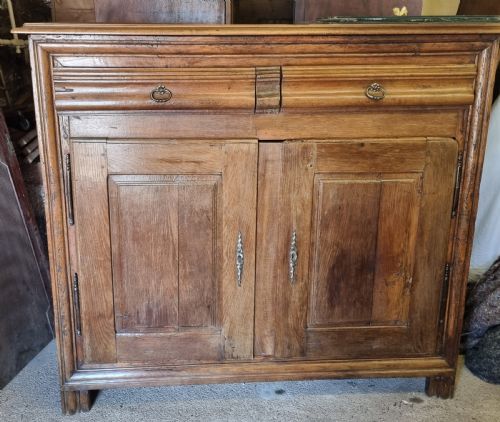


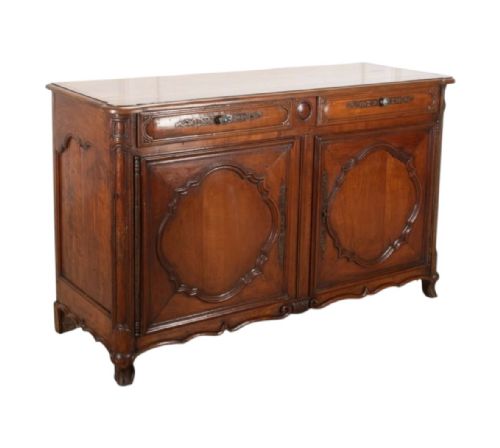


Warm Wood Credenza
A warm wood credenza grounds a room with deep timber tones and practical storage, spanning centuries of cabinetmaking from provincial French buffets to Georgian sideboards.
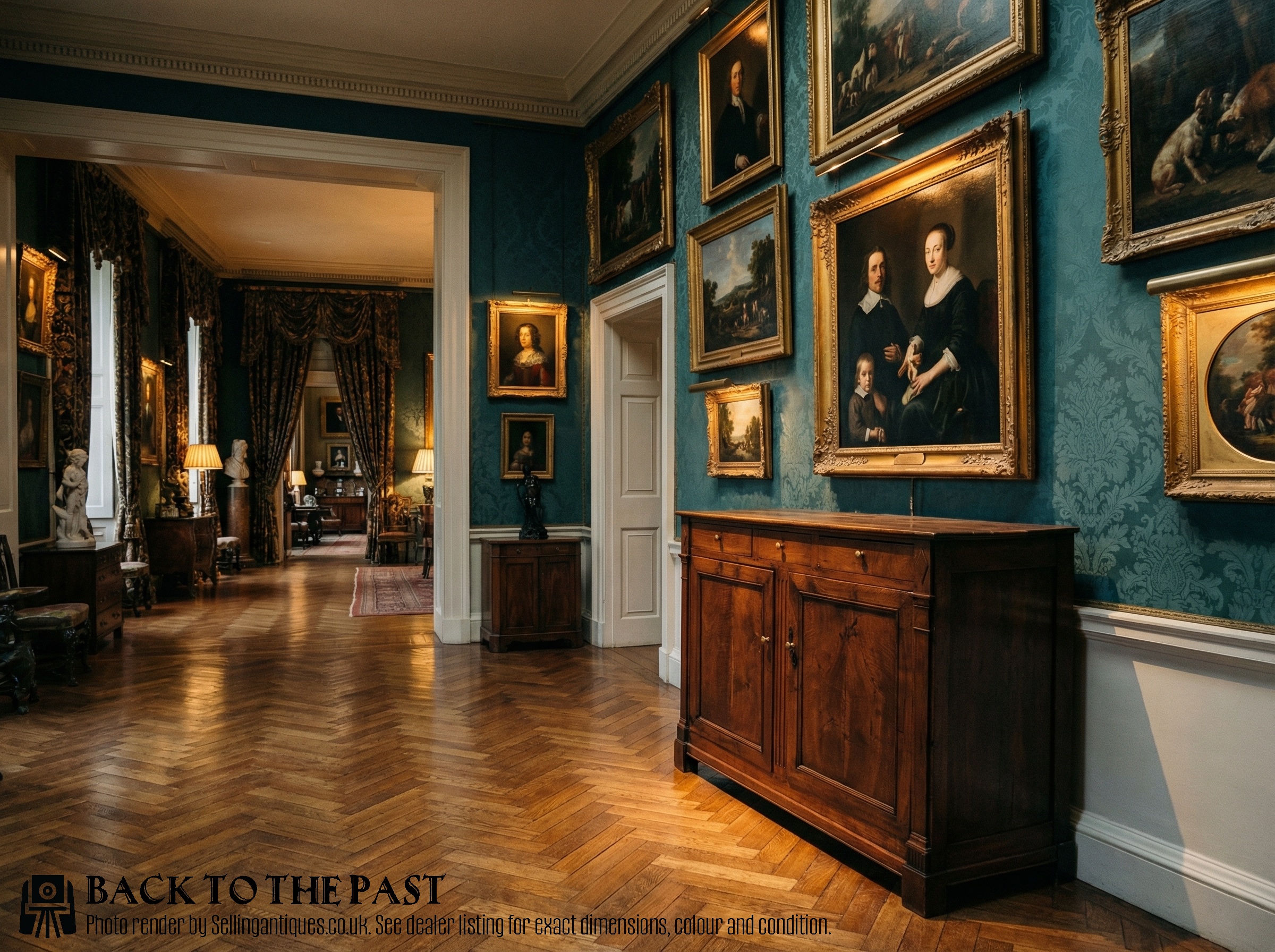
Warm Wood Credenza
The selections found here draw from a broad temporal range, encompassing 18th-century Georgian and Directoire pieces alongside 19th-century French provincial items and early 20th-century walnut marquetry. Most examples rely on foundational forms like the sideboard or the house maid cupboard.
Regional variations shape these forms distinctly, moving from Irish cedar and solid cherrywood to French fruitwood and Shanxi province style Chinese storage cabinets. Buyers encounter everything from serpentine fronts to simple two-door timber frames.
How these pieces were made
Cabinetmakers utilised dense hardwoods such as mahogany, oak, cherrywood, and pollard oak to construct sturdy carcasses capable of decades of daily service. Surfaces often incorporate contrasting satinwood inlay or intricate burr walnut marquetry to create visual depth across large panel doors.
Structural hardware relied on forged brass and iron for key escutcheons, handles, and hinges, anchoring the timber panels securely. Joinery traditions varied by region, supporting heavy shelving and deep storage compartments without modern synthetic adhesives.
House maid cupboards kept the hallways tidy long before anyone invented a hallway closet.
What varies in quality
The distinction between standard utility storage and exceptional cabinetwork rests in the selection of timber figures and the precision of inlaid veneers. Grain matching across multiple doors and the deliberate placement of burr walnut or satinwood elevate the visual impact of a piece.
Construction methods also separate utilitarian cupboards from refined formal dining furniture, visible in the handling of serpentine fronts and carved details. Fine execution of secondary timbers inside drawers and cupboards indicates the overall care invested by the original workshop.
The Warm Wood Credenza Glossary
- Credenza
- A flat-topped sideboard or cabinet traditionally used for storing and serving food. Modern usage applies the term broadly to low storage furniture with doors or drawers.
- Sideboard
- A dining room piece designed for holding table linen, silver, and china. Georgian and Victorian examples often feature deep cellarette drawers.
- Buffet
- A French-origin sideboard or cupboard built for food preparation and serving. These pieces frequently utilise regional fruitwoods, cherry, or oak.
- Marquetry
- The art of applying small pieces of veneer to a structure to form decorative patterns. Burr walnut and satinwood inlay are common applications.
- Serpentine
- A curved furniture front characterised by a convex centre flanked by concave ends. This contour requires advanced woodworking skill to execute cleanly in solid timber.
Warm Wood Credenza: Frequently Asked Questions
What is a credenza?
A credenza is a low storage cabinet originally designed for dining rooms to hold serving dishes and tableware. Over time, the term has come to encompass various sideboards, buffets, and large cupboards.
These pieces provide substantial surface space on top while concealing generous interior storage behind doors or drawers.
Where should I place a sideboard?
Sideboards traditionally sit against a dining room wall to store serving pieces and assist with meal preparation. They also function effectively in entryways or living rooms as display surfaces.
Their substantial depth and length require a wall with enough clearance to maintain smooth traffic flow around the room.
How do I care for antique timber?
Antique timber responds best to stable indoor humidity and protection from direct sunlight, which can fade rich fruitwood and mahogany finishes. Regular dusting with a soft cloth preserves the natural polish without building up residue.
Applying a traditional beeswax occasionally helps nourish older hardwoods like oak and walnut.
How do I identify Georgian furniture?
Georgian pieces date from the 18th century and are typically recognised by classical proportions, restrained carving, and high-quality mahogany or oak. Sideboards from this era often feature tapered legs and understated brass hardware.
Construction details like hand-cut dovetails and solid secondary timbers help confirm the period origins.