


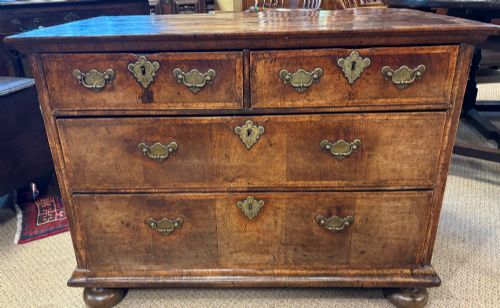
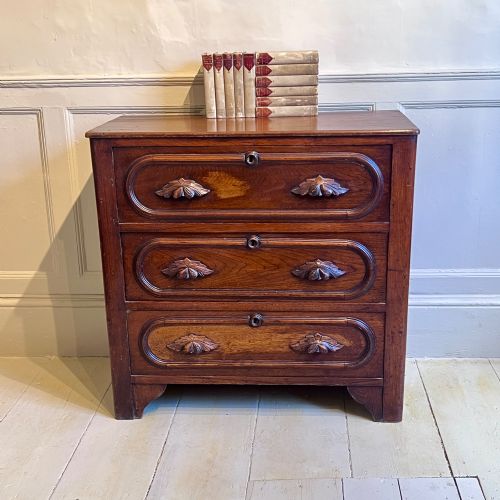
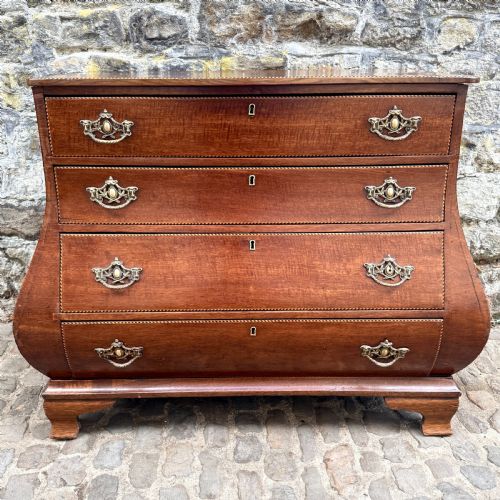
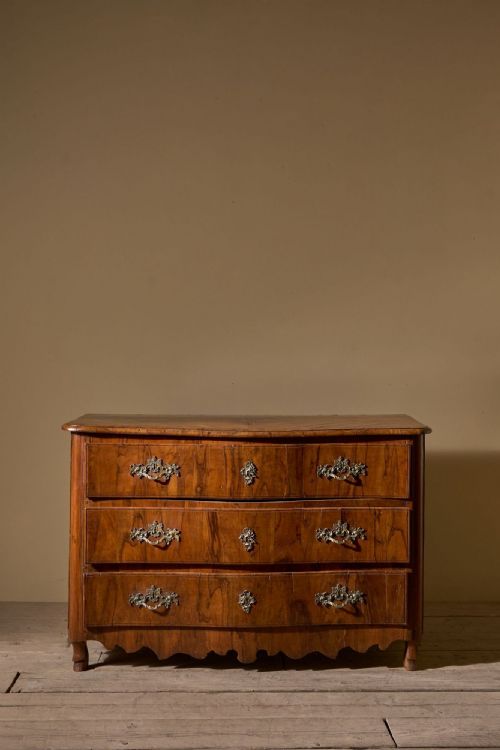
Warm Wood Chest of Drawers
A warm wood chest of drawers brings immediate depth and grain to a room, offering practical storage through centuries of craftsmanship.
Warm Wood Chest of Drawers
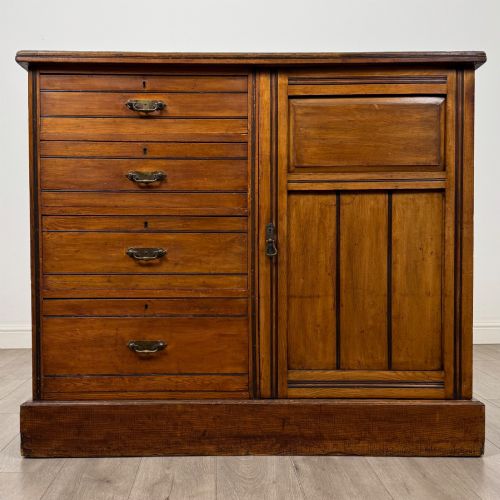
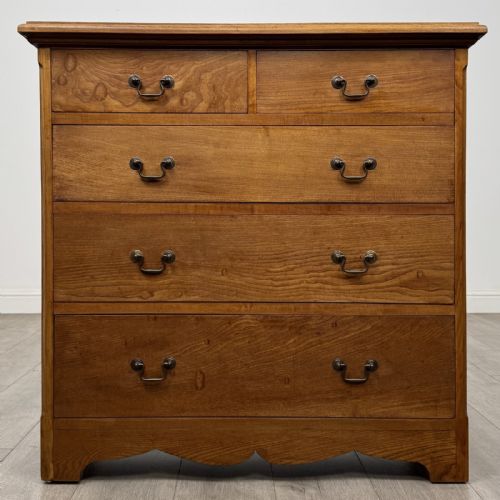
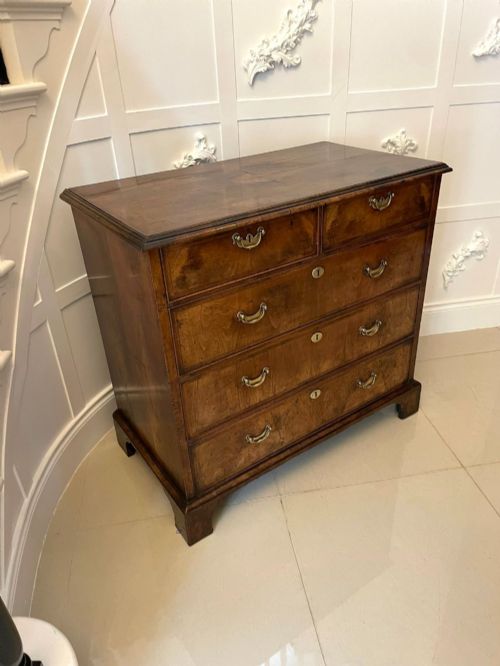
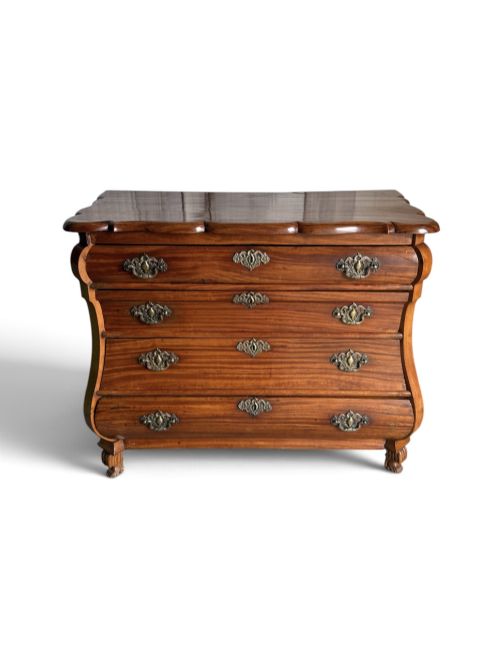
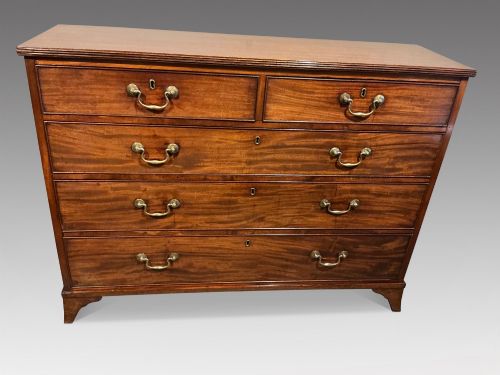
A warm wood chest of drawers serves as a functional storage piece defined by its timber construction and stacked drawer arrangement. Buyers seeking a warm wood chest of drawers encounter forms ranging from compact campaign furniture to substantial Georgian proportions.
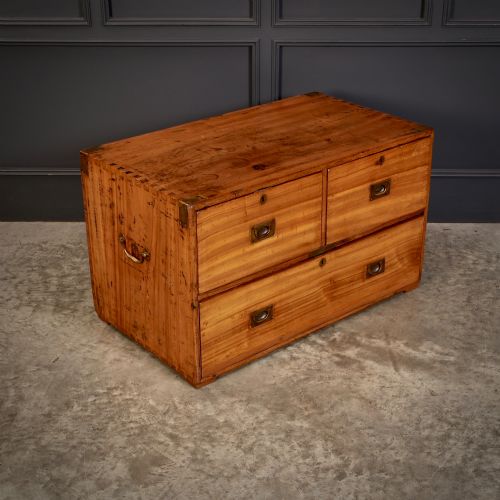
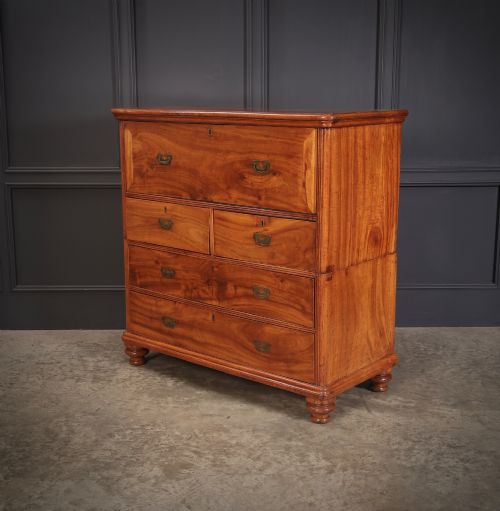
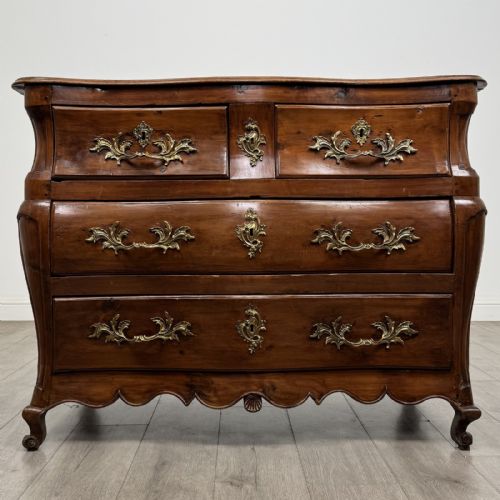
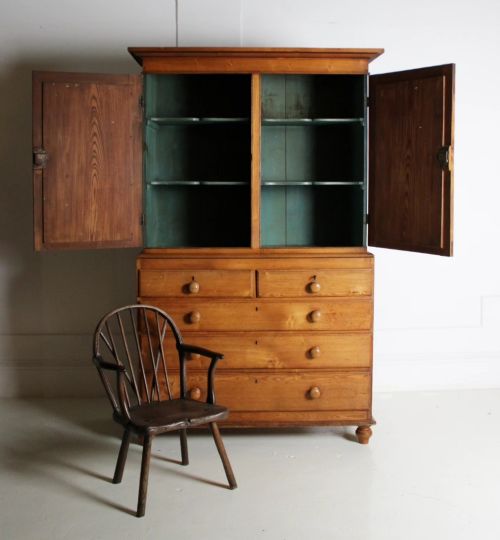
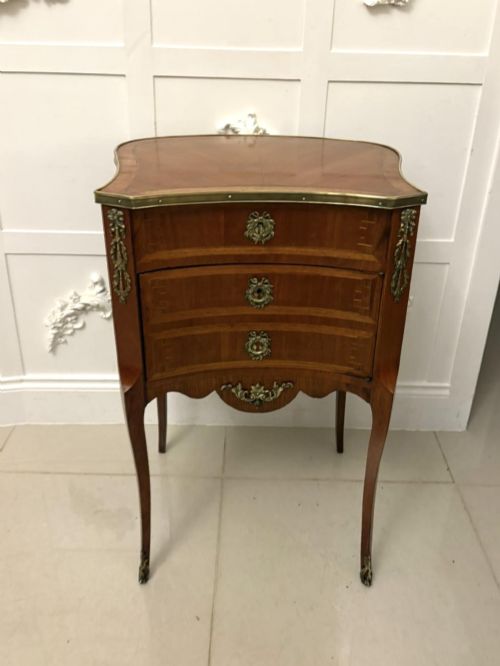
The pieces span multiple centuries, running from seventeenth-century fruitwood and oak through eighteenth-century walnut and mahogany to nineteenth-century camphor wood and cedar. Alongside standard chests, the selection includes commodes, lowboys, linen presses, and campaign designs featuring brass fittings.
Origin points vary widely, covering English, French, Dutch, American, Chinese export, and Japanese workshops. This diversity means buyers find regional interpretations of domestic storage, each utilising local timbers and vernacular detailing.
How they were made
Cabinetmakers relied primarily on solid timbers and selected veneers such as mahogany, walnut, oak, camphor wood, cherrywood, and fruitwood. These woods were chosen for their natural grain patterns and durability, often finished to enhance the inherent warmth of the material.
Construction techniques included dovetailed drawer joints and panelled carcases designed to withstand seasonal movement in the timber. Metal elements such as brass handles and corner brackets appeared on campaign pieces, while marquetry and parquetry decorated continental commodes.
Warm Wood Chest of Drawers Retail Price Guide 2026
Typical asking prices for warm wood chest of drawers among the pieces listed under this phrase on Sellingantiques today, from the lower quarter to the upper quarter. They describe what is for sale here now, not the wider market.
Periods represented span from the late seventeenth century through the Georgian and Regency eras into the late nineteenth and early twentieth centuries.
What varies in quality
Quality rests upon the selection of timber figures, such as highly figured walnut, elm, or satinwood, paired with thoughtful proportions and timber thickness. Superior pieces show restraint in their decoration, letting the natural grain and colour dominate the surface.
Construction integrity distinguishes finer examples, visible in the precision of the dovetailing, the snug fit of the drawers within their carcase, and the retention of original brass hardware or marble tops.
The Warm Wood Chest of Drawers Glossary
- Commode
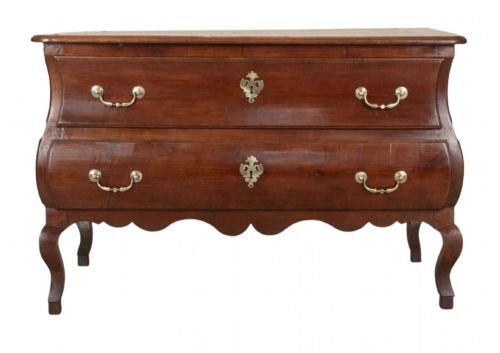
- A low chest of drawers or cabinet, frequently of French origin and associated with eighteenth-century styles. It often stands on relatively tall legs compared to standard British forms.
- Campaign chest
- A modular chest of drawers built in sections with recessed brass handles and corner brackets for transport by military officers. It is commonly constructed from camphor wood, cedar, or mahogany.
- Lowboy
- A small oak, walnut, or cherrywood table with one or more rows of drawers, functioning as a dressing table or side table. It dates predominantly from the seventeenth and eighteenth centuries.
- Linen press
- A tall cupboard featuring upper doors enclosing sliding trays for textiles above a lower bank of drawers. These pieces were essential for storing household linens before fitted wardrobes.
- Bombe
- A bulging, convex furniture profile swelling outward on the front and sides, typical of continental European case pieces. This sophisticated shaping requires advanced woodworking skill.
- Secretaire
- A cabinet or chest incorporating a fitted writing drawer with a drop-front flap and small internal compartments. It combines desk functionality with standard drawer storage.
Warm Wood Chest of Drawers: Frequently Asked Questions
What is a campaign chest?
A campaign chest is a portable set of drawers made in two or more stackable sections for military travel. They typically feature brass corner brackets and flush inset handles to prevent snagging during transit.
These pieces are most frequently constructed from durable timbers like camphor wood, cedar, or mahogany. Their modular design allowed officers to pack belongings securely on the move.
How do I care for antique wood furniture?
Antique wood pieces require stable room temperatures and protection from direct sunlight to prevent timber shrinkage and fading. Regular dusting with a dry cloth keeps the surface clean without damaging the polish.
Applying traditional beeswax occasionally helps nourish older finishes like mahogany, walnut, and oak. Avoid modern silicone sprays, which can penetrate and degrade historic wood surfaces.
What is the difference between a commode and a chest?
A commode generally refers to a decorative continental European chest of drawers, often featuring shaped fronts, marquetry, or marble tops. Standard chests typically follow British vernacular forms with simpler rectangular carcases.
French provincial and Louis styles heavily influence the commodes found in these categories. They often stand on more pronounced cabriole or tapered legs than traditional English chests.
How do I identify different furniture woods?
Identifying woods involves examining grain patterns, colour tones, and weight within the piece. Mahogany and walnut offer deep brown and reddish hues with rich figuring, while oak displays distinct medullary rays.
Camphor wood is easily recognised by its characteristic aromatic scent and pale grain. Fruitwood and cherrywood present smoother, warmer reddish-brown tones often found on country pieces.