

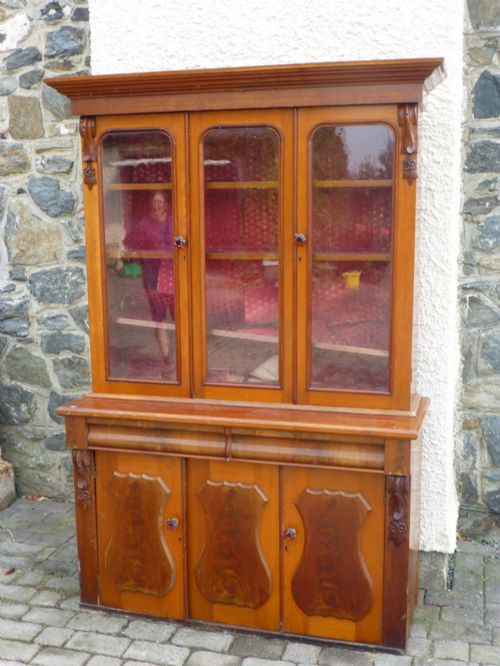
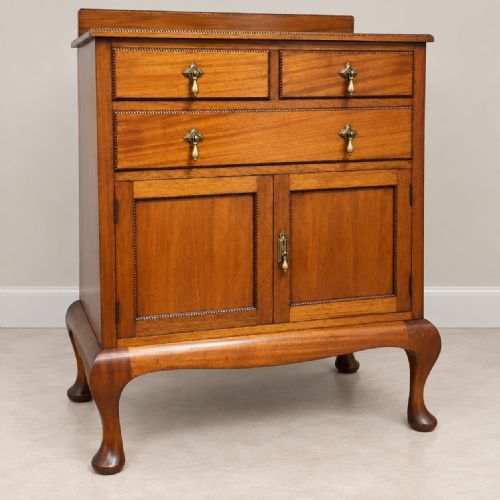
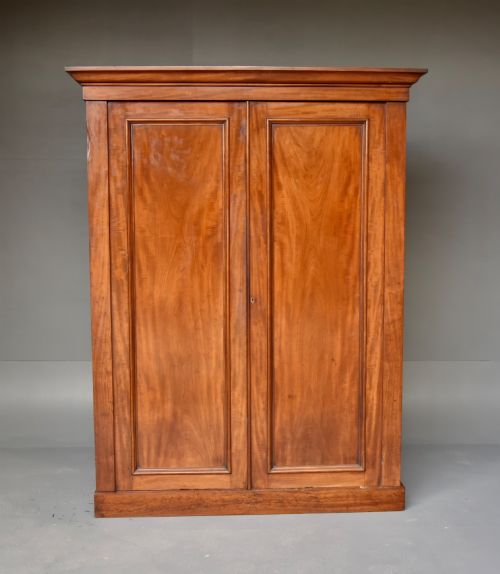


Warm Mahogany Linen Press
A warm mahogany linen press is a substantial bedroom storage piece offering deep sliding trays and drawer space, combining rich timber grain with practical vertical scale.
Warm Mahogany Linen Press
A warm mahogany linen press is a substantial storage furniture piece designed for domestic organisation, typically featuring upper cupboard doors concealing sliding trays and lower drawers.
The versions met on this page span Georgian, Victorian, and Edwardian periods, utilising rich timber tones and formal cabinet-making traditions.
Related forms appearing alongside presses include wardrobes, tallboys, and compactum units, reflecting the varied terminology used for large bedroom cupboards across different eras.
How they were made
Construction relies primarily on solid mahogany and mahogany veneers applied to secondary timbers, finished with polished surfaces that highlight the natural grain of the wood.
Interior fittings frequently include timber sliding trays, often referred to as slides, alongside brass handles, locks, and occasional glass elements in related bookcase formats.
Warm Mahogany Linen Press Retail Price Guide 2026
Typical asking prices for warm mahogany linen press among the pieces listed under this phrase on Sellingantiques today, from the lower quarter to the upper quarter. They describe what is for sale here now, not the wider market.
Early cabinet makers occasionally concealed secret compartment drawers behind the decorative sliding trays of larger presses.
What varies in quality
Quality rests in the depth of timber figure, the precision of drawer dovetailing, and the preservation of original interior sliding trays rather than later internal alterations.
Proportion and scale distinguish finer architectural examples, where cornices, panel arrangements, and brass hardware display considered design rather than plain utility.
Maple and Co
The Warm Mahogany Linen Press Glossary
- Linen press
- A tall cabinet with upper doors enclosing sliding trays, originally intended for storing folded textiles and garments before hanging wardrobes became standard.
- Sliding tray
- A shallow internal shelf that pulls out horizontally, allowing folded items to be stacked and accessed without disturbing the entire pile.
- Compactum
- A multi-compartment wardrobe combining hanging space, drawers, and linen shelves within a single unified cabinet structure.
- Cornice
- The decorative moulded projection that crowns the top of the cabinet, adding architectural definition to the piece.
- Dovetail
- A traditional interlocking joint used in drawer construction, prized for its structural strength and resistance to pull forces.
Warm Mahogany Linen Press: Frequently Asked Questions
What is inside a linen press?
Inside the upper section you typically find a series of pull-out wooden sliding trays designed for storing folded linen and clothing. The lower section usually contains a chest of drawers for additional storage.
These interior configurations made them essential bedroom furniture before full-length hanging wardrobes became the dominant domestic storage choice.
How do I date a mahogany press?
Dating relies on examining construction methods, timber choice, hardware styles, and overall architectural proportions. Georgian pieces often display finer cornices and bracket feet, while Victorian examples tend to be heavier and more robust.
Secondary woods used inside drawers and backboards also provide clues to the period and region of manufacture.
Can I remove the sliding trays?
The internal sliding trays are generally built into the fixed framework of the upper compartment. Altering them to create hanging space requires professional joinery work.
Many collectors prefer to keep the interior in its original configuration to preserve the historical integrity and utility of the piece.
Where should I place a large press?
Because these cabinets are exceptionally tall and heavy, they require a stable wall and sufficient ceiling clearance. Measure both the footprint and the overall height before positioning.
Keeping them away from direct heat sources and strong sunlight protects the mahogany polish and prevents timber movement over time.