

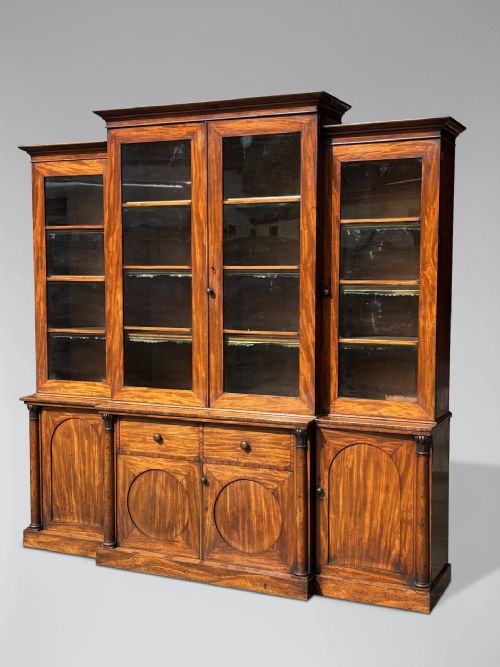


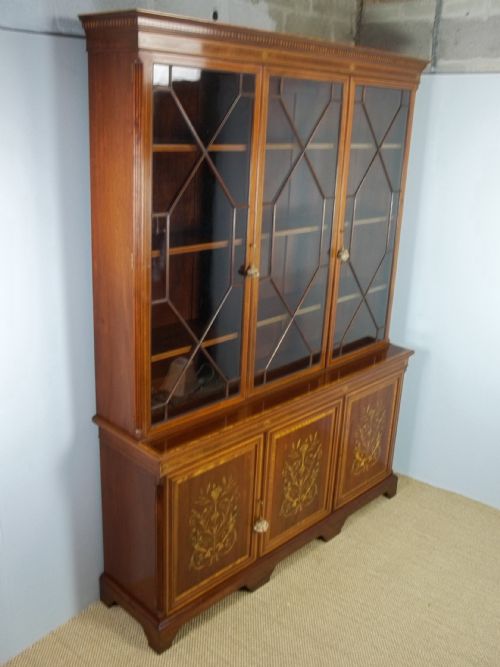


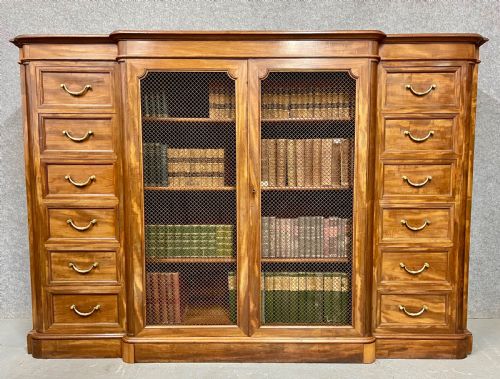

Warm Brown Breakfront Cabinet
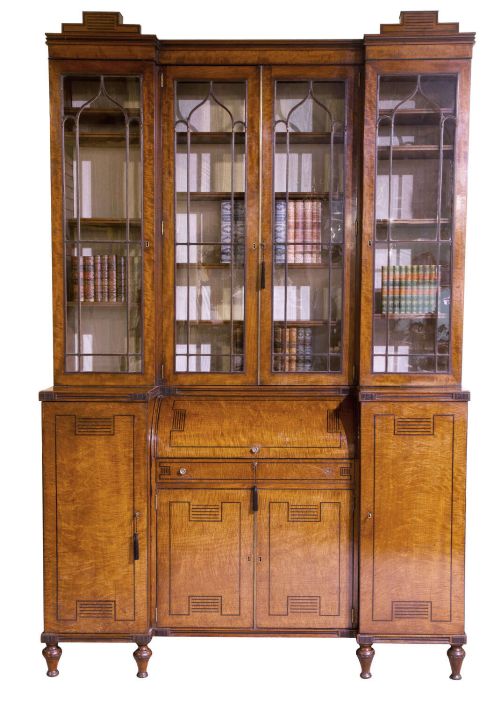
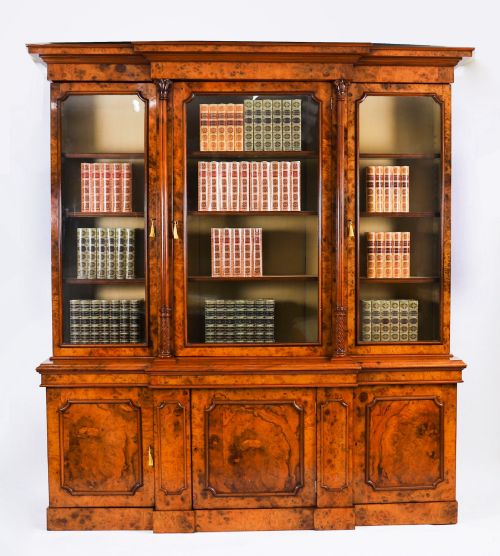
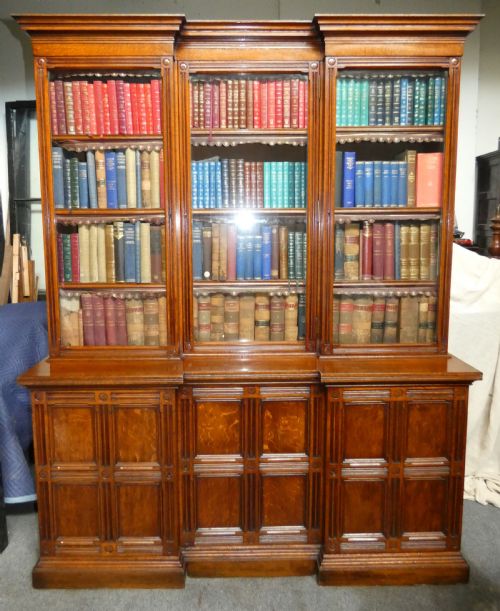
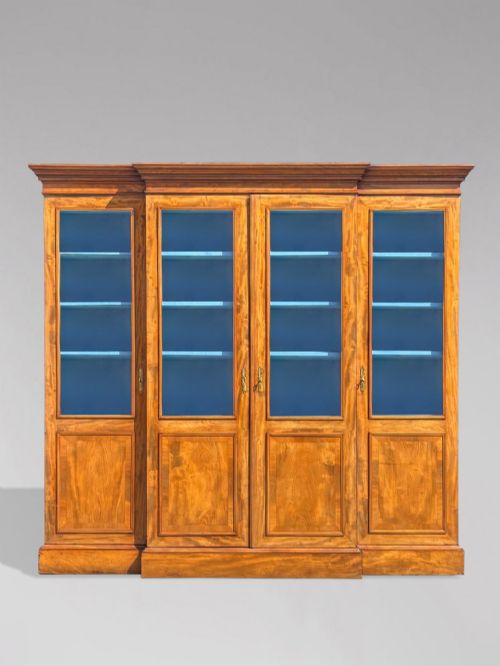
A warm brown breakfront cabinet offers substantial storage and display presence, uniting rich timber tones with a recessed central section.
Warm Brown Breakfront Cabinet
A warm brown breakfront cabinet is a large storage piece characterised by its stepped facade, where the central section projects forward from the flanking wings. When searching for a warm brown breakfront cabinet, buyers encounter substantial bookcase furniture, library pieces, and sideboards built across several historical eras.
The selections available range from Georgian mahogany examples to Victorian Gothic oak versions and later twentieth-century interpretations. These pieces function primarily as bookcases, display cabinets, and large storage cupboards designed to anchor a principal room.
Makers utilised rich native and exotic timbers to construct these prominent architectural pieces, creating deep natural colouring through French polishing and waxing. Buyers are most likely to meet mahogany, oak, and walnut constructions featuring glazed, panelled, or wire mesh doors.
How they were made
Cabinetmakers constructed these large storage units using dense hardwoods such as mahogany, oak, walnut, and cherrywood, often over secondary pine or deal carcases. Timber selection determined the structural integrity required to support tall upright bookcase sections and heavy cornice mouldings.
Surface decoration relied on natural grain patterns, marquetry inlay, and carved architectural details rather than applied paint finishes. Glazing bars divided glass panels in library bookcases, while brass hardware secured large doors and interior shelving.
Warm Brown Breakfront Cabinet Retail Price Guide 2026
Typical asking prices for warm brown breakfront cabinet among the pieces listed under this phrase on Sellingantiques today, from the lower quarter to the upper quarter. They describe what is for sale here now, not the wider market.
Materials recorded in current stock include oak, mahogany, walnut, cherrywood, rosewood, Gonçalo Alves, brass, glass, marble, and wire mesh.
What varies in quality
The distinction between tiers of quality rests upon timber selection, such as the choice of figured mahogany or burr walnut veneers, and the crispness of carved mouldings. Superior examples demonstrate precise cabinet joints, well-fitted doors, and balanced proportions across the projecting central breakfront section.
Interior fittings, including adjustable shelving systems, solid backboards, and original brass or steel hardware, distinguish finer workshops from more utilitarian production. The depth of the timber's patina and the integrity of structural timber further separate standard pieces from exceptional library furniture.
Edwards and Roberts
The Warm Brown Breakfront Cabinet Glossary
- Breakfront
- An architectural furniture form where the central section projects forward from the flanking wings. This layout creates visual depth and breaks up the flat facade of large bookcases and sideboards.
- Gonçalo Alves
- A dense exotic hardwood prized for its striking contrasting grain patterns. Makers utilised this timber in Regency furniture to create highly decorative surfaces.
- Marquetry
- The art of applying decorative veneer pieces to a structure to form geometric or pictorial designs. Craftsmen employed contrasting woods to produce elaborate surface patterns on cabinet doors.
- Chiffonier
- A low sideboard or cabinet equipped with drawers and enclosed shelving below. Victorian examples often incorporated glazed doors or mirrored superstructures.
- Transitional style
- A design phase bridging distinct decorative periods, notably combining Rococo curves with Neoclassical straight lines in eighteenth and twentieth-century cabinetmaking.
Warm Brown Breakfront Cabinet: Frequently Asked Questions
What is a breakfront cabinet?
A breakfront cabinet is a large storage unit featuring a central section that steps forward from the flanking left and right sections. This architectural form adds depth and visual interest to bookcases and sideboards.
Cabinetmakers built these pieces to house extensive book collections or display valued possessions while providing enclosed lower storage behind wooden doors.
How do I date an antique cabinet?
Dating relies on examining the construction methods, timber species, hardware, and stylistic details visible on the piece. Regency pieces often display exotic timbers and classical motifs, while Victorian versions frequently utilise heavy oak or walnut.
Secondary woods inside drawers, backboards, and dovetail joints provide further clues regarding the period of manufacture and workshop origin.
Where should I place a large bookcase?
Large bookcases and breakfront cabinets require substantial wall space and stable ambient conditions away from direct heat sources. Placing them in libraries, dining rooms, or large living spaces allows the proportions to anchor the room.
Because these units are heavy and tall, securing them to the wall ensures safety, particularly when dealing with historic timber furniture.
What woods were used for these cabinets?
Cabinetmakers utilised a variety of native and imported timbers, including mahogany, oak, walnut, cherrywood, and rosewood. Rich brown tones predominated across Georgian and Victorian workshop production.
Finer examples incorporated decorative veneers like burr walnut or exotic species such as Gonçalo Alves to highlight the front-facing panels and cornices.