



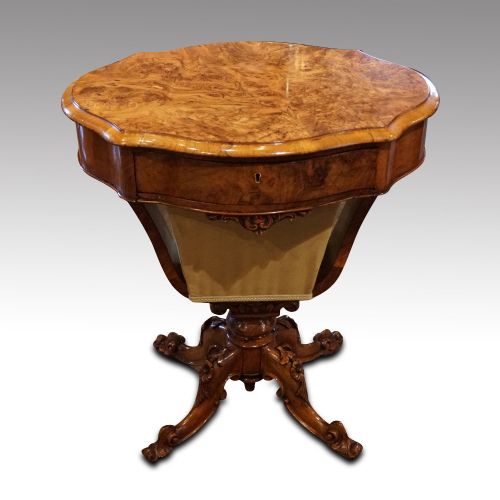


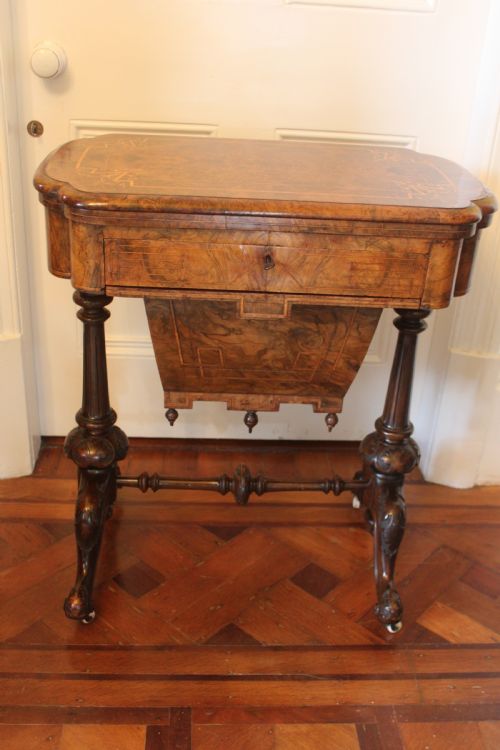


Walnut Worktable
A walnut worktable combines practical storage for needlework with the rich grain of burr timber.
Walnut Worktable
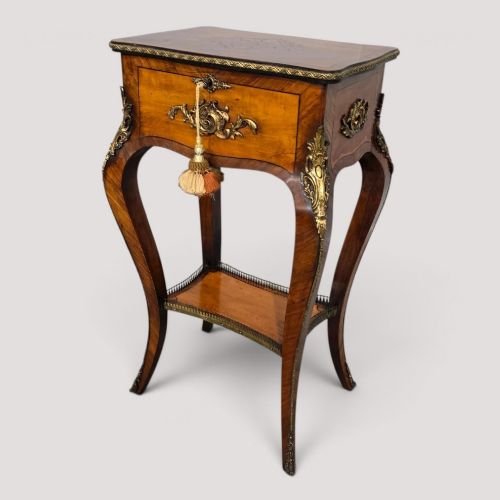
When you search for a walnut worktable, you encounter a specialised piece of nineteenth-century furniture designed for sewing, writing and light domestic tasks. These tables frequently combine an internal compartment or bag for threads and fabrics with a sturdy wooden frame.
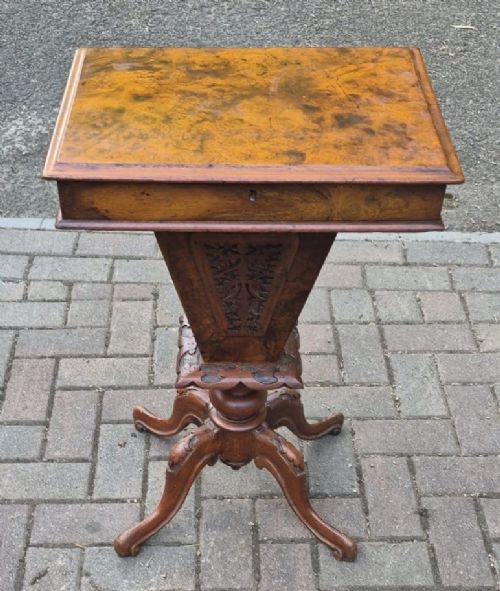
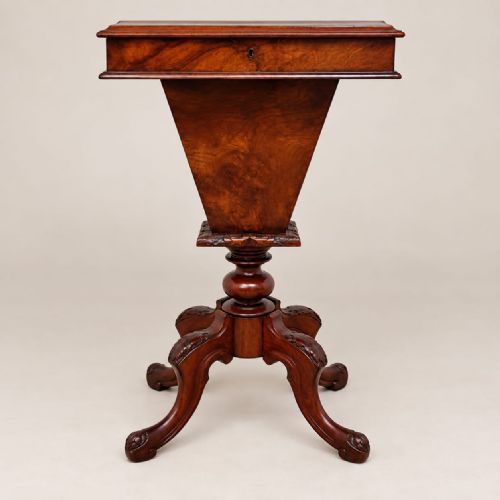
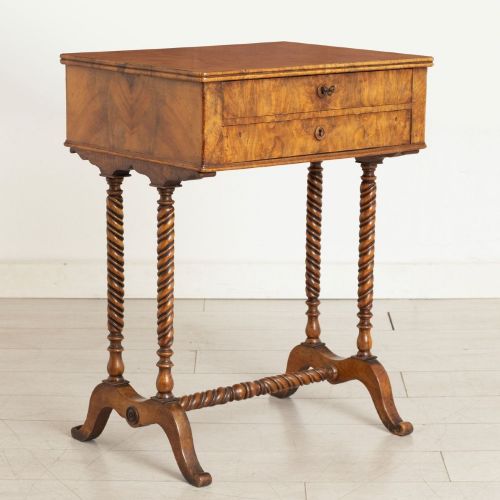
The pieces listed here lean heavily towards the Victorian period, appearing in forms such as sewing tables, games tables and trumpet workboxes. You will also find occasional variations like oval formats and pedestal designs supported on carved or turned legs.
How They Were Made
Cabinet makers utilised solid walnut and decorative burr veneers over secondary timbers to achieve a rich surface appearance. The lids and tops often incorporate wood inlay, boxwood, marquetry inlay and fruitwood inlay to create geometric or floral patterns.
Structural elements rely on carved and turned supports, sometimes featuring brass accents or fitted interior compartments lined with fabric and leather. Construction methods from the nineteenth century prioritised stability in small-scale occasional furniture.
Walnut Worktable Retail Price Guide 2026
Typical asking prices for walnut worktable among the pieces listed under this phrase on Sellingantiques today, from the lower quarter to the upper quarter. They describe what is for sale here now, not the wider market.
The listings on this page span the Victorian period, featuring materials such as burr walnut, boxwood, marquetry, and fruitwood inlay.
What Varies in Quality
The visual appeal of a walnut worktable rests largely on the choice of burr veneer and the precision of the inlay work. Finer examples display symmetrical grain patterns and intricate boxwood or fruitwood detailing across the lid and frieze.
Construction details such as carved supports, the execution of turned pillars, and the completeness of internal sewing fittings separate standard pieces from exceptional ones. The integration of combined functions, such as games boards or writing surfaces, also elevates the complexity of the piece.
The Walnut Worktable Glossary
- Burr Walnut
- Timber featuring knotted or twisted grain patterns that create highly decorative swirling figures when sliced into veneer.
- Trumpet Workbox
- A sewing table characterised by an octagonal or cone-shaped body widening towards the base, resembling the bell of a musical instrument.
- Marquetry Inlay
- The art of applying small pieces of various woods to a structure to form decorative pictures or ornamental patterns.
- Boxwood
- A dense, pale yellowish wood frequently utilised for contrasting stringing and fine inlay details on dark cabinet surfaces.
Walnut Worktable: Frequently Asked Questions
What is a walnut worktable?
A walnut worktable is a nineteenth-century small table equipped with drawers, boxes or fabric bags intended for sewing and needlework.
Many examples also incorporate folding tops for playing games or writing letters.
How do I identify a Victorian piece?
Victorian examples generally show the characteristic dark grain of walnut, often enhanced with burr veneers and fine boxwood or fruitwood inlay.
They rely on turned and carved wooden supports rather than the straight lines associated with earlier Regency furniture.
Where were these tables used?
These tables sat in nineteenth-century drawing rooms and ladies' boudoirs where domestic handcrafts took place.
Their compact size allowed them to function easily as decorative side or occasional tables when not in active use.
What are trumpet workboxes?
Trumpet workboxes are a specific form of sewing table featuring a flared octagonal body mounted on a pillar and tripod base.
The hinged lid opens to reveal partitioned compartments for storing cottons, needles and tools.