





Walnut Workbox Table
A walnut workbox table combines a compact storage compartment for needlework with a steady surface, offering both utility and rich timber grain.

Walnut Workbox Table
A walnut workbox table serves as a dual-purpose piece of furniture designed for domestic needlework and small crafts. These tables typically feature a fitted interior beneath the lid or a suspended bag for sewing materials.
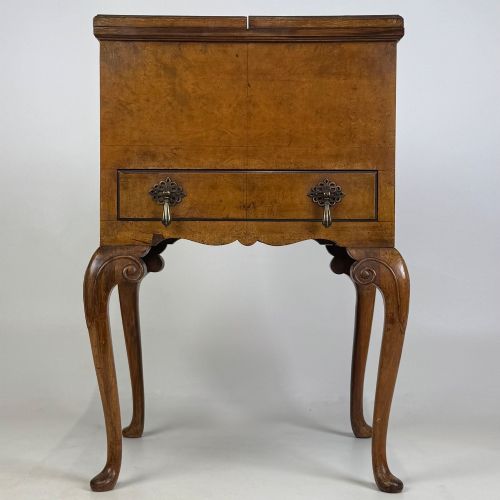
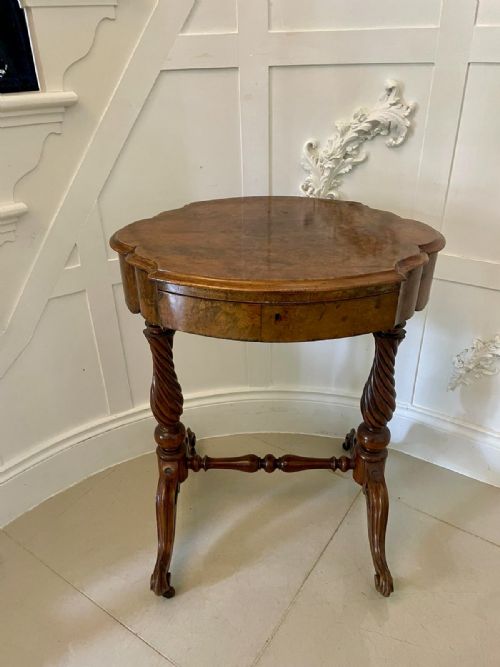
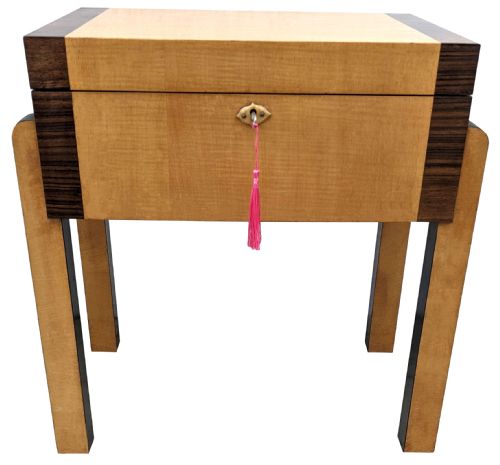
Most examples found here date from the Victorian era, spanning the mid to late nineteenth century, alongside occasional Edwardian and Art Deco pieces. The forms range from trumpet-shaped pedestals and tripod bases to freestanding occasional and games tables.
Makers utilised rich timber figures, frequently pairing the main body with contrasting stringing and decorative motifs. Buyers encounter these versatile items functioning as lamp tables, side tables or compact jewellery storage in modern rooms.
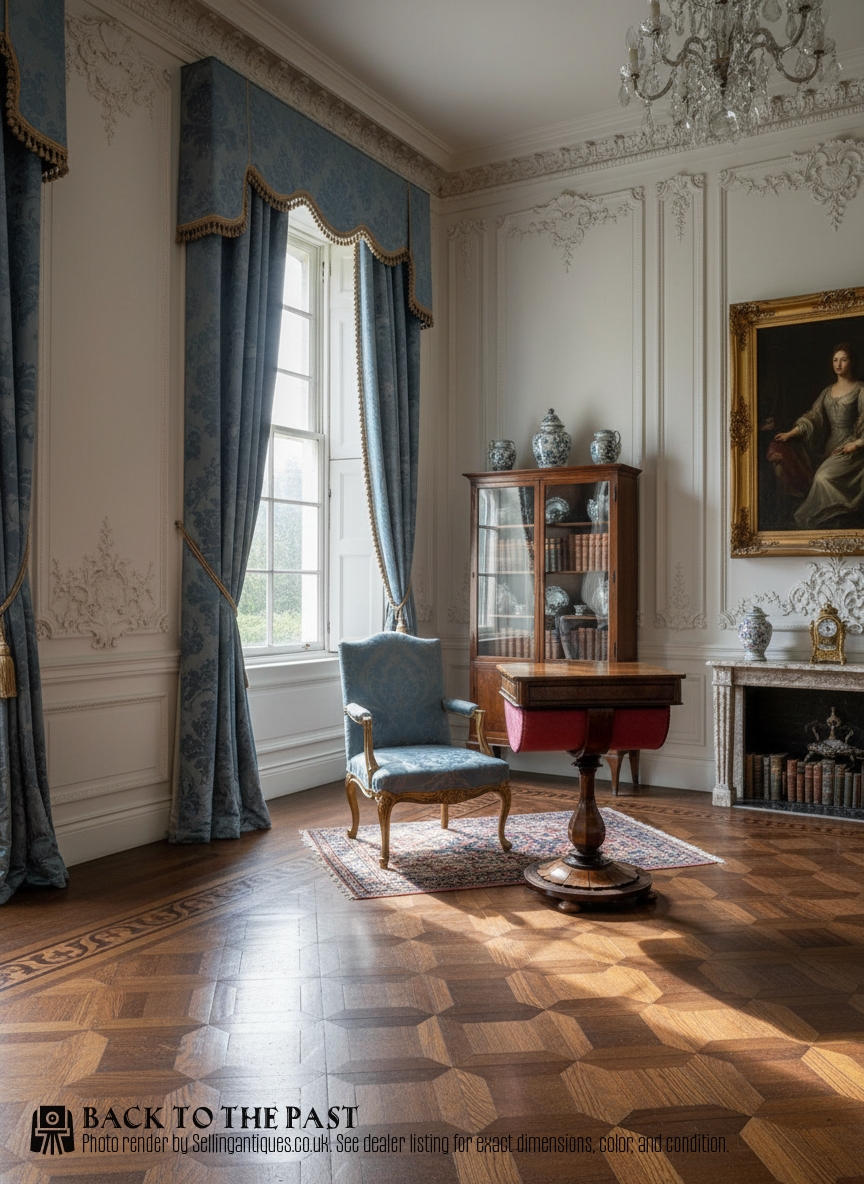
How they were made
Cabinet makers built the foundational carcase using solid timbers before applying veneers of walnut and burr walnut across the visible surfaces. Burr walnut yields highly figured, swirling patterns that define the aesthetic of the better pieces.
Many examples incorporate marquetry and wood inlay, utilising boxwood and satinwood to create intricate floral or geometric motifs across the tops and lids. Brass hardware, such as hinges, locks and small castors, provides functional articulation and structural detail.
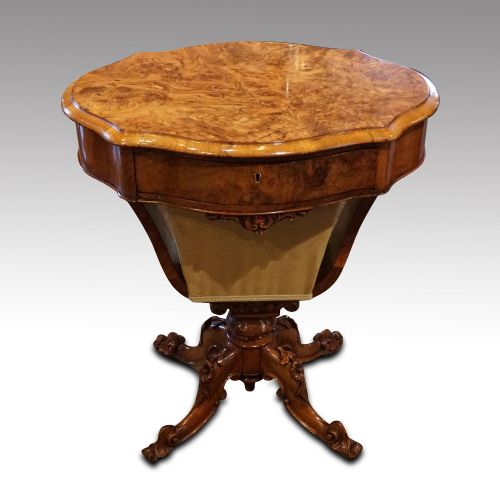
Interior compartments often feature fitted trays lined with fabric to organise threads, needles and small tools. Trumpet workboxes employ a distinctive cone-shaped wooden body expanding outwards from a central pedestal base.
Early makers occasionally hid secret compartments inside the sewing wells to keep private letters safe from curious household staff.
What varies in quality
The choice of timber grain sets the visual standard, with dense, highly figured burr walnut commanding greater attention than plain, straight-cut walnut boards. The crispness of the wood inlay and marquetry, particularly where boxwood and satinwood meet the dark walnut background, indicates the skill of the original workshop.
Structural complexity influences the character of the piece, as seen in the transition from simple rectangular boxes on stands to faceted trumpet forms with carved tripod legs. Interior fitted compartments that retain their original fabric lining and divided wooden trays demonstrate a higher degree of initial craftsmanship and careful retention.
Proportion and stability matter greatly in pedestal designs, where a well-balanced tripod base ensures the table stands firmly while supporting the weight of the hinged workbox above.
The Walnut Workbox Table Glossary
- Burr walnut
- A specialised timber veneer taken from the knotted growths of a walnut tree, prized for its swirling, highly decorative grain patterns. Cabinet makers used it on prominent surfaces like table tops and lids.
- Trumpet workbox
- A nineteenth-century sewing table featuring a distinctive cone-shaped body that flares outwards toward the top, typically supported on a pillar and tripod base.
- Marquetry inlay
- Decorative patterns formed by fitting contrasting pieces of wood veneer, such as boxwood and satinwood, into the walnut surface to create pictorial or geometric designs.
- Work table
- A multi-functional piece of furniture designed primarily for needlework, housing a storage compartment and often incorporating a folding top for writing or playing games like chess and draughts.
Walnut Workbox Table: Frequently Asked Questions
What is inside a walnut workbox table?
Inside the main compartment under the lid, these tables usually contain a fitted wooden tray divided into small sections for holding spools, needles and thimbles. Many Victorian examples also feature a suspended fabric bag beneath the body to catch loose textiles and wool.
Some variations combine the sewing storage with a games board top, revealing a checkerboard or backgammon layout when unfolded, or incorporate small compartments specifically designed to hold jewellery.
How do I date a walnut workbox table?
Dating relies on observing the combination of materials, form and construction methods visible across the piece. Mid-nineteenth-century Victorian examples frequently display rich burr walnut veneers and trumpet pedestals, while later Edwardian versions often incorporate lighter stringing and simpler cabinet frames.
Art Deco pieces from the twentieth century introduce smoother geometric lines, contrasting satinwood details and streamlined pedestal supports. Examining the interior hardware and timber construction helps narrow the decade of manufacture.
Where should I place one at home?
These compact tables fit easily beside a sofa or armchair, functioning effectively as an occasional lamp table or a bedside stand. Their small footprint makes them suitable for narrow hallways or reception rooms where surface space is limited.
The enclosed storage compartments provide a practical spot to keep small everyday items out of sight while maintaining a decorative surface for lighting or display.
How do trumpet workboxes differ from other styles?
Trumpet workboxes are defined by their characteristic cone-shaped wooden body that tapers down to a central pillar, standing on three carved feet. This pedestal construction distinguishes them from four-legged cabinet or sewing table forms.
The flared shape maximises interior storage capacity while keeping the floor footprint small, making them a popular choice throughout the Victorian period.