

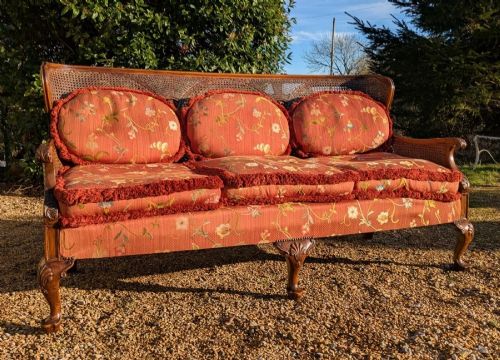


Walnut Wood Settee
These walnut wood settees combine rich timber frames with period upholstery, offering both practical seating and strong historical character for your home.
Walnut Wood Settee
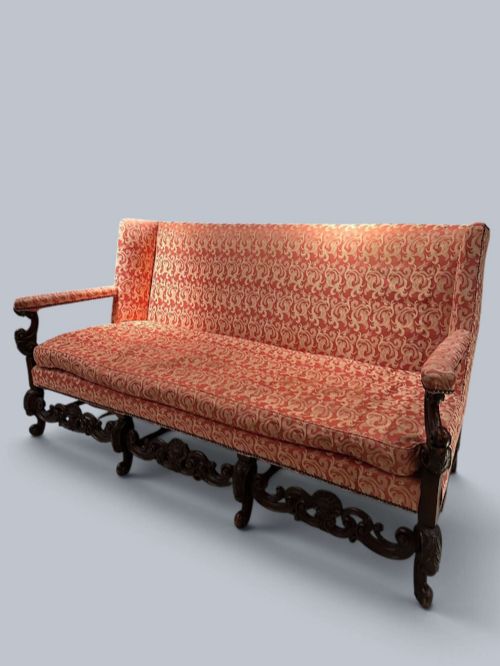
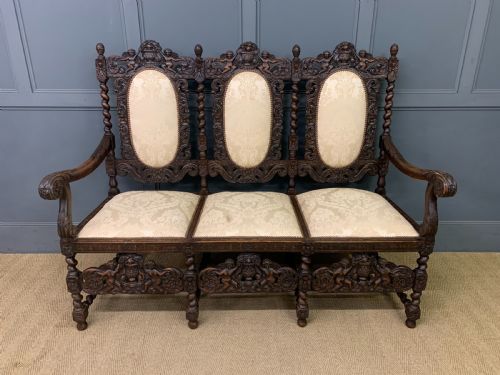
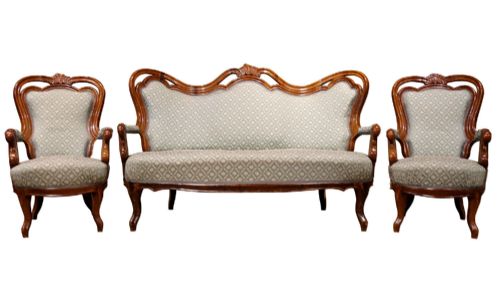
A walnut wood settee brings substantial nineteenth-century seating into modern interiors, drawing on Victorian, revival, and continental designs. You will encounter everything from compact double-end sofas and chaise longues to expansive salon suites and carved canapés.
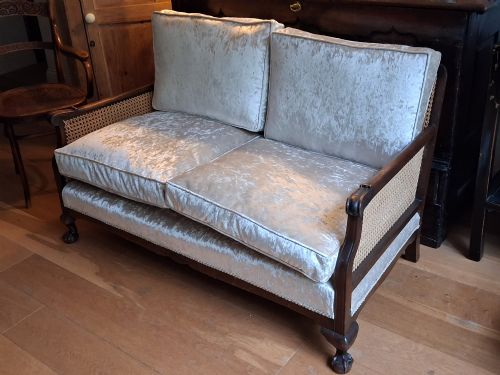
The materials span solid walnut frames paired with traditional coverings like velvet, leather, fabric, and cane work. Many pieces reflect revival aesthetics including Rococo, French Louis XV, Carolean, and Georgian influences.
How they were made
Makers shaped structural frames from solid walnut, often applying deep relief carving to show off the grain and tone of the timber. Joinery relied on traditional mortise and tenon methods to handle the weight and pressure of daily use.
Upholstery techniques combined sprung foundations with horsehair or feather fillings, secured beneath heavy textiles, velvet, leather, or woven cane panels. Brass elements occasionally appear as decorative accents or castors on feet.
Walnut Wood Settee Retail Price Guide 2026
Typical asking prices for walnut wood settee among the pieces listed under this phrase on Sellingantiques today, from the lower quarter to the upper quarter. They describe what is for sale here now, not the wider market.
One remarkably palatial Venetian bench carries the full recorded legacy of Valentino Panciera Besarel.
What varies in quality
Quality rests primarily on the crispness of the carved detail and the architectural balance of the frame. Superior examples display deeply undercut foliage and smooth, confident scrollwork rather than flat, mechanical moulding.
The integrity of the timber and the standard of surviving upholstery work also dictate value. Original cane work in pristine condition or high-grade period leather elevates a piece far above standard commercial production.
The Walnut Wood Settee Glossary
- Bergère
- An enclosed upholstered armchair or sofa featuring wooden frames and tightly woven cane sides or backs. It originated in France and often includes loose feather cushions.
- Canapé
- A traditional French-style upholstered sofa featuring an exposed wooden frame and an elongated seating area. These typically display decorative carving along the top rail.
- Chaise Longue
- An upholstered long chair designed for reclining, combining a chair with an extended footrest. Victorian examples frequently feature a single scroll end.
- Salon Suite
- A matched set of seating furniture, such as a settee paired with matching armchairs, designed for formal drawing rooms. They share identical wood carving and upholstery fabrics.
- Cameo Back
- A chair or settee back shaped like an oval cameo brooch, framed by carved timber. This style is particularly common in mid-nineteenth-century Victorian seating.
Walnut Wood Settee: Frequently Asked Questions
How do I style a walnut wood settee today?
Place a carved Victorian or French-style settee against a plain wall in a hallway or drawing room to let the timber frame stand out.
Keep surrounding furniture simple to avoid visual clutter and let the historic upholstery fabric anchor the room's colour palette.
Were these settees used in bedrooms?
Shorter two-seater settees and chaise longues were frequently placed at the end of large beds or in private dressing rooms during the nineteenth century.
They provided a comfortable spot for putting on shoes or resting during the day without retreating to formal reception rooms.
How do I care for cane work on a sofa?
Cane panels require occasional light dusting with a soft brush and gentle cleaning with a damp cloth to prevent the natural fibres from drying out.
Avoid placing cane furniture near direct heat sources or in overly dry rooms to keep the material supple and prevent snapping.
What is the difference between Victorian and Rococo revival styles?
Victorian walnut settees often feature heavier, more robust proportions with deep buttoning and restrained structural framing.
Rococo revival pieces embrace asymmetric curves, flowing floral carvings, and lighter French influences derived from Louis XV designs.