



Walnut Wood Barometer
A walnut wood barometer brings rich timber grain and precision dials to a wall, blending domestic science with period craftsmanship.
Walnut Wood Barometer
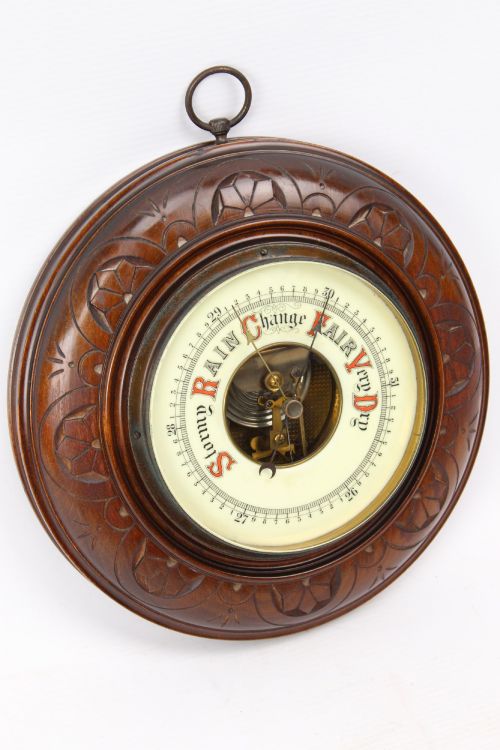
A walnut wood barometer combines atmospheric measurement with rich timber cabinetry, appearing in various forms from banjo cases to wall-hung clocks and aneroid dials. These pieces span centuries, originating primarily in the eighteenth, nineteenth, and early twentieth periods.
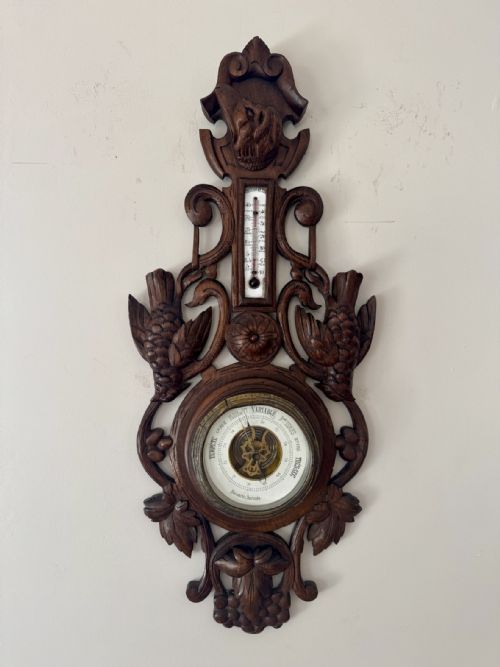
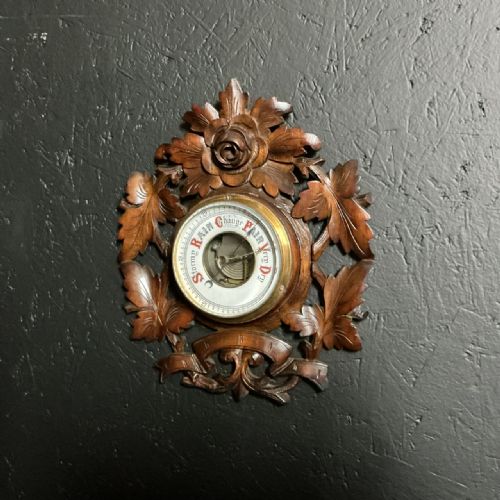
The most common examples encountered on this page belong to the Victorian era and the Black Forest style, often featuring carved cases, circular faces, or combined thermometer displays. Buyers also find American, Scandinavian, and Georgian interpretations within the selection.
Makers housed these mechanisms in everything from simple circular frames to elaborate carved lindenwood and burr walnut housings. The dial materials range from crisp ceramic to brass and glass-covered porcelain.
Construction and materials
Makers relied on solid walnut and burr walnut veneers, shaping the timber into banjo shapes, stick cases, and circular frames. Carved wood details, including Black Forest motifs, often adorn the exterior housings.
Internal mechanisms utilised brass and glass components alongside mercurial tubes or aneroid movements. Dials were frequently fashioned from porcelain or ceramic, bearing detailed calibrations for atmospheric reading.
Walnut Wood Barometer Retail Price Guide 2026
Typical asking prices for walnut wood barometer among the pieces listed under this phrase on Sellingantiques today, from the lower quarter to the upper quarter. They describe what is for sale here now, not the wider market.
Listings feature walnut wood barometers spanning the 18th century, the Victorian period, and into the early 20th century.
Assessing quality and craftsmanship
The standard of carving and timber selection dictates much of the visual distinction across these instruments. Highly articulated woodwork, particularly in Black Forest or banjo styles, separates simpler output from finer workshops.
The preservation of the original glass, brass bezels, and legible dial faces contributes significantly to the integrity of the piece. Integrated instruments, such as combined clocks and thermometers, demonstrate higher complexity in their initial manufacture.
NEGRETTI & ZAMBRA
The Walnut Wood Barometer Glossary
- Aneroid barometer
- An instrument that measures air pressure without liquid, using a small flexible metal box called an aneroid cell. This design allowed for more compact and varied cabinet shapes.
- Banjo barometer
- A domestic weather glass housed in a distinctive curved wooden case resembling a banjo. These instruments often incorporate thermometers and hygrometers alongside the main dial.
- Stick barometer
- A tall, vertical barometer utilising a mercurial column to measure atmospheric pressure. Early examples often feature exposed scales and restrained walnut trunk designs.
- Burr walnut
- A figured timber veneer taken from the wart or burl of a walnut tree. It produces intricate, swirling grain patterns highly prized in cabinet work.
- Black Forest style
- A nineteenth-century tradition of deeply carved wooden decoration, often featuring naturalistic foliage and animal motifs. These pieces typically house aneroid barometer movements.
Walnut Wood Barometer: Frequently Asked Questions
How do aneroid and mercurial barometers differ?
Mercurial instruments use a column of liquid mercury balanced against air pressure in a glass tube. Aneroid versions rely on a sealed metal capsule that expands or contracts with atmospheric changes.
This mechanical difference allowed makers to house aneroid movements in complex, wall-mounted wooden frames like banjo and Black Forest styles.
What periods do these barometers come from?
The pieces span from the early eighteenth century through the Victorian era and into the early twentieth century. Victorian and nineteenth-century examples appear most frequently in the listings.
Earlier eighteenth-century pieces typically take the form of stick barometers, while later Edwardian versions often combine multiple instruments on one dial.
How were banjo barometers used?
Banjo barometers hung in domestic hallways and reception rooms to help occupants anticipate weather changes. They often included thermometers to monitor indoor or outdoor temperature alongside air pressure.
Many also featured hygrometers or spirit levels, serving as multi-functional weather stations for the home.
How do I identify Black Forest barometers?
Black Forest barometers are characterised by deeply carved wooden cases featuring naturalistic motifs such as leaves, branches, and animals. They almost exclusively utilise aneroid movements behind glass and brass bezels.
These pieces typically date from the nineteenth century and reflect the distinctive wood-carving traditions of central Europe.