

Walnut Wood Armchair
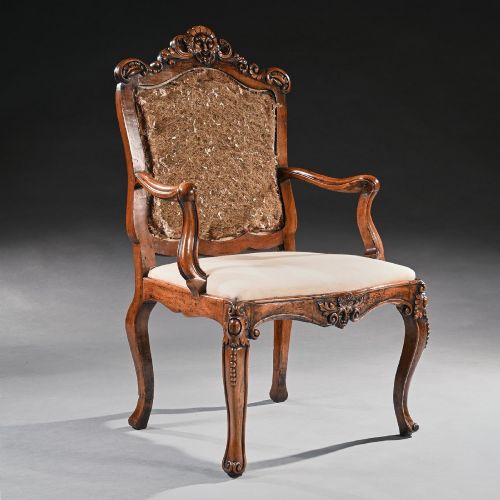
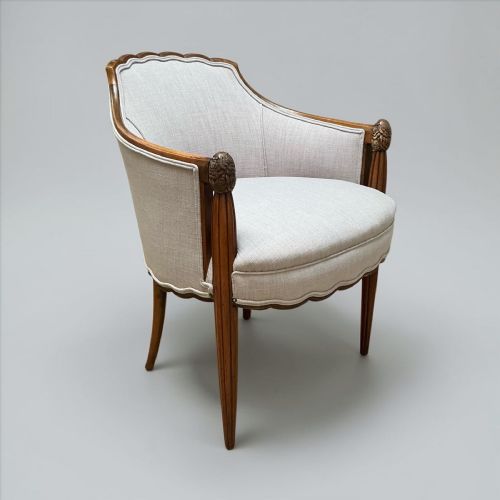
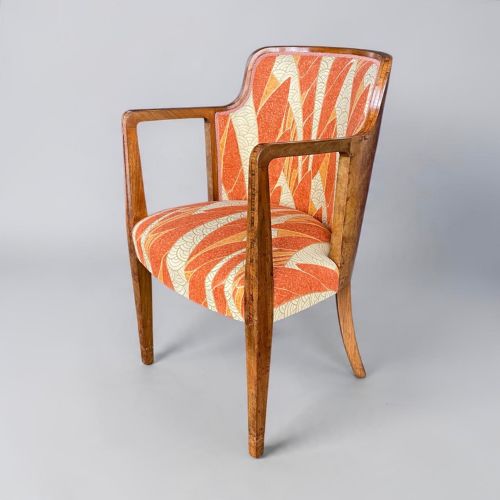
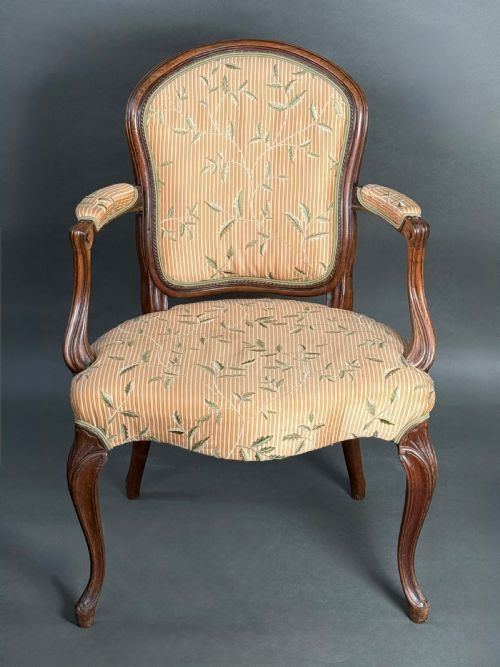
A walnut wood armchair brings warmth and rich grain to a room, ranging from robust seventeenth-century frames to sleek art deco forms.
Walnut Wood Armchair
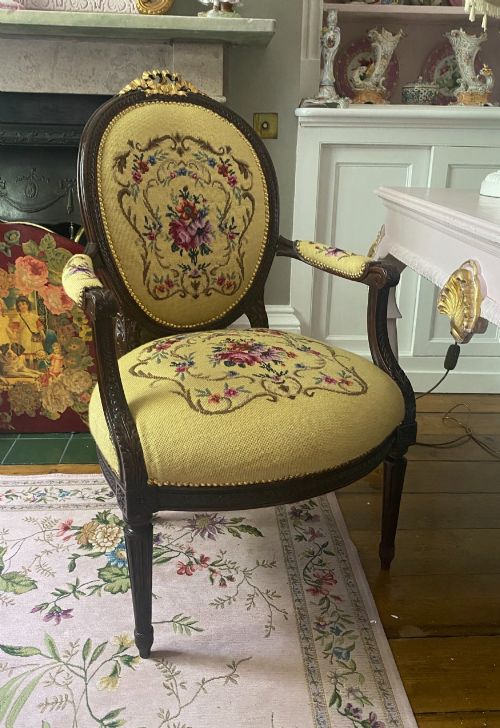
A walnut wood armchair spans several centuries of design, encompassing English, French, Italian, and Middle Eastern origins. When searching this phrase, buyers encounter everything from austere seventeenth-century seating to ornate nineteenth-century revival styles and twentieth-century art deco pieces.
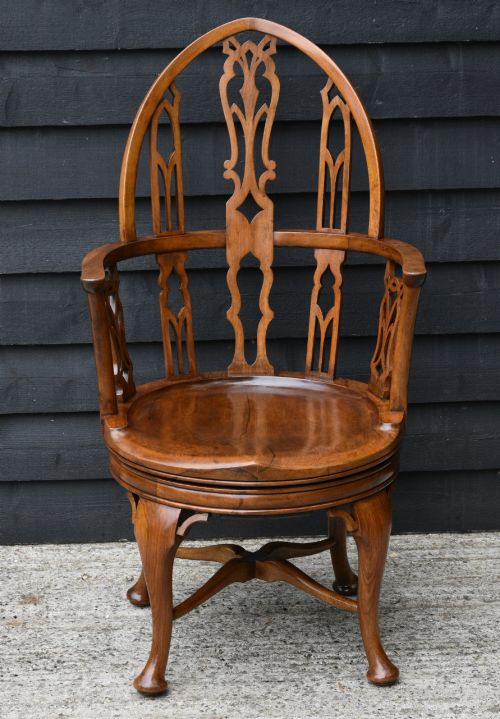
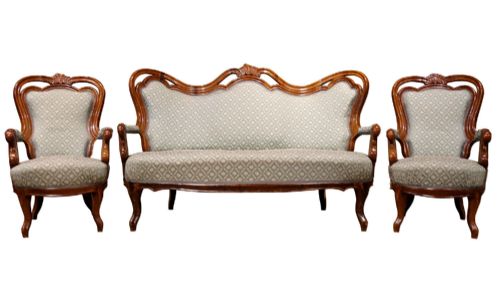
The selection here includes standard armchairs, desk chairs, revolving office chairs, and salon suite seating. English and continental workshops produced these in considerable variety, utilising the dense dark timber for both structural support and intricate carved decoration.
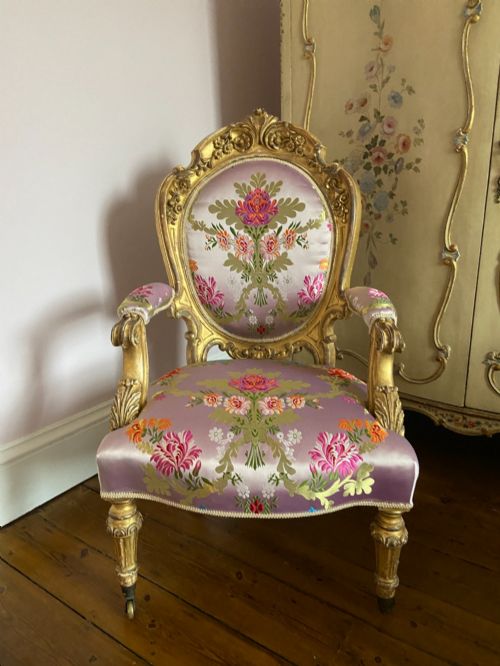
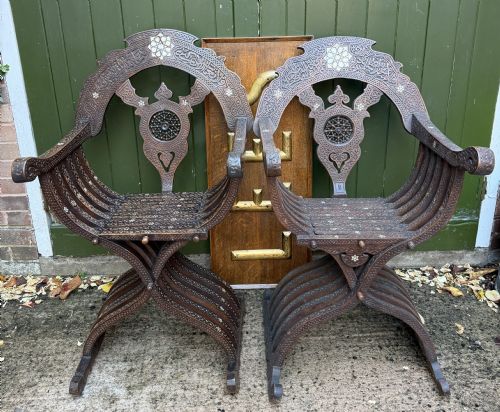
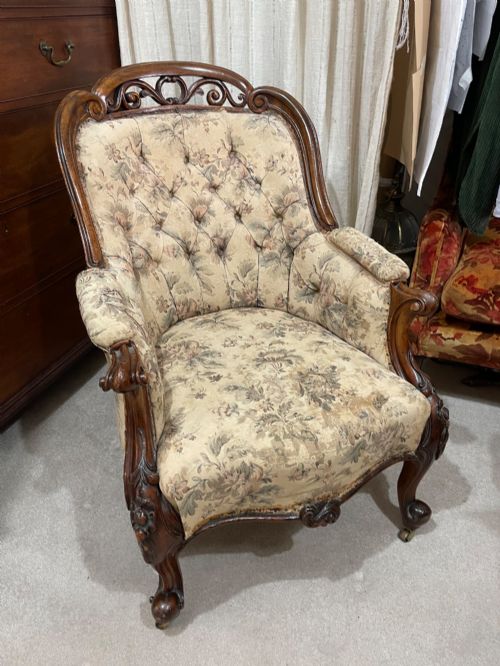
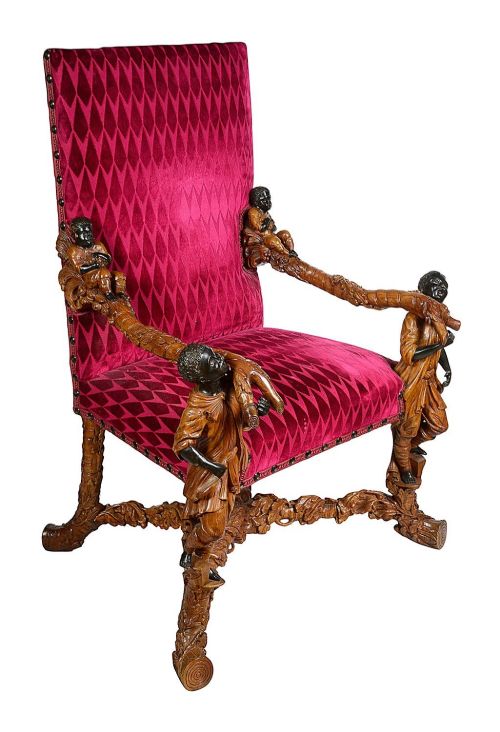
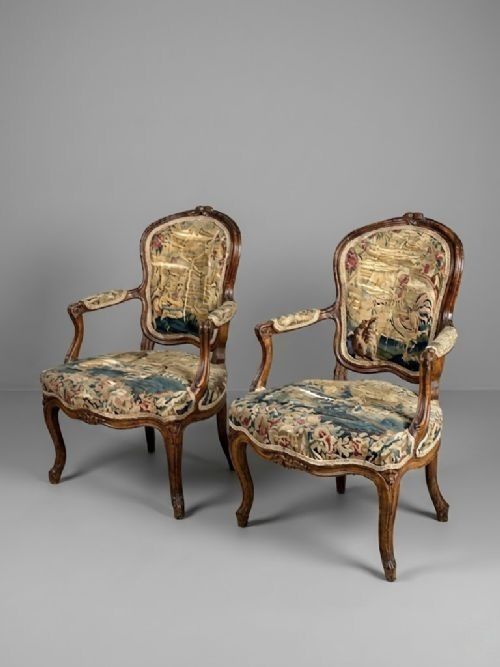
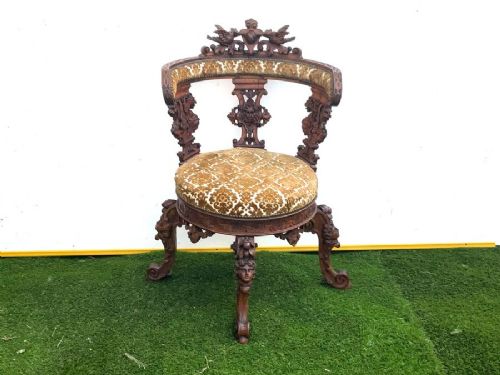
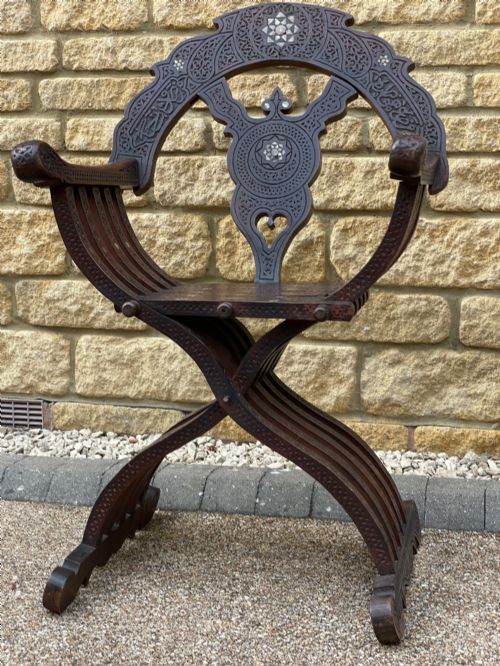
Nineteenth-century interpretations dominate the available forms, often drawing on earlier Louis XV, Rococo, or Carolean aesthetics. Regional variations range from Syrian mother-of-pearl inlaid frames to English spoonback designs and Venetian carved armchairs.
Materials and construction methods
Makers utilised solid walnut alongside specialised secondary timbers, shaping the primary wood to accept deep relief carving and structural joints. Gilt wood, brass fittings, and carved fruitwood appear across various pieces to accent the dense grain of the main structure.
Upholstery defines a substantial portion of these seats, employing traditional textiles such as silk, velvet, linen, and Aubusson tapestry. Certain regional examples incorporate intricate nacre-shell and mother-of-pearl parquetry inlay set directly into the wooden framework.
Walnut Wood Armchair Retail Price Guide 2026
Typical asking prices for walnut wood armchair among the pieces listed under this phrase on Sellingantiques today, from the lower quarter to the upper quarter. They describe what is for sale here now, not the wider market.
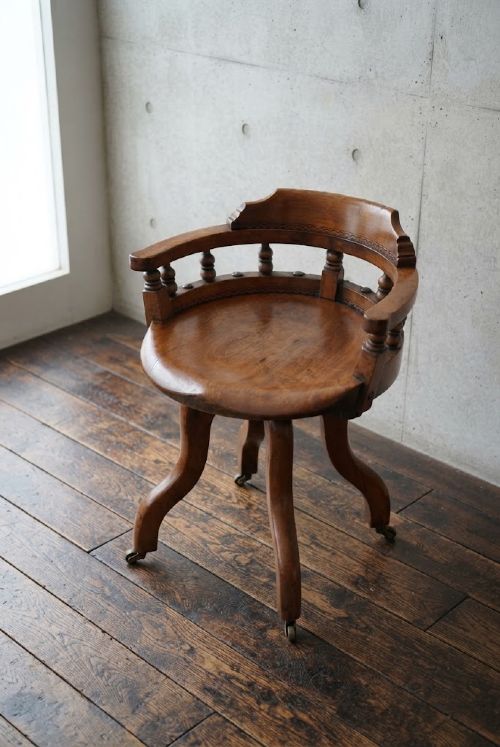
Some nineteenth-century desk chairs allowed Victorian clerks to swivel in style while contemplating their ledgers.
Distinctions in craftsmanship
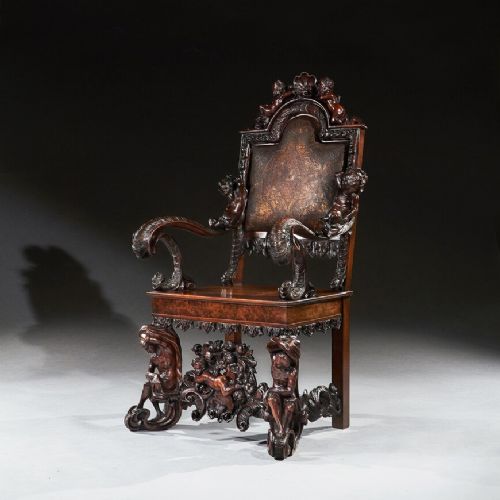
Quality rests primarily in the crispness of the wood carving and the integrity of the joinery. Finer examples display deeply undercut foliage, figures, or scrolls carved directly from the solid walnut rather than applied in secondary mouldings.
The sophistication of the secondary materials also signals distinction, from hand-turned bobbin components to high-grade silk or period tapestry upholstery. Proportion and balance differentiate standard regional production from exhibition-quality works.
C Hindley And Sons·Andrea Brustolon·Thomas Hope·Colefax And Fowler
The Walnut Wood Armchair Glossary
- Bergere
- An enclosed upholstered armchair with wooden framing around the sides and back, often paired with a loose seat cushion.
- Carolean
- A seventeenth-century English style characterised by rich carving, scrolling arms, and cane or upholstered panels reflecting the restoration court.
- Parquetry
- A geometric mosaic of wood pieces used for decorative veneer on furniture surfaces, frequently incorporating contrasting materials like mother-of-pearl.
- Spoonback
- A Victorian chair design featuring a padded backrest shaped in the vertical curve of a spoon to fit the human spine.
- Monopodia
- Furniture supports carved in the form of a single lion or animal leg, popular in classical revival designs.
Walnut Wood Armchair: Frequently Asked Questions
What periods do these armchairs cover?
The pieces span from the seventeenth century through the Victorian era up to the 1930s. Styles range from early Baroque and Carolean frames to later art deco designs.
Mid-nineteenth-century revival pieces also appear frequently, mimicking earlier French and Italian aesthetics.
How were these chairs used historically?
They served as formal seating in salons, audience chambers, and studies. Revolving versions functioned specifically as desk chairs for offices and libraries.
Some items formed part of larger salon suites intended for entertaining guests in wealthy households.
How should I care for the wood?
Keep the walnut timber away from direct sunlight and excessive heat sources to prevent the grain from drying out. Dust regularly with a soft, dry cloth.
Avoid commercial silicone polishes that can build up a residue over antique surfaces.
What textiles are used for upholstery?
Original and replacement coverings include silk, velvet, linen, and Aubusson tapestry. Some armchairs feature exposed wooden frames with minimal padding, while others are fully upholstered.
Needlework and patterned textiles frequently match the historical period of the wooden frame.