




Walnut Wellington Cabinet
A walnut wellington cabinet is a tall, narrow locking chest built for secure storage, offering rich timber figuring and slender proportions for any room.
Walnut Wellington Cabinet
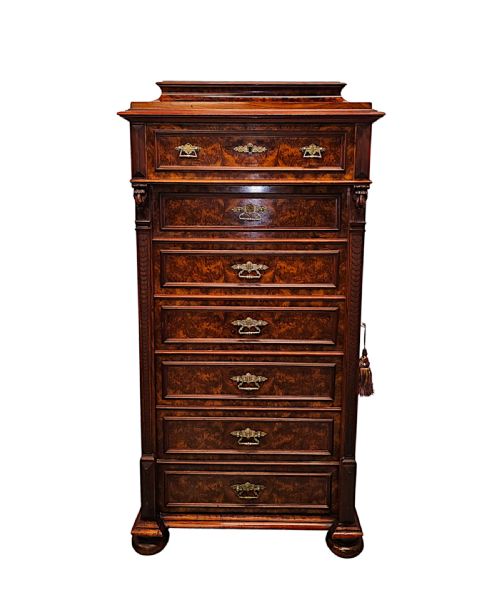
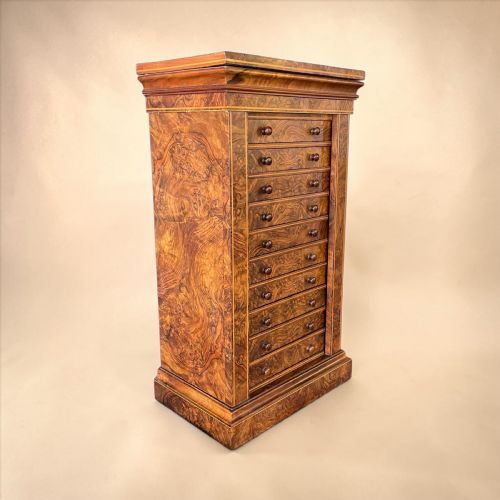
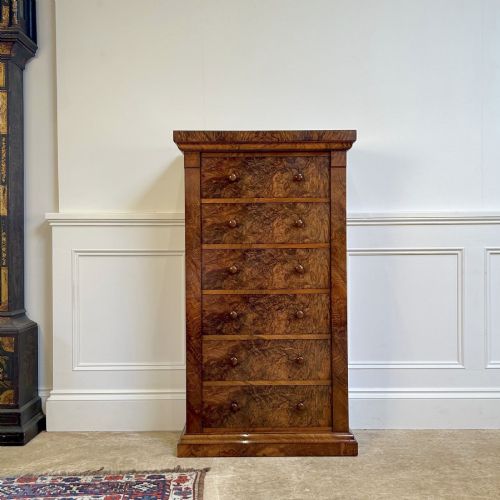
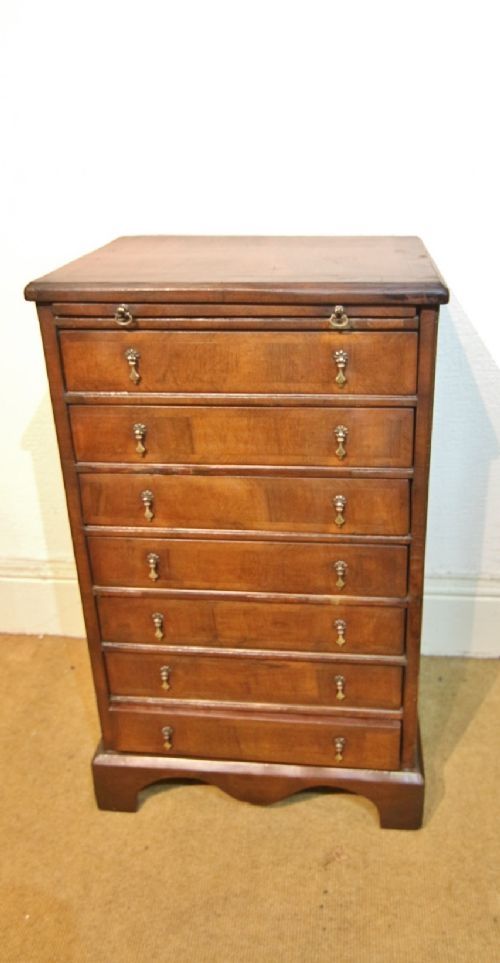
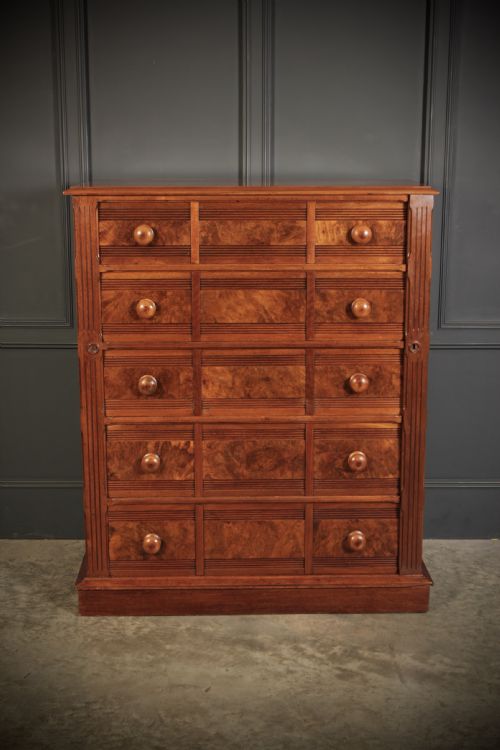
A walnut wellington cabinet takes the form of a tall, narrow chest of drawers designed with a hinged locking stile on one side. This locking mechanism secures every drawer simultaneously when the right-hand pilaster is padlocked or keyed into place. Buyers searching this phrase look for these vertical filing and specimen pieces originating primarily from the nineteenth century.
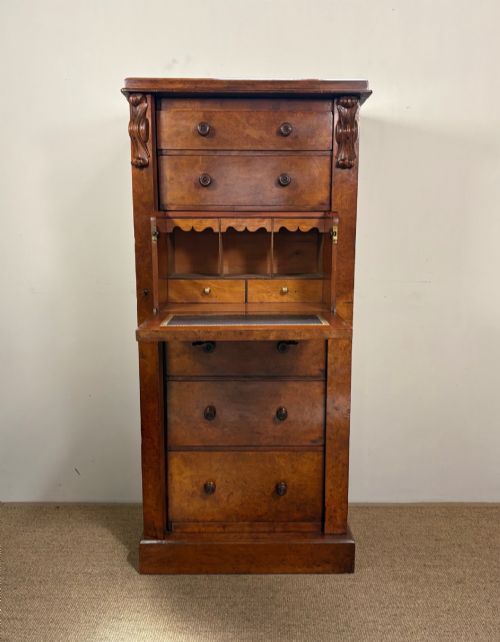
The pieces on this page span the Victorian and Georgian style periods, utilising timber grains like burr and figured walnut. Most examples function as chests of drawers, bank of drawers, or secretary chests featuring multiple internal tiers. Cabinets and storage forms appear alongside specialist collector pieces fitted with numerous shallow drawers.
Victorian iterations dominate the selection, often presenting with inlaid details or brass hardware. Makers such as Gillows and Holland and Sons appear amongst nineteenth-century examples, showing the high standard of cabinet-making applied to these tall narrow formats.
How they were made
Cabinet-makers constructed these pieces using solid timber frames lined with walnut veneer and burr walnut surfaces to highlight rich grain patterns. Oak frequently served as the secondary wood for drawer linings and internal divisions, providing structural stability to the tall framework. Timber selection focused on highly figured panels for the drawer fronts and top surfaces.
Metalwork played a functional and decorative role, incorporating brass handles, locks, and hinges that secured the locking stiles. Leather inserts occasionally appeared on pull-out writing surfaces within secretaire variations. Joinery relied on traditional dovetailing for the drawer construction to withstand daily use.
Walnut Wellington Cabinet Retail Price Guide 2026
Typical asking prices for walnut wellington cabinet among the pieces listed under this phrase on Sellingantiques today, from the lower quarter to the upper quarter. They describe what is for sale here now, not the wider market.
Listings feature nineteenth-century dates, predominantly Victorian, utilising walnut, burr walnut, oak, and brass materials.
What varies in quality
The distinction between standard pieces and top-tier examples rests upon the choice of veneer and timber figuring. Highly figured burr walnut and symmetrical grain matching across the drawer fronts elevate a cabinet's visual presence. Attribution to documented makers like Gillows or Holland and Sons also shifts an example toward the upper end of the range.
Proportion and structural integrity define the craftsmanship of the taller narrow chests. Well-executed locking mechanisms that operate smoothly alongside refined brass fittings demonstrate superior workshop practice. The preservation of original polished surfaces without heavy intervention maintains the integrity of the piece.
Gillows·Holland and Sons·Gillows of Lancaster
The Walnut Wellington Cabinet Glossary
- Wellington chest
- A tall, narrow chest of drawers featuring a hinged locking stile on one side that secures the drawers when closed. This form originated in the nineteenth century and typically contains six to twelve shallow drawers.
- Burr walnut
- A wood harvested from the abnormal growth of a walnut tree, yielding highly decorative and swirling grain patterns. Cabinet-makers used veneers of this material on primary display surfaces.
- Secretaire chest
- A cabinet incorporating a fitted pull-out writing drawer with a drop-front desk surface. These pieces combine secure storage with compact writing facilities.
- Stile
- A vertical framing member of a cabinet or door structure. In this furniture type, the right-hand stile acts as the locking bar that swings open to release the drawers.
- Specimen cabinet
- A specialised chest designed to hold geological, botanical, or coin collections within shallow drawers. These interiors often feature numbered or divided compartments for organised storage.
Walnut Wellington Cabinet: Frequently Asked Questions
What is a walnut wellington cabinet?
A walnut wellington cabinet is a tall, narrow nineteenth-century chest of drawers featuring a locking side pilaster.
This hinged locking bar secures all the drawers at once when fastened, keeping private papers or collections safe.
How were these cabinets used?
These cabinets served as secure storage for personal documents, letters, valuables, or specialised natural history collections.
The multiple shallow drawers allowed owners to organise specimens, coins, or daily correspondence within a compact footprint.
Where should I place one at home?
Their slender proportions make these cabinets ideal for tight spaces, hallways, studies, or beside a fireplace.
They provide substantial vertical storage without dominating the floor area of a room.
How do I identify a Victorian piece?
Victorian examples frequently display rich burr walnut veneers, brass drop handles, and dark polished timber tones.
Cabinet construction from this era often includes oak drawer linings and robust locking mechanisms along the right stile.