

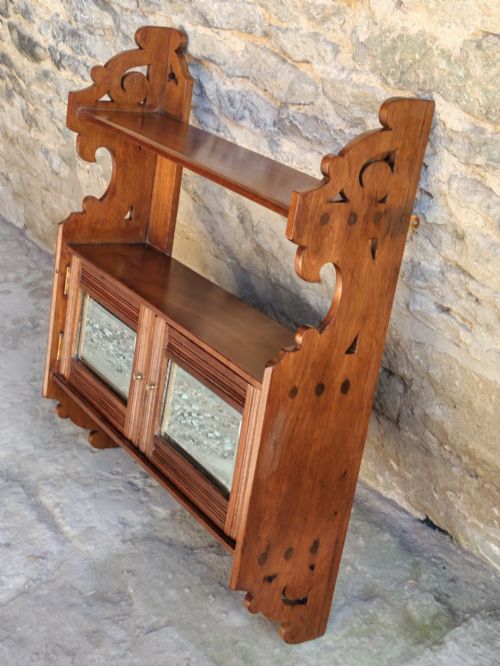


Walnut Wall Shelf
A walnut wall shelf brings warmth and practical display space to a room, offering rich timber grain and clever vertical storage.
Walnut Wall Shelf
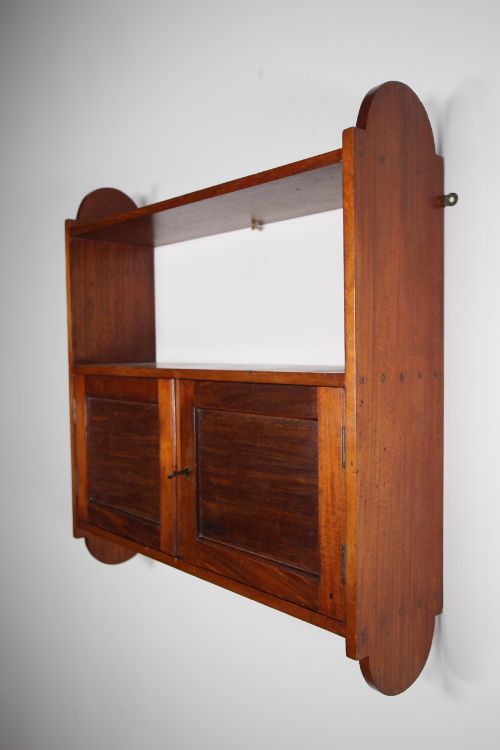
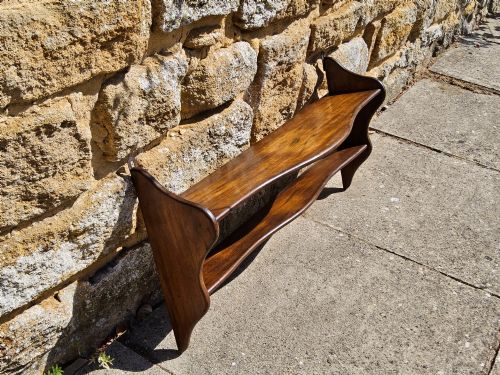
A walnut wall shelf serves as both a functional storage ledge and a decorative architectural element in a home. The pieces found here span from simple display ledges to elaborate hanging cabinets and bracketed platforms.
Victorian and Edwardian examples dominate the selection, often incorporating mirrors, hooks, or enclosed cupboards alongside the timber shelving. Earlier Georgian and eighteenth-century items appear occasionally, offering refined proportions and deeper carved detail.
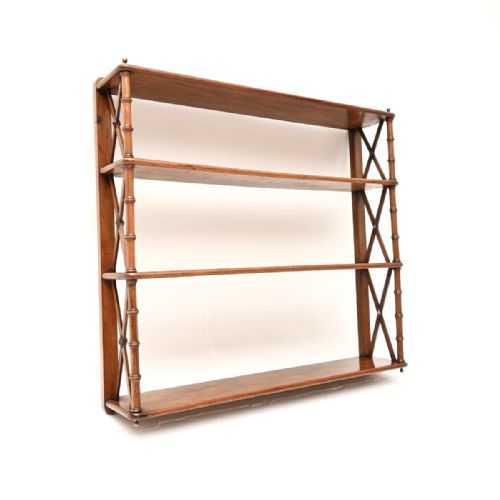
Forms vary from compact corner brackets to tall hanging units fitted with multiple display tiers. Buyers encounter English, French, and Italian interpretations, each reflecting the specific cabinet-making traditions of its origin.
Materials and construction methods
Timbers focus heavily on walnut, sometimes noted as red walnut, valued for its deep colour and decorative grain patterns. Makers frequently combined the solid wood with brass hinges, glass panels, and mirror glass to create functional hall furniture and display cabinets.
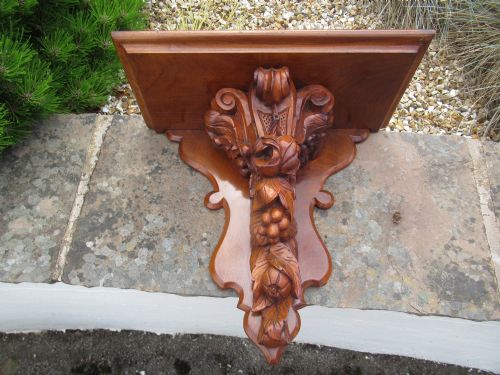
Surface decoration relies on skilled carving, marquetry inlay, and parcel-gilt highlights. Structural support comes from solid brackets, corbels, and wall-mounting plates designed to secure the weight of the timber directly to masonry or studwork.
Walnut Wall Shelf Retail Price Guide 2026
Typical asking prices for walnut wall shelf among the pieces listed under this phrase on Sellingantiques today, from the lower quarter to the upper quarter. They describe what is for sale here now, not the wider market.
The listings span the eighteenth, nineteenth, and early twentieth centuries, featuring English, French, and Italian regional designs.
Quality factors in walnut shelving
Distinction between pieces lies in the crispness of the hand-carved detail and the selection of the timber veneer. Superior examples display symmetrical grain matching and robust joinery that remains stable under daily use.
The integration of secondary materials such as bevelled mirror glass, inlaid mother-of-pearl, or cast brass hardware indicates higher workshop standards. Original structural integrity and untouched surface patination separate standard production items from master-carved commissions.
Arthur Simpson·Connell of London·Luigi Frullini·JAS Shoolbred
The Walnut Wall Shelf Glossary
- Corbel
- A structural bracket projecting from a wall to support a weight above it. Carved walnut versions often feature foliate or scroll motifs.
- Pier glass
- A tall mirror designed to hang on the wall between windows, frequently paired with a matching console table or shelf beneath.
- Marquetry
- The art of applying pieces of veneer to a structure to form decorative patterns. Walnut pieces often use lighter woods to contrast against the dark background.
- Overmantle
- A large mirror or display shelf designed specifically to hang on the wall directly above a fireplace mantelpiece.
- Parcel-gilt
- Partially gilded with gold leaf or powder, highlighting specific carved details such as foliage or mouldings against the walnut body.
Walnut Wall Shelf: Frequently Asked Questions
How do I hang a heavy walnut wall shelf safely?
Secure the mounting brackets directly into wall studs or use appropriate heavy-duty wall anchors rated for timber weight.
Check that the fixing points on the back of the cabinet or shelf frame are stable before loading the ledges with books or ceramics.
What rooms suit a wall-mounted walnut cabinet?
Hallways and reception rooms benefit greatly from units that combine coat hooks, key cupboards, and small display ledges.
Bedrooms and bathrooms often utilise smaller shaving mirrors with integrated shelves to maximise vertical storage without taking up floor space.
How do I tell Victorian walnut from Edwardian pieces?
Victorian examples tend to feature heavier carving, darker finishes, and more elaborate crests or turned spindle galleries.
Edwardian pieces often show lighter timber tones, cleaner lines influenced by the Arts and Crafts movement, and simpler functional layouts.
How should I clean antique walnut furniture?
Dust the timber regularly with a soft, dry cloth and avoid commercial silicone sprays that can build up over time.
Apply a traditional beeswax polish sparingly once or twice a year to nourish the grain and protect the surface finish.