




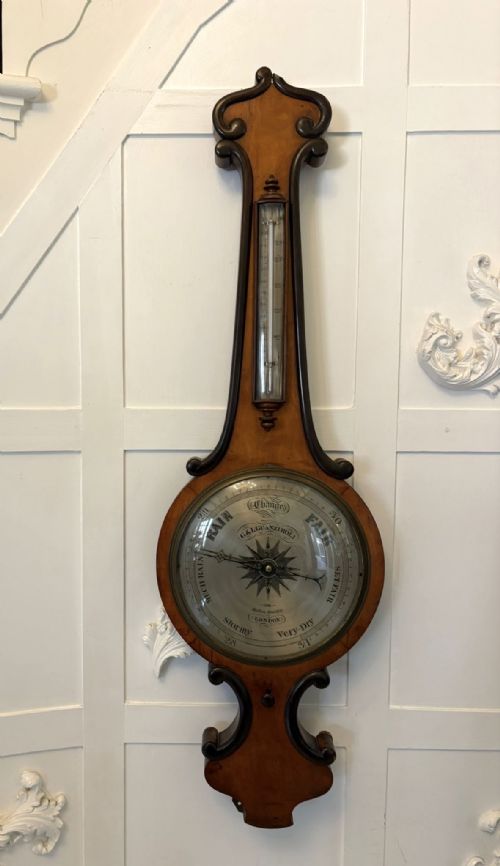


Walnut Wall Instrument
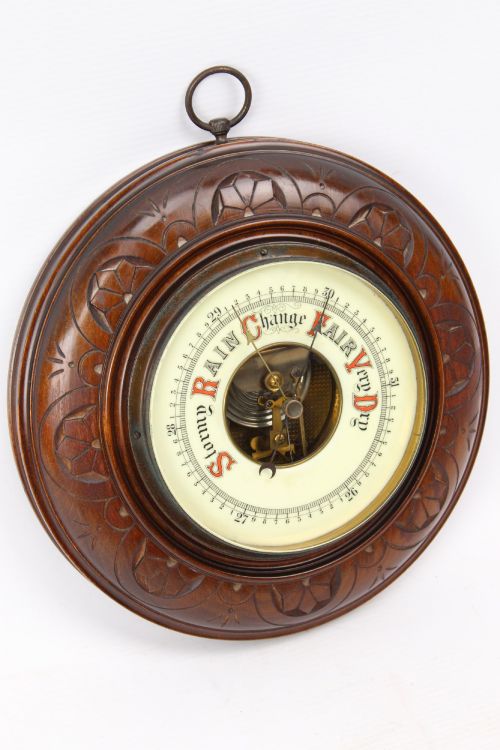
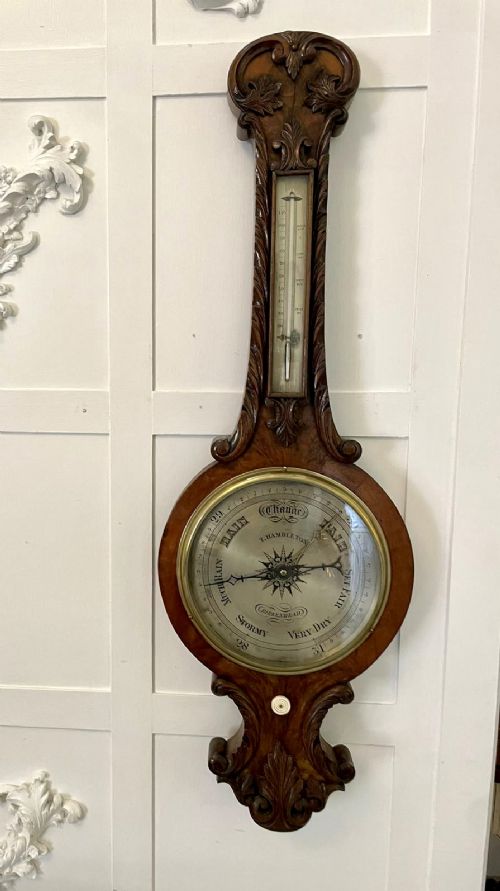
These walnut wall instruments are timber-cased timekeepers and weather glasses that bring both practical utility and rich grain to domestic walls.
Walnut Wall Instrument
A walnut wall instrument combines functional meteorological or horological tracking with domestic display, taking the form of barometers, thermometers, and wall clocks housed in timber cases. When searching for a walnut wall instrument, buyers encounter pieces designed to mount securely on interior surfaces, utilising walnut timber for both structural integrity and decorative presence.
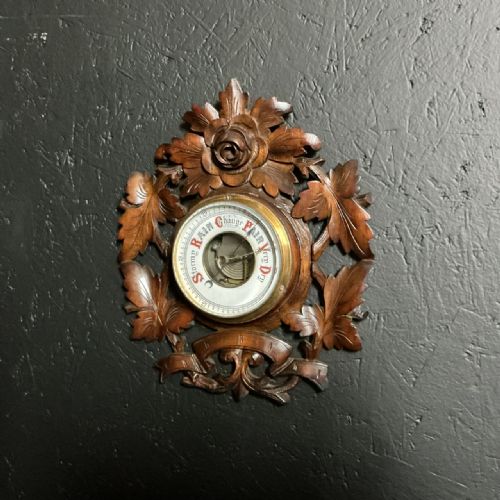
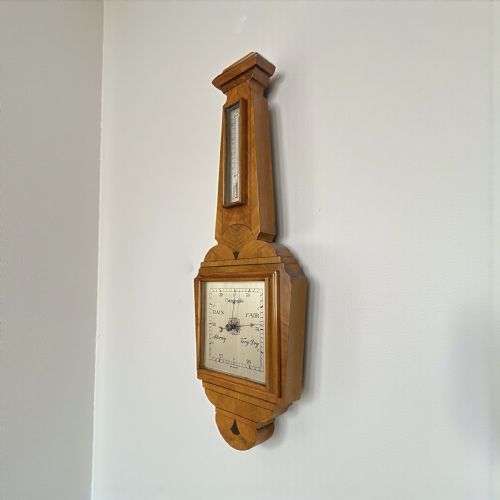
The selection on this page ranges across the nineteenth and twentieth centuries, spanning Victorian, Edwardian, and Art Deco periods alongside distinct regional styles such as Black Forest, Scandinavian, and American interpretations. Banjo barometers, wheel barometers, stick barometers, and combined clock-barometer units represent the primary configurations available to collectors.
Makers from London firms to continental workshops produced these pieces using native and exotic woods, frequently incorporating carved foliage, ceramic dials, and exposed mercury tubes or aneroid movements. Each example reflects the prevailing design ethos of its era, from ornate Victorian carving to clean Art Deco lines.
How they were made
Cabinetmakers constructed the foundational carcasses and surrounds using solid walnut, burr walnut, and lindenwood, frequently applying wood veneer over secondary timbers to achieve striking decorative grain patterns. These timber housings were shaped through sawing, turning, and detailed hand-carving, particularly evident in the scrollwork and foliage of Black Forest and Victorian examples.
Functional components integrated directly into the woodwork include brass bezels, ceramic and metal dials, glass protective covers, and precision movements such as mercurial tubes and aneroid mechanisms. Master instrument makers fitted these delicate internal parts into the timber chassis alongside thermometers and spirit levels to ensure accurate atmospheric readings.
Walnut Wall Instrument Retail Price Guide 2026
Typical asking prices for walnut wall instrument among the pieces listed under this phrase on Sellingantiques today, from the lower quarter to the upper quarter. They describe what is for sale here now, not the wider market.
Listings feature walnut wall instruments spanning the 1700s through to the 1930s, utilising brass, glass, and burr walnut veneer.
What varies in quality
The standard of timber selection and cabinetwork largely dictates the distinction between standard and superior pieces, particularly regarding the depth of burr walnut figuring and the crispness of hand-carved details. Pieces featuring deeply undercut foliage, integrated thermometer housings, and well-preserved original veneers command greater appreciation from collectors.
The refinement of the internal dial and the reputation of the recording maker also influence the standing of an instrument, alongside the survival of original glass, bezels, and mercurial or aneroid mechanisms. Consistency in the original finish and the harmonious integration of clock and barometer functions elevate the overall execution.
G & L Guanziroli London·Negretti & Zambra London
The Walnut Wall Instrument Glossary
- Aneroid barometer
- An instrument that measures atmospheric pressure without liquids, using a flexible metal box that expands or contracts as pressure changes.
- Banjo barometer
- A wall-mounted weather glass characterised by a bulbous lower section tapering into a slender neck, popular throughout the nineteenth century.
- Stick barometer
- A tall, narrow wall instrument containing an exposed vertical tube of mercury to measure barometric pressure changes directly.
- Wheel barometer
- A mercurial weather glass connected to a pulley and pointer system that displays atmospheric readings on a circular dial face.
- Burr walnut
- A prized timber harvested from walnut tree growths, valued by cabinetmakers for its swirling, highly figured grain patterns.
Walnut Wall Instrument: Frequently Asked Questions
How do aneroid and mercurial barometers differ?
Mercurial barometers rely on a column of liquid mercury contained within a glass tube that rises and falls with atmospheric pressure variations. This traditional method offers direct visual reading of pressure shifts.
Aneroid barometers employ a sealed metal capsule that expands or contracts under pressure changes, transferring movement mechanically to a dial pointer. This design eliminates liquid mercury entirely, making the instrument safer and easier to transport.
Where should I hang a wall barometer?
Select an interior wall that remains free from direct sunlight and away from sudden temperature fluctuations caused by radiators or draughts. Stable environmental conditions help preserve the timber case and prevent inaccurate internal mechanism readings.
Ensure the mounting point can securely support the weight of the timber and glass housing. Height matters for ease of viewing and setting any movable indicators against current readings.
How do I identify a Black Forest piece?
Black Forest pieces are distinguished by deep, naturalistic hand-carved woodwork featuring motifs such as leaves, vines, and wildlife. These German and Swiss-influenced items often display exceptional sculptural detail on the walnut or lindenwood case.
The carving style prioritizes organic forms that wrap around the dial and thermometer surrounds. This distinct regional aesthetic sets them apart from standard domestic English Victorian wall instruments.
Did these instruments include clocks?
Many wall instruments combine barometers and thermometers with functional clock movements within a single timber case. These multi-function pieces served as comprehensive domestic utility stations for households.
Makers integrated the clock face alongside dial indicators to provide timekeeping and weather forecasting simultaneously. Such combined units require careful winding and calibration to maintain both functions accurately.