
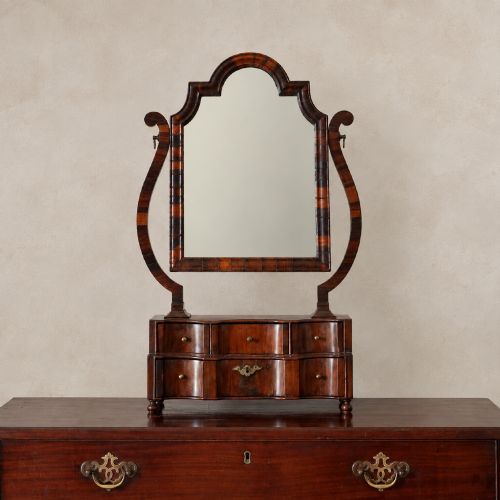
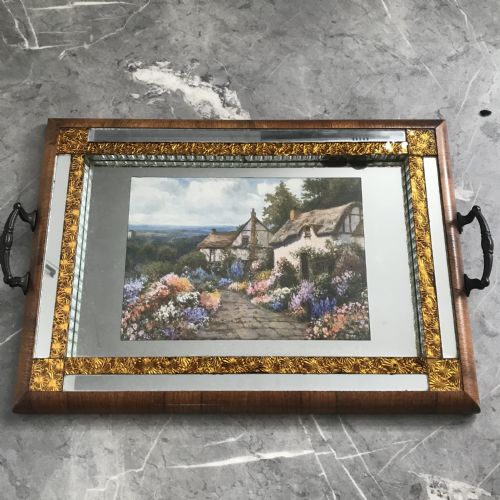


Walnut Veneered Mirror
These walnut veneered mirrors are timber-framed looking glasses showcasing rich grain figure, offering period character for any interior scheme.
Walnut Veneered Mirror
A walnut veneered mirror brings deep brown timber tones and striking decorative grain patterns into a room, typically taking the form of wall mirrors, overmantels, or small toilet mirrors. Buyers searching this phrase encounter examples stretching from the seventeenth century through to the art deco period, reflecting shifting tastes in domestic furnishings over three hundred years.
The version most commonly met on this page is the cushion-framed or wall-mounted looking glass utilising rich walnut or oyster veneers. These pieces rely on figured wood slices applied to a supportive carcase, creating concentric or geometric patterns that define the aesthetic of early English and continental interiors.
Alongside dedicated wall pieces, the selection includes related forms like toilet mirrors designed for dressing tables and architectural overmantels meant to hang above fireplace surrounds. Each style employs the same core technique of applying fine timber veneers to framing structures, though proportions and decorative flourishes vary by era.
Materials and construction methods
Craftsmen built these looking glasses by applying thin slices of walnut or laburnum veneer over a secondary wood carcase, often arranging the grain in circular oyster patterns or symmetrical book-matched layouts. This technique allowed cabinetmakers to display the most visually striking sections of timber across flat framing surfaces without risking the splitting associated with solid boards of equivalent width.
Glass plates were historically silvered using traditional methods, set within rebates at the back of the frame and secured with wooden slips or backing boards. Metal elements such as brass candle sconces, hanging rings, or bronze ormolu mounts occasionally supplemented the wooden structures, particularly on eighteenth-century and continental pieces.
Tree branches sacrificed for seventeenth-century oyster veneer little knew they would end up reflecting centuries of curious faces.
Distinguishing quality across periods
Quality in these looking glasses rests upon the choice of timber figure and the precision of the veneer work. Superior examples display dense, well-matched grain patterns that wrap cleanly around corners and mouldings, whereas simpler or later pieces may show flat or repetitive grain orientation.
The integrity of the frame construction and the survival of early or original mirror glass plates also separate finer items from standard ones. Subtle details such as parcel gilt fretwork carving, well-cast brass hardware, and sound joinery indicate higher workshop standards during production.
JEAN FAURE
The Walnut Veneered Mirror Glossary
- Oyster veneer
- Cross-sections cut transversely from small branches or roots, creating small circular or oval patterns resembling oyster shells. Makers arranged these closely together to form intricate geometric fields on seventeenth-century frames.
- Cushion frame
- A broad, rounded frame profile that swells outwards towards the edge, popular during the seventeenth and early eighteenth centuries. This shape accentuates the swirling grain of walnut or oyster veneers.
- Overmantel mirror
- A large horizontal looking glass designed specifically to be hung above a mantelpiece or fireplace. These pieces often anchor the decorative scheme of a reception room.
- Toilet mirror
- A small looking glass mounted on a pivoting stand or miniature bureau base, intended for placement on a dressing table. They became essential accessories in bedchambers from the seventeenth century onward.
Walnut Veneered Mirror: Frequently Asked Questions
How do I date a walnut veneered mirror?
Dating relies on examining the frame profile, the construction of the wooden backing, and the characteristics of the glass plate. Early seventeenth and eighteenth-century pieces often feature cushion mouldings or oyster veneers, while later Victorian and art deco examples show distinct stylistic proportions.
Secondary woods used in the carcase also provide clues, as cabinetmakers shifted their material choices over the centuries. Comparing the specific joinery methods and decorative motifs against documented period pieces helps narrow down the decade of manufacture.
What is oyster veneering?
Oyster veneering involves slicing small branches or roots across the grain to produce small, circular discs with rich annular growth rings. Cabinetmakers laid these discs side by side to create patterned surfaces resembling the shells of oysters.
This labor-intensive technique was particularly popular during the seventeenth century on walnut furniture and mirror frames. The resulting surface catches the light differently depending on the grain orientation of each individual disc.
Where should I hang an overmantel mirror?
An overmantel mirror traditionally hangs centrally above a fireplace mantelpiece to reflect light and visually expand the room. Their horizontal proportions suit the expanse of a chimney breast.
When positioning one, ensure the fixings are secured firmly into wall studs or masonry to support the weight of the timber frame and glass. Pairing the mirror with appropriate ceiling height creates a balanced focal point within the interior space.
Are toilet mirrors adjustable?
Most antique toilet mirrors feature brass pivot screws or side arms that allow the glass plate to tilt forward or backward. This adjustability helped users catch the correct angle for grooming.
Over time, the friction mechanisms in these stands can loosen or stiffen. Careful handling of the original brass hardware ensures the pivoting function operates smoothly without straining the surrounding wood.