

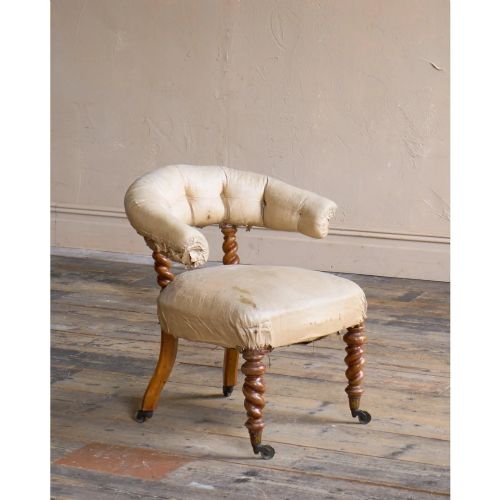
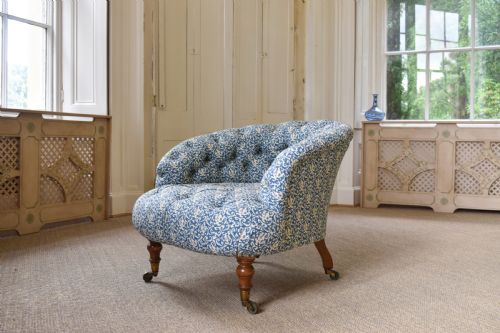
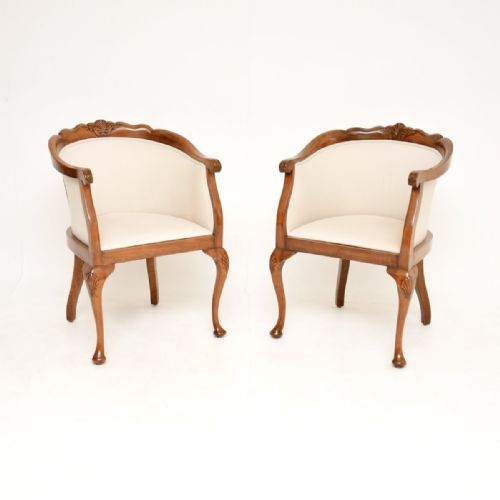

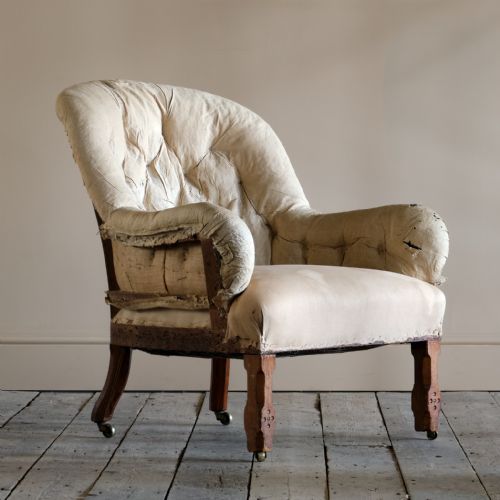

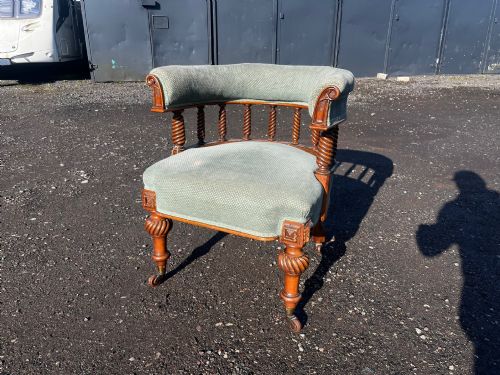
Walnut Tub Armchairs
Walnut tub armchairs combine curved enveloping timber frames with rich upholstery, offering a comfortable seat shaped for the fireside or desk.
Walnut Tub Armchairs
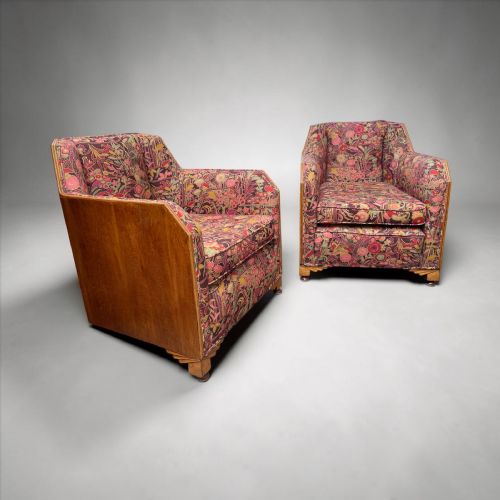
Walnut tub armchairs are defined by their curved, enclosed backs that sweep continuously around to form the armrests, creating a protective, rounded seating shape. This phrase covers forms intended for various rooms, from library desks and studies to drawing rooms and reading corners.
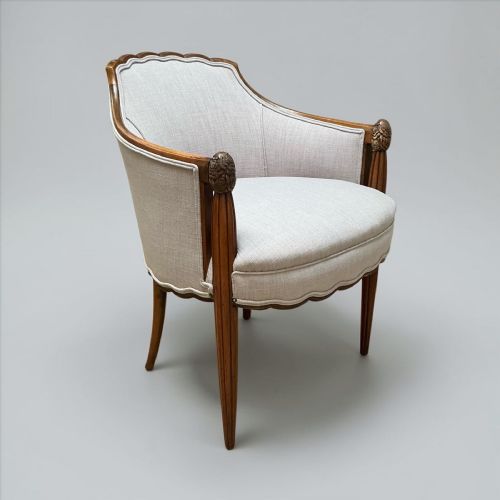
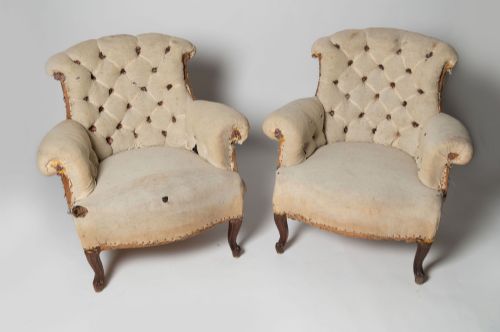
The versions most frequently met on this page date from the nineteenth century into the nineteen-thirties, spanning Victorian, Edwardian, and Art Deco periods. Many examples appear as matched pairs, particularly in French Louis XV styles, Edwardian inlaid designs, and geometric Art Deco shapes.
How they were made
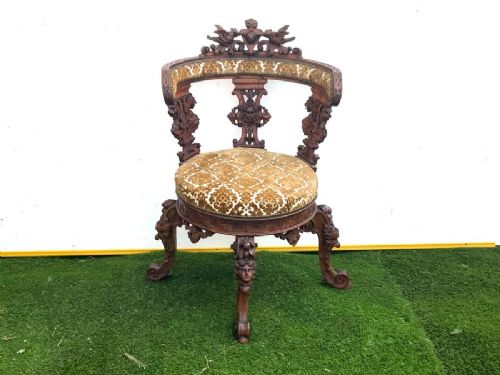
The structural frames are constructed from walnut, occasionally incorporating beech, shaped and carved to form the continuous curved back and supports. Some pieces feature intricate details such as Moorish inlaid patterns in bone or contrasting woods, or elaborate Italian Renaissance revival carving.
Upholstery relies on traditional materials including leather, silk, velvet, cane, and textile coverings secured over sprung or padded interiors. Details like brass hardware, oil cloth cushions, and open cane panels complete the construction of these chairs.
Some nineteenth-century sitters enjoyed their reading chairs fitted with oil cloth cushions designed to survive accidental ink spills from energetic letter writers.
What varies in quality
Quality in these chairs rests upon the fluidity of the timber frame's curves and the depth of skill in the cabinetmaking, particularly where wood is bent or heavily carved. Pieces bearing maker attributions or stamps from established cabinetmakers demonstrate superior workshop execution.
The integrity of the original materials, such as patinated leather, hand-woven cane, or period textiles, distinguishes standard production items from finer library and salon seating. The harmony between the walnut frame's proportions and its upholstery determines the success of each piece.
Hille·C. Hindley & Sons·Gillows
The Walnut Tub Armchairs Glossary
- Tub chair
- An armchair featuring a low, rounded, enclosed back that curves forward to form arms. This design evolved to protect the sitter from draughts in nineteenth-century rooms.
- Bergère
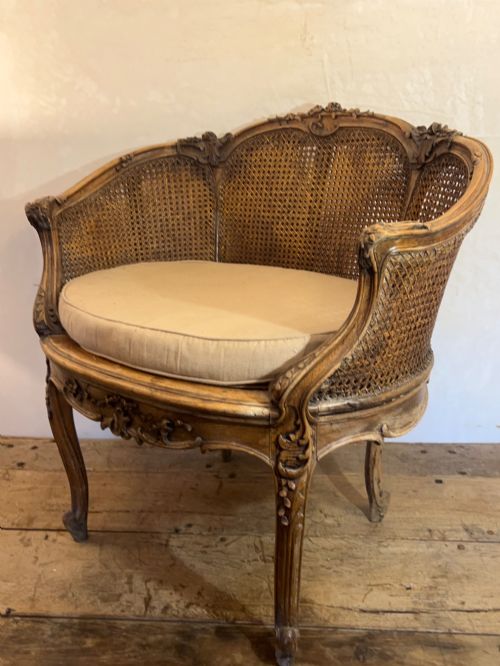
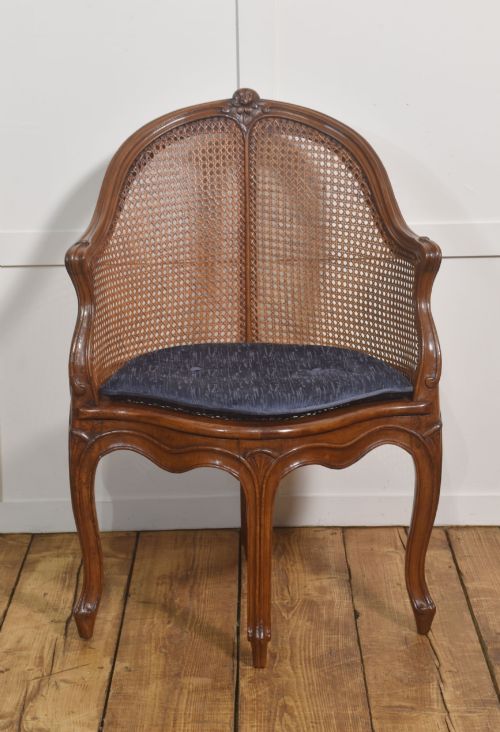
- An enclosed upholstered armchair with a wooden frame where the sides are frequently filled with cane or upholstery. These French-inspired seats often feature loose squab cushions.
- Corbeille
- A French term denoting a basket-shaped armchair with a rounded, enveloping back. These seats typically showcase Louis XV influence and elaborate curved woodwork.
- Cane
- Woven rattan material utilised for the back panels and sides of seating frames. This technique provides a light, breathable alternative to solid wood or heavy padding.
Walnut Tub Armchairs: Frequently Asked Questions
What is a tub armchair?
A tub armchair is a seat with a continuous curved back and armrests forming an enclosed, rounded shape. This design wraps around the sitter to provide enclosed support.
Historically utilised in libraries, studies, and drawing rooms, these chairs offer a deeper, more enveloping sit than standard flat-backed armchairs.
How do I identify a Victorian tub chair?
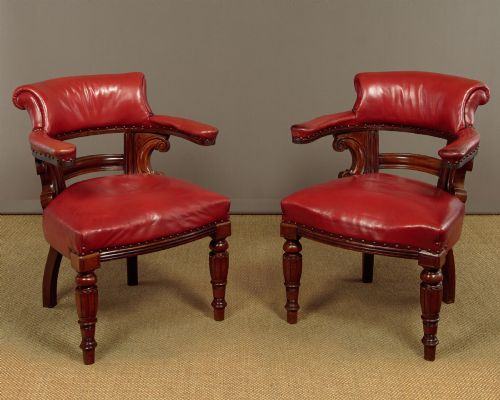
Victorian tub chairs are recognised by their sturdy walnut frames, deep buttoned or sprung upholstery, and often substantial proportions. They frequently incorporate turned legs or leather coverings.
Victorian pieces span from mid-century padded library chairs to late-century captains and desk models, showing robust joinery and heavier wood presence.
Are Art Deco tub chairs different?
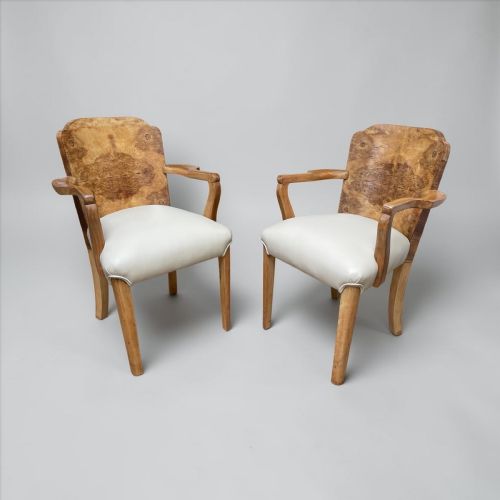
Art Deco examples feature streamlined, geometric wooden frames, often utilising bleached walnut or paired with smooth leather. They depart from nineteenth-century curves to embrace modern, clean silhouettes.
These nineteen-thirty pieces focus on simplified luxury, matching occasional chair forms with functional desk armchair designs.
How were these chairs used historically?
These chairs served multiple domestic functions, functioning as reading seats by the fire, desk chairs in studies, or occasional seating in formal salons. Their enclosed shape kept sitters warm in draughty rooms.
Pairing them was common practice for drawing rooms, where matching sets accommodated guests during social gatherings.