

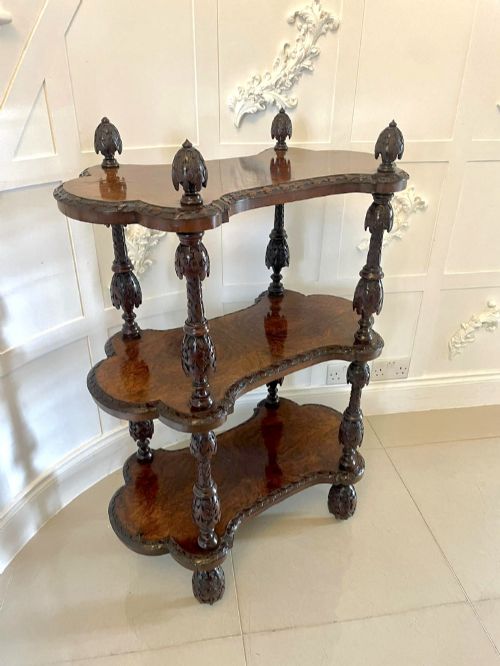
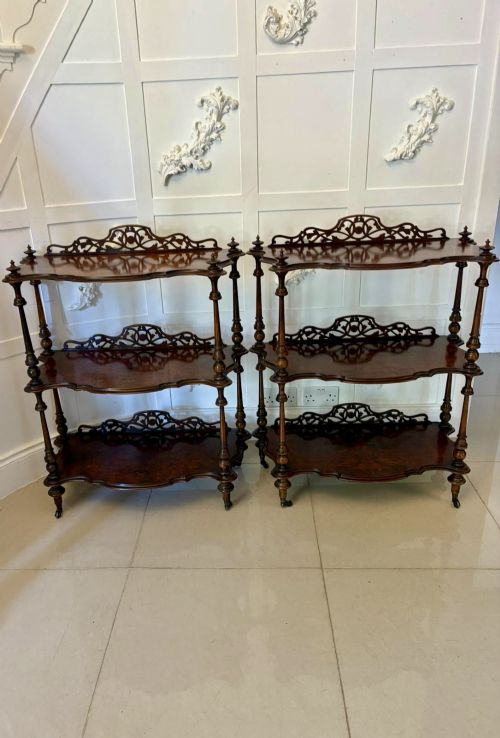
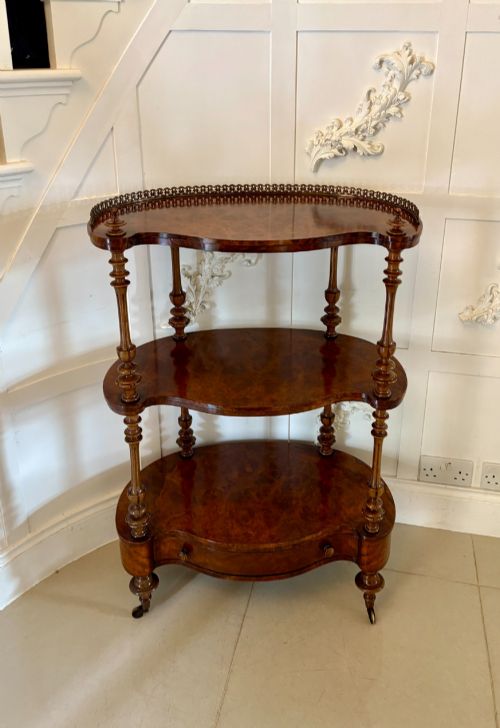
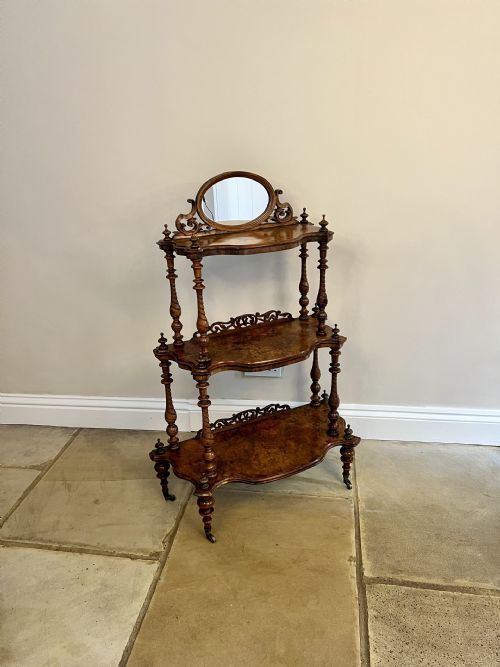


Walnut Three Tier Shelves
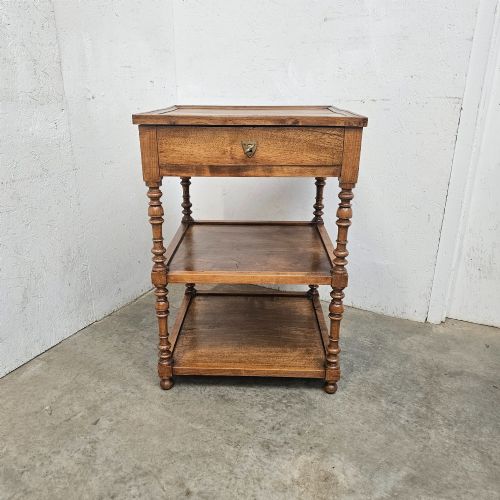
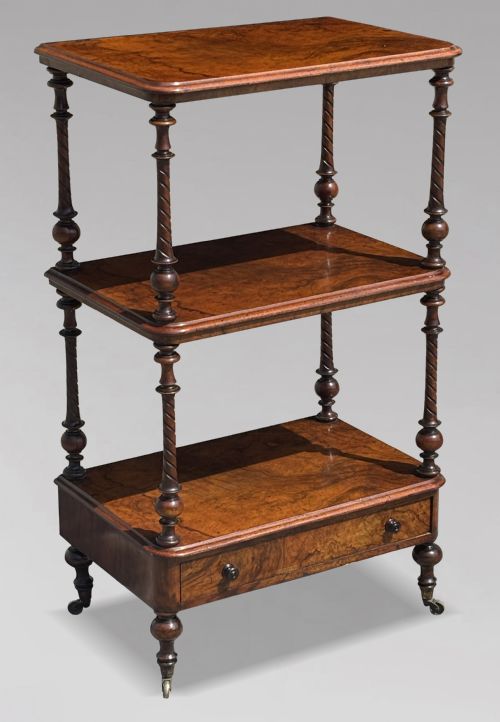
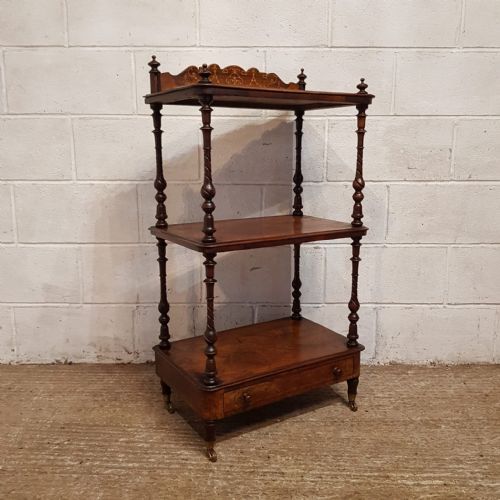
Walnut three tier shelves bring tiered display space into a room, joining the practical utility of a whatnot with rich figured wood.
Walnut Three Tier Shelves
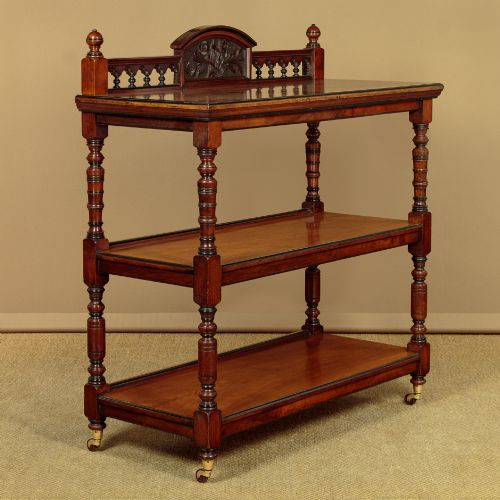
When searching for walnut three tier shelves, buyers encounter tiered display furniture commonly catalogued as whatnots, etageres, and open shelf units. These pieces range from compact corner stands and serpentine side pieces to larger freestanding exhibition pieces.
The versions most frequently met on this page date from the Victorian and Edwardian eras, spanning the mid-nineteenth century through the early twentieth century. English workshops and French makers dominate the origins, producing both serpentine and demi-lune forms with multiple open tiers.
How they were made
Cabinetmakers built these frames primarily from solid walnut and burr walnut veneers, often incorporating mahogany or ebonised wood for contrast. Marquetry inlay and marquetry veneer embellish the surfaces, paired with brass mounts, ormolu, and ceramic elements on specific continental examples.
Turned legs, carved supports, and adjustable shelves provide the structural framework for these tiered stands. Joinery methods of the period relied on precise fitting and turning to support the open levels without heavy brackets.
Walnut Three Tier Shelves Retail Price Guide 2026
Typical asking prices for walnut three tier shelves among the pieces listed under this phrase on Sellingantiques today, from the lower quarter to the upper quarter. They describe what is for sale here now, not the wider market.
At least one clever cabinetmaker built a whatnot that doubles as a campaign washstand, ready for deployment in the field.
What varies in quality
The distinction between standard utility pieces and top-tier examples lies in the selection of the burr walnut and the crispness of the marquetry inlay. Superior items display intensely figured grain patterns and meticulous hand-cut details rather than plain veneer.
Construction refinement also separates the grades, visible in finely turned uprights, balanced proportions, and integrated brass fittings. Exhibition quality pieces show greater ambition in outline, such as serpentine fronts or elaborate carving.
Heal's·Gillows
The Walnut Three Tier Shelves Glossary
- Whatnot
- A piece of furniture with multiple open shelves used for displaying ornaments and small objects. These originated in the eighteenth century and remained popular throughout the Victorian period.
- Etagere
- A French display stand featuring several tiers for ornaments, sharing a similar function to the English whatnot. They frequently incorporate inlaid marquetry and metal mounts.
- Burr Walnut
- A specialised wood cut from walnut tree growths, yielding highly decorative swirling grain patterns. Cabinetmakers prized this veneer for the principal surfaces of high-grade Victorian furniture.
- Marquetry
- Decorative woodwork where small pieces of veneer are fitted into a ground to form geometric or floral patterns. This technique appeared frequently on nineteenth-century French and English display furniture.
- Serpentine
- A furniture outline shaped with a double-curved edge that bows outward centrally and curves inward at the sides. This contour demands skilled carpentry and indicates a higher grade of manufacture.
Walnut Three Tier Shelves: Frequently Asked Questions
What were walnut three tier shelves used for?
These tiered units served primarily for displaying ceramics, books, and decorative ornaments in nineteenth-century drawing rooms and parlours. They kept prized small possessions visible and organised.
Over time, their role shifted from formal display to versatile accent furniture used to hold plants, lamps, or small collections in domestic interiors.
How do I style a whatnot in a modern home?
Place a three-tier stand against a neutral wall in a living room or hallway to let the figured burr walnut grain stand out. Use the open levels to display books, ceramics, or small sculptures without overcrowding the shelves.
Keep the distribution of items balanced across the tiers, pairing heavier objects on the lower level with lighter pieces near the top.
How do I tell a Victorian whatnot from an Edwardian etagere?
Victorian models typically feature dark, heavily figured burr walnut, turned columns, and serpentine or corner shapes reflecting mid-nineteenth-century revival styles. They prioritize sturdy presence and rich wood tones. <br><br> Edwardian etageres often display lighter construction, French marquetry inlay, ormolu mounts, and polished walnut frames reflecting Belle Epoque and continental influences.
Are these shelves adjustable?
Certain Victorian buffet and whatnot designs include fully adjustable shelving mechanisms, allowing the tiers to shift height according to the objects placed upon them. This engineering suited multifunctional rooms.
Most traditional three-tier units, however, feature fixed uprights and permanent shelf placement determined by the original cabinetmaker's construction.