

Walnut Table with Gallery
A walnut table with gallery combines rich timber with a raised rim, offering both a decorative surface and a practical stop for precious items.
Walnut Table with Gallery
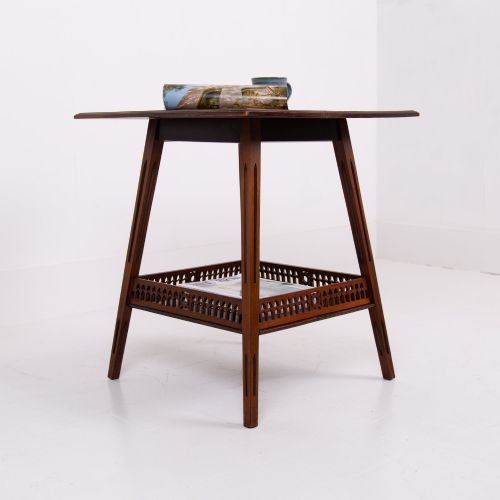
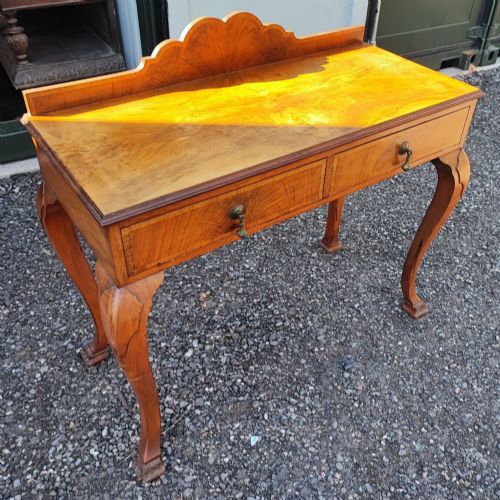
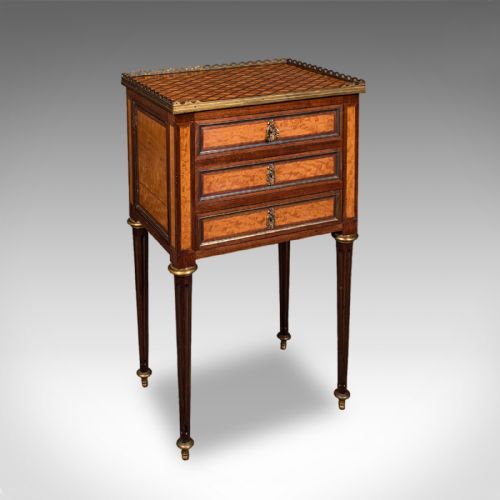
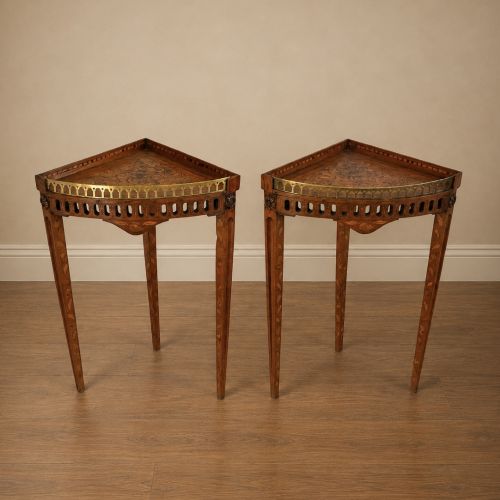
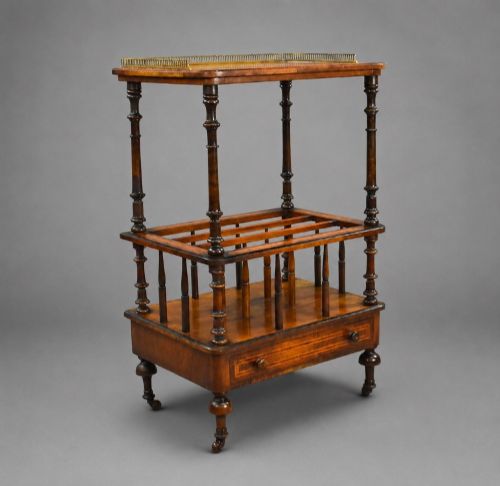
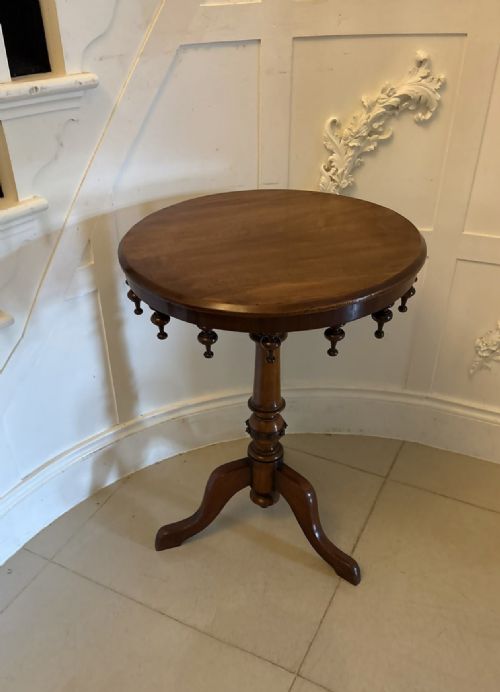
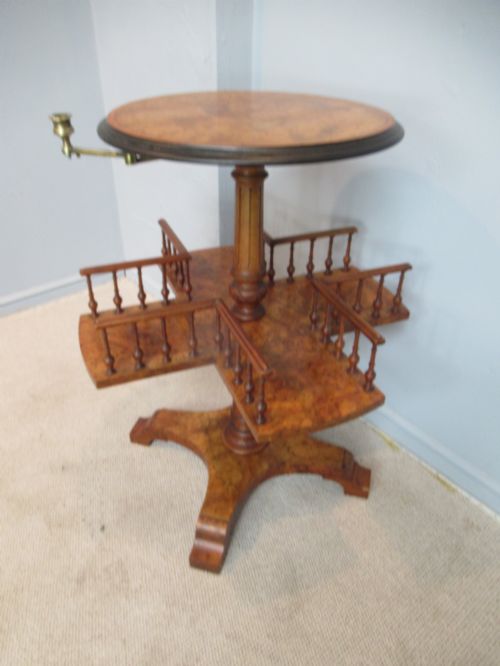
A walnut table with gallery typically presents as an occasional table, writing desk, or side table, incorporating a raised border around the top surface. These pieces emerge across periods such as the eighteenth century, the Victorian era, and the Edwardian period.
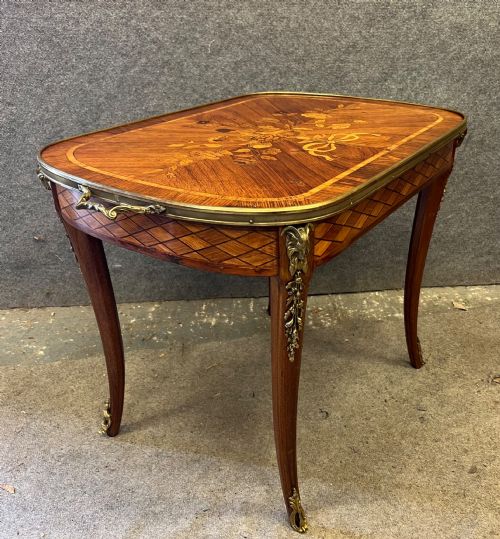
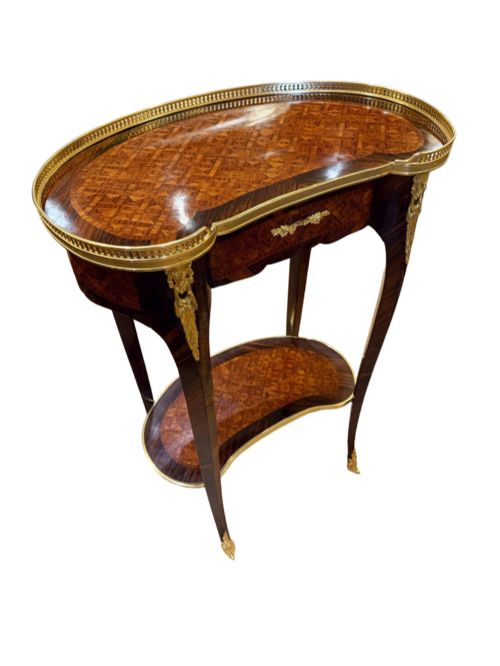
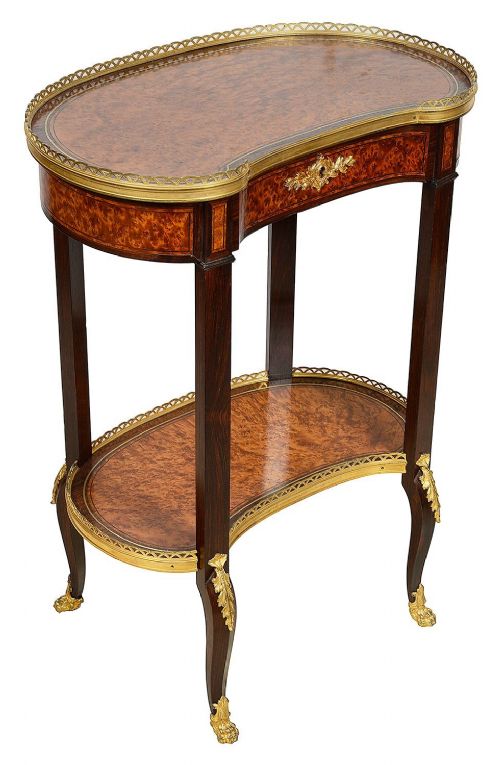
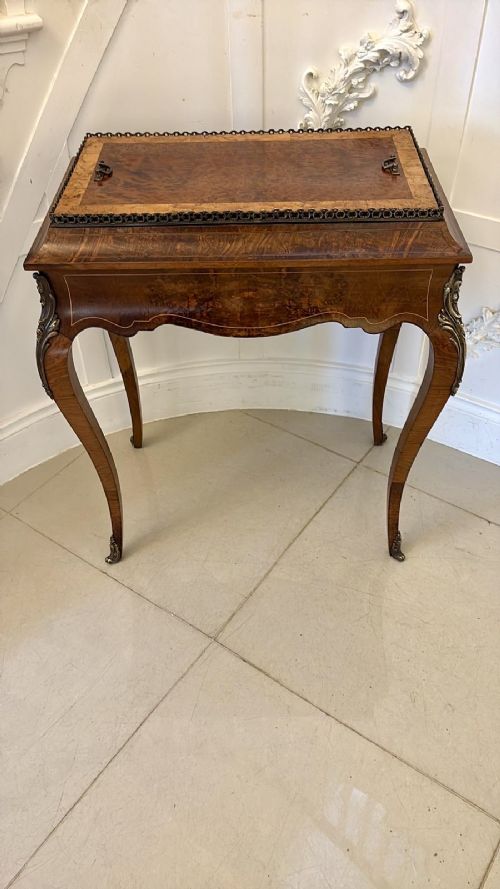
Makers frequently employ forms like kidney shapes, circular tops, and corner tables alongside practical additions like drawers or leather inset writing surfaces. French styles, including Louis XV revivals, appear regularly among the selection.
Buyers encounter variations ranging from simple side serving tables to elaborate desks and étagères. The presence of a gallery, whether in brass or carved wood, defines the practical character of each piece.
Materials and construction methods
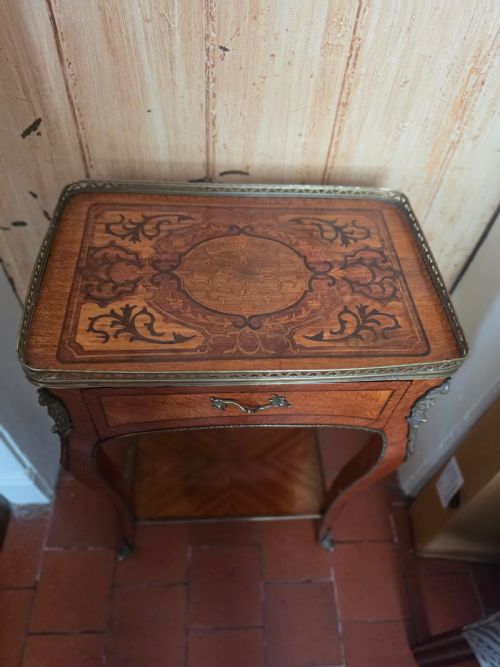
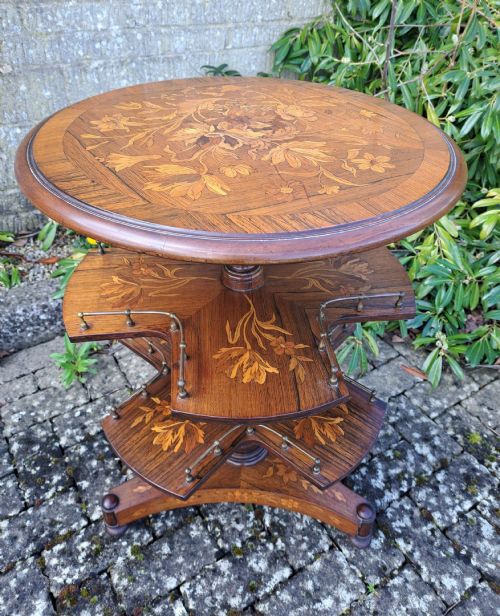
Craftsmen construct these tables primarily from walnut, burr walnut, and satinwood, applying intricate marquetry and parquetry inlay to enrich the timber surfaces. The natural grain of the wood provides the primary visual texture.
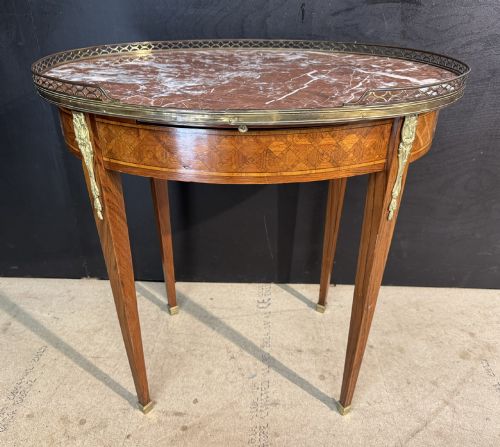
Metal elements such as brass galleries, ormolu mounts, and leather inserts complement the woodwork, particularly on French revival and nineteenth-century examples. Structural details include revolving mechanisms and fitted drawers.
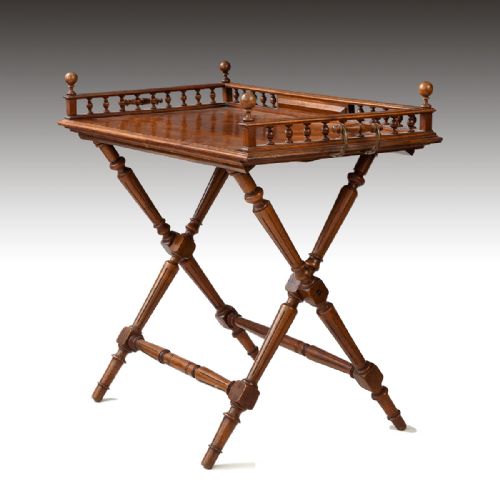
Makers integrate raised borders, termed galleries, directly onto the perimeter of the table top using brass spindles, pierced metalwork, or matching timber. This technique secures small objects while framing the grain of the wood.
Some nineteenth-century tables feature revolving galleries, letting owners spin their trinkets like miniature conversation pits.
Evaluating quality and craftsmanship
Quality reveals itself in the choice of timber, particularly where figured burr walnut or detailed marquetry inlay displays deliberate grain placement and precise cutting. The integration of the gallery into the top surface demands careful joinery and secure metal fitting.
Execution of secondary materials, such as tooled leather inserts, cast brass galleries, and ormolu mounts, distinguishes finer examples from standard production. The crispness of carved details in French revival pieces indicates the skill of the maker.
Proportion and structural integrity define the higher tiers of these tables, where drawers slide smoothly and stands support the weight of stone, onyx, or timber tops without wobble.
Heal & Sons·Gillow & Co
The Walnut Table with Gallery Glossary
- Gallery
- A raised rim or pierced border fitted around the edge of a table top to prevent items from sliding off. This feature is commonly cast in brass or fashioned from matching timber.
- Marquetry
- The art of applying decorative veneer pieces in various woods to form geometric patterns or pictorial designs. Craftsmen use this technique extensively on table surfaces.
- Parquetry
- A geometric mosaic of wood pieces used for decorative floors and furniture tops. It creates structured patterns across the surface of occasional tables.
- Burr Walnut
- Wood taken from a tree growth or burr, producing highly figured, swirling grain patterns. Cabinet makers prize this material for high-status furniture.
- Bonheur Du Jour
- A light lady's writing desk featuring a small cabinet or superstructure on the top. These desks often incorporate drawers and galleried shelves.
Walnut Table with Gallery: Frequently Asked Questions
What is a gallery on a table?
A gallery is a raised rim or pierced railing fitted around the perimeter of a table top. Its primary purpose is to keep small items from rolling or falling off the surface.
On these walnut tables, galleries are frequently fashioned from polished brass or carved from the same timber as the top.
How do I care for a walnut table?
Walnut furniture benefits from a stable environment away from direct sunlight and excessive heat fluctuations. Regular dusting with a soft, dry cloth preserves the finish of the timber.
Avoid using silicone-based polishes, opting instead for traditional beeswax applied sparingly to nourish the grain of the wood.
Where were these tables used originally?
These tables served various domestic functions depending on their specific form, from holding writing implements in a study to displaying decorative objects in a drawing room. Occasional tables and side tables moved easily around the home as needed.
Desks and bonheur du jour pieces provided dedicated workspace for correspondence in private chambers or parlours.
How do I distinguish nineteenth-century examples?
Nineteenth-century pieces often display characteristic timber choices like burr walnut alongside specific revival styles, such as French Louis XV designs or Victorian construction methods. Examining the underside and drawer construction reveals period-appropriate joinery.
The integration of brass galleries and marquetry inlay aligns closely with manufacturing techniques recorded from the eighteen-hundreds.