


Walnut Serpentine Dressers
Walnut serpentine dressers bring sculptural movement and rich grain to a room, offering deep storage within gracefully curving fronts.
Walnut Serpentine Dressers
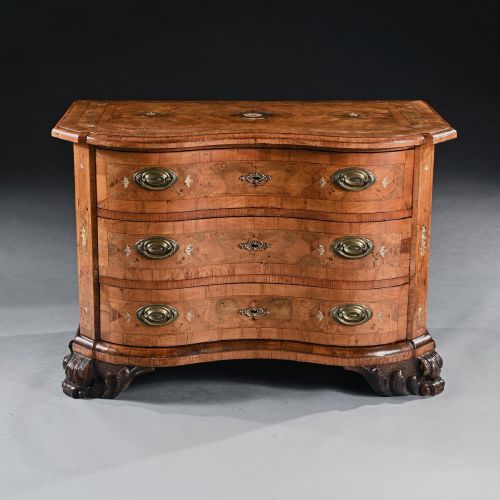
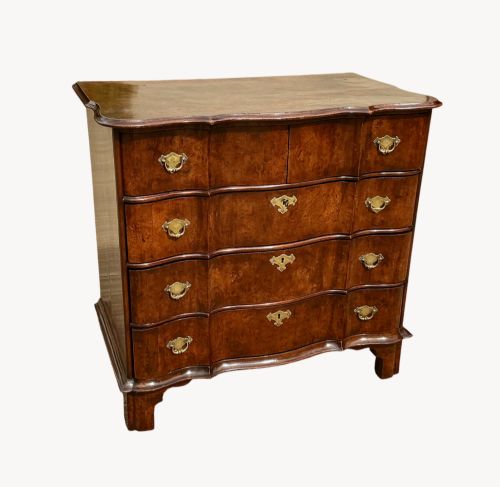
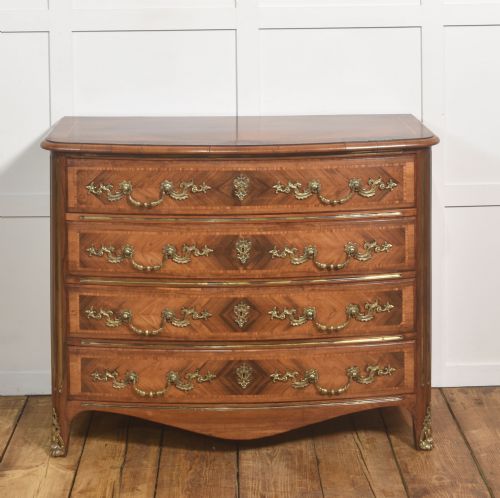
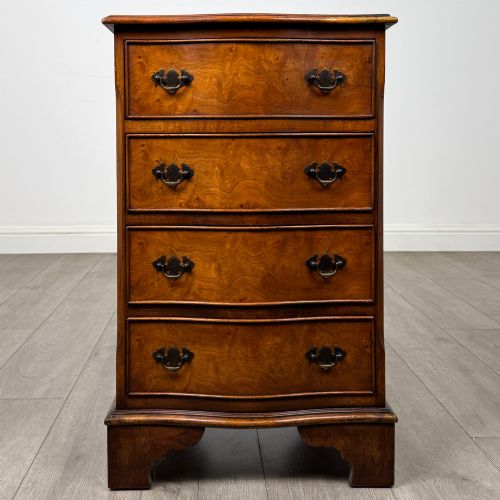
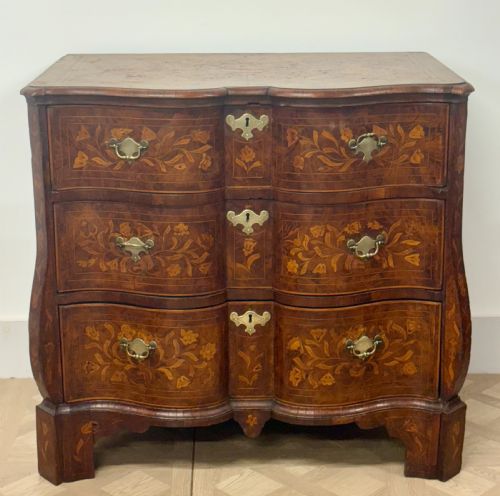
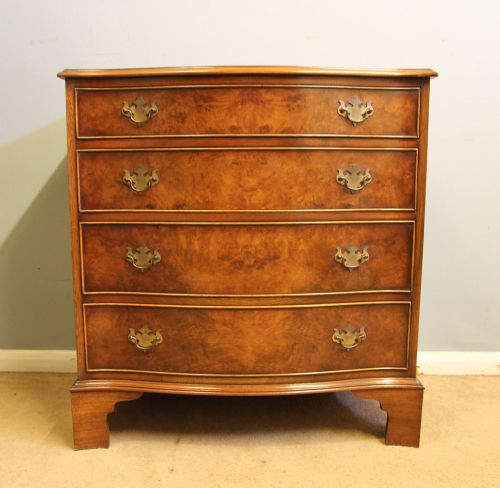
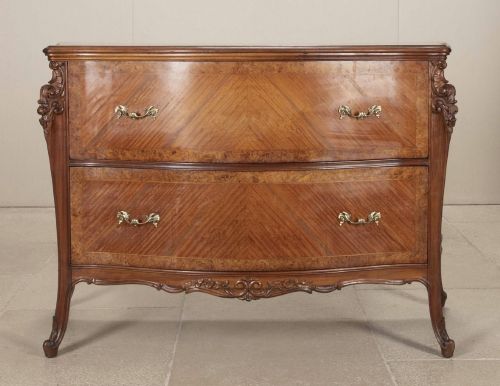
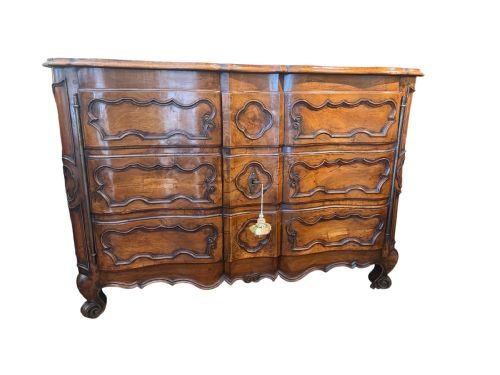
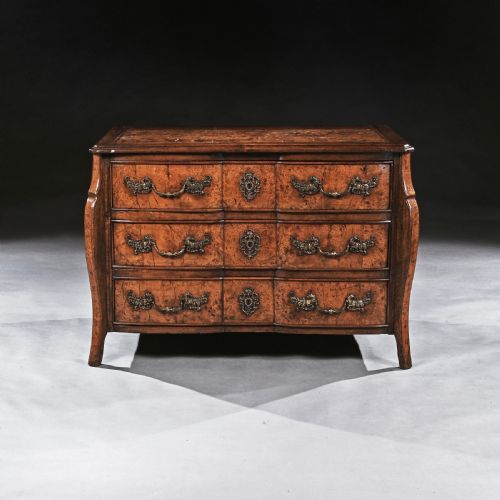
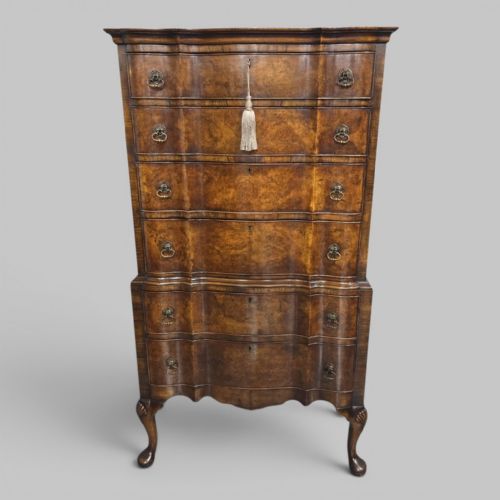
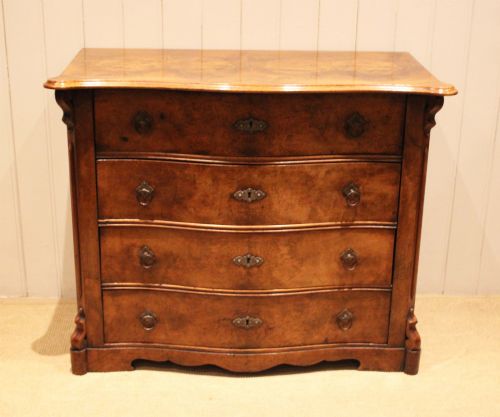
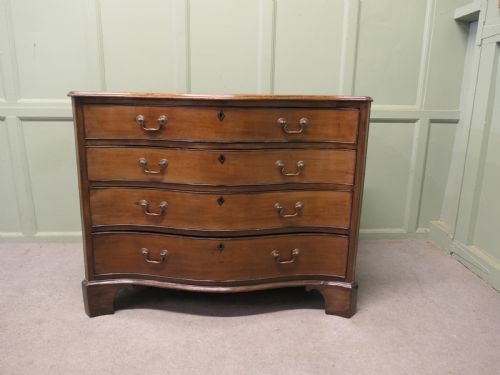
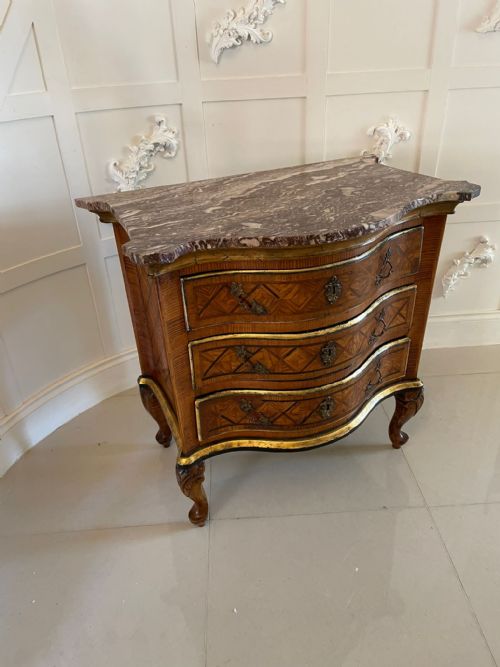
Walnut serpentine dressers take the form of chests of drawers and commodes, defined by their undulating fronts that sweep outward and inward. These pieces draw the eye through their rhythmic contours and the warm tones of their timber.
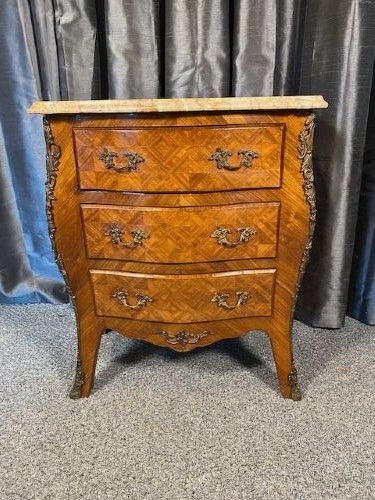
Buyers encounter examples spanning from the eighteenth century to the twentieth century, with continental European pieces appearing frequently alongside later revival styles. Forms range from compact country commodes to grand marble-topped models fitted with ormolu mounts.
How walnut serpentine dressers were made
Cabinetmakers worked solid walnut and figured burr walnut veneers over supportive secondary timbers like oak and fruitwood, shaping the carcasses to follow the complex curves of the front. Marquetry, parquetry, pewter, and ivory inlays decorated many of the surfaces, requiring immense precision to fit flush against the undulating wood.
High-status iterations incorporated thick marble tops and cast brass or ormolu mounts that followed the sweeping lines of the drawers and corners. These applied elements required careful casting and chasing to sit correctly upon the complex wooden shapes.
Some eighteenth-century commodes include hidden compartments tucked behind secret panels for safeguarding valuables away from curious eyes.
What varies in quality
The choice of timber creates an immediate distinction, as highly figured burr walnut and intricate marquetry patterns demand superior skill from the maker compared to plain grain. The fluidity and balance of the serpentine curve itself dictate the visual success of the piece, requiring expert hand-shaping rather than mechanical stiffness.
The integration of secondary materials such as marble and bronze mounts separates standard domestic furniture from high-end cabinetwork. Well-fitted drawers that maintain smooth operation along curving tracks demonstrate the enduring structural integrity of the construction.
The Walnut Serpentine Dressers Glossary
- Serpentine
- A front contour that curves outward in the centre and inward at the sides, creating an undulating line. This shape demands advanced woodworking skills to construct accurately.
- Burr walnut
- Wood taken from the growth growths or knots of walnut trees, displaying intricate, swirling grain patterns. Cabinetmakers sliced this timber into thin veneers to cover larger surfaces.
- Commode
- A low chest of drawers or cabinet originating in France, often featuring decorative mounts and a marble top. These pieces served both decorative and practical functions in formal rooms.
- Ormolu
- Gilded bronze used for decorative mounts, handles, and feet on high-end furniture. The material added metallic contrast and rich ornamentation to the wooden body.
Walnut Serpentine Dressers: Frequently Asked Questions
What periods do these dressers come from?
These pieces date from the eighteenth century through to the twentieth century, encompassing original Georgian and continental European eras alongside later revival periods.
Craftsmen across these centuries reproduced and adapted the curving serpentine form, meaning buyers encounter both antique originals and later interpretations.
Where were serpentine dressers made?
Originating largely in continental workshops across France, Germany, Italy, and the Netherlands, these dressers reflect distinct regional tastes and cabinetmaking traditions.
British and Scandinavian makers also adopted the form, producing regional variations that utilised local timbers alongside imported walnut veneers.
How do I maintain burr walnut surfaces?
Burr walnut benefits from stable room environments away from direct sunlight and strong heat sources, which can dry out the delicate veneers.
Regular dusting with a dry cloth and occasional application of appropriate furniture wax help preserve the lustre of the grain.
What is the difference between a commode and a chest of drawers?
While both provide storage through stacked drawers, the term commode typically denotes a lower, more decorative continental piece, frequently finished with a marble top and bronze mounts.
Chests of drawers often follow simpler British or regional forms, constructed entirely of wood without the added stone or metal ornamentation.