



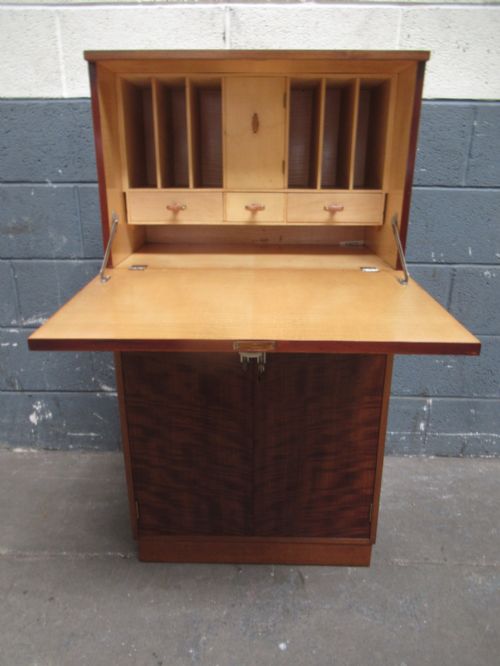

Walnut Secretaire Bureau
A walnut secretaire bureau combines the practicality of a writing desk with the enclosed security of cabinetry, offering collectors a striking piece of period furniture.
Walnut Secretaire Bureau
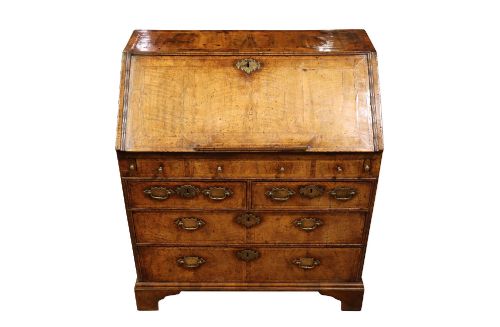
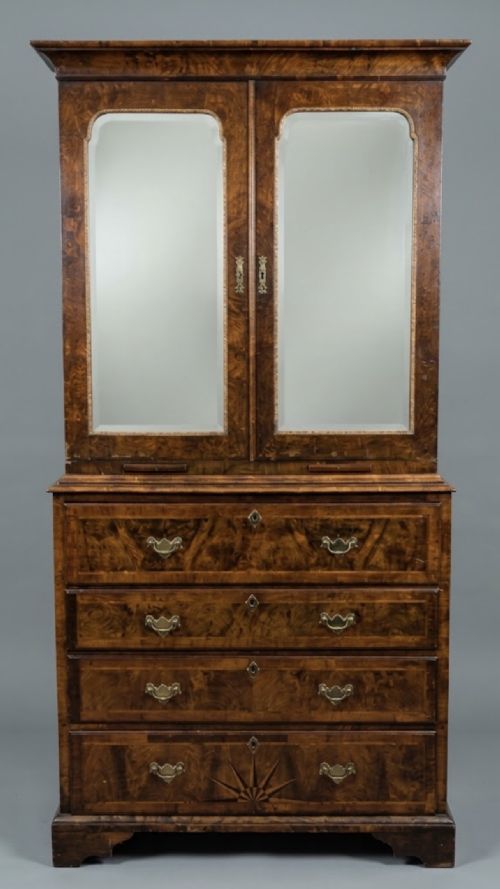
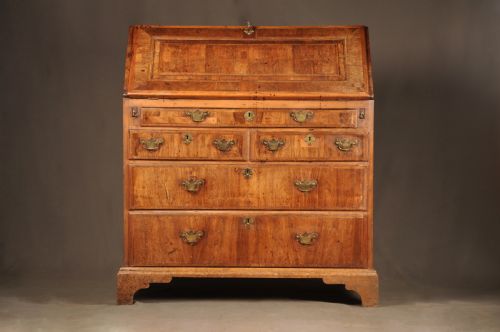
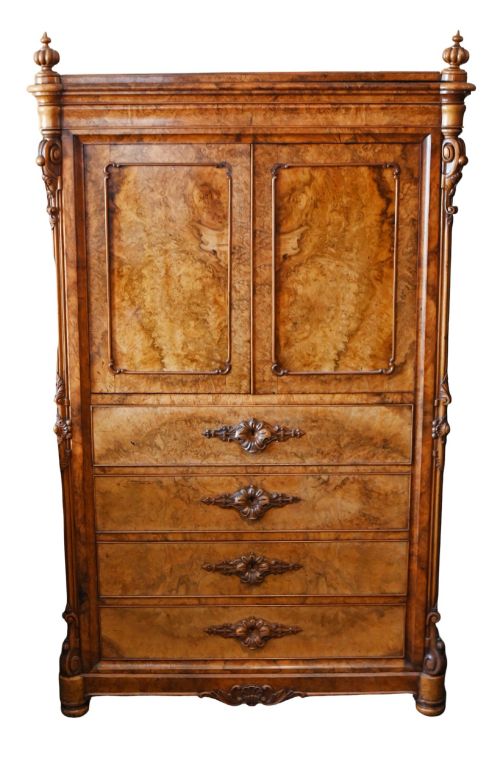
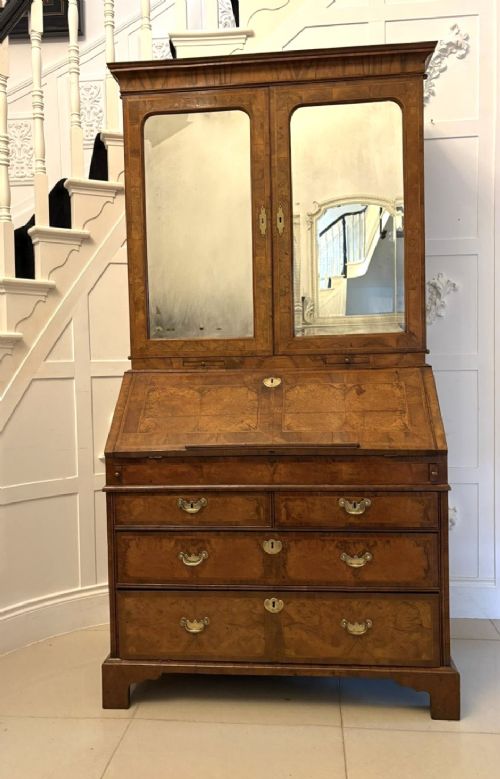
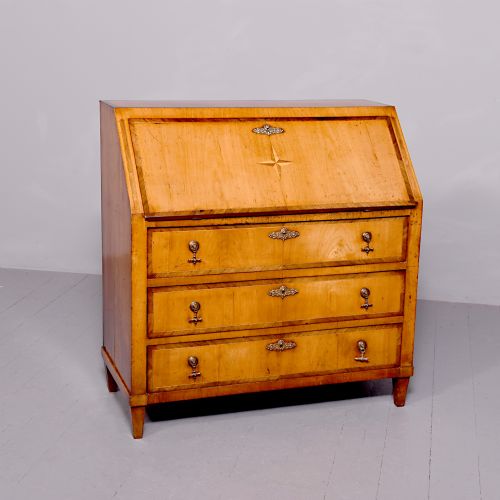
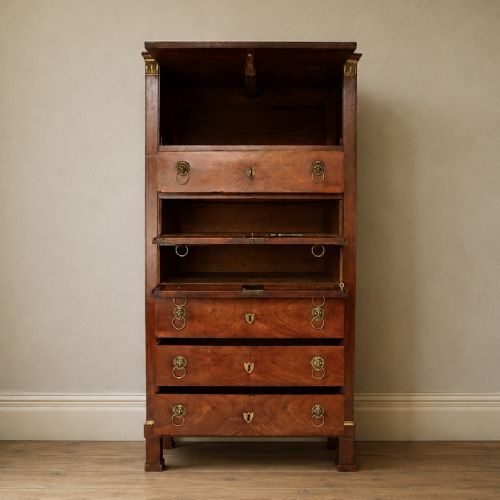
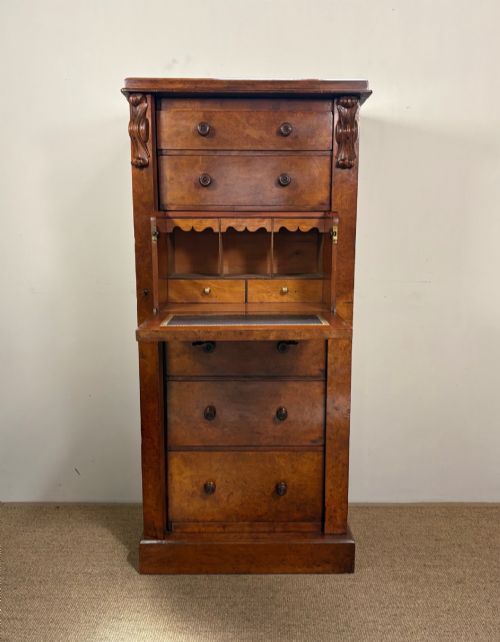
A walnut secretaire bureau is primarily defined by a fitted writing drawer that drops forward to reveal compartments, pigeonholes and small drawers. These pieces appear frequently as tall bureau bookcases, cabinet secretaires and chest forms originating from the eighteenth and nineteenth centuries.
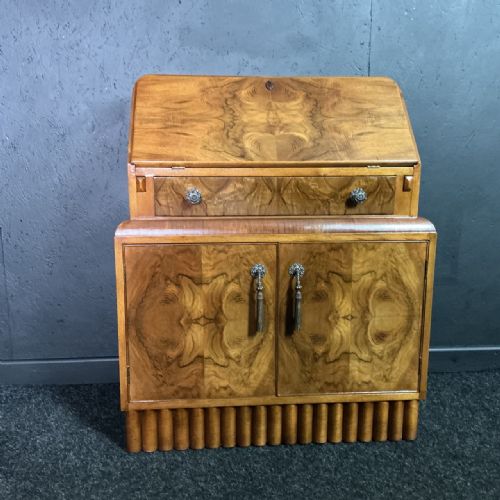
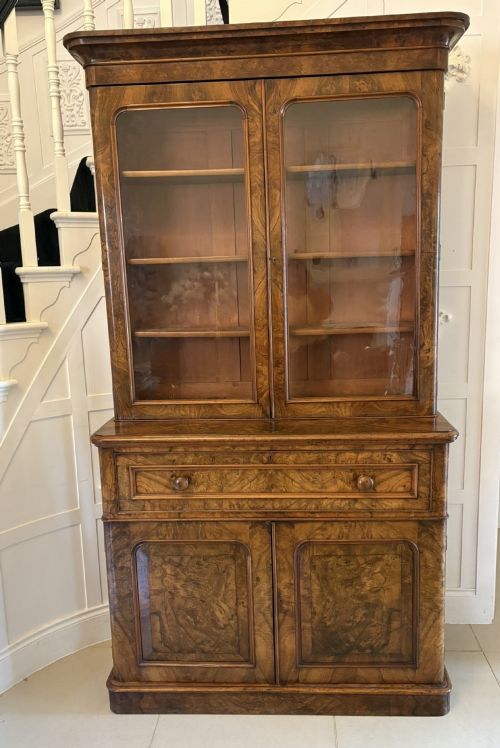
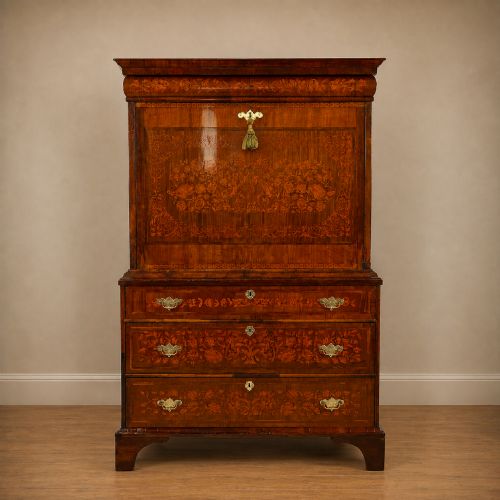
The selections span distinct regional aesthetics, including English Georgian designs, Dutch Baroque marquetry, Italian geometric marquetry and French Empire or Art Deco cabinets. Buyers most often encounter eighteenth-century George I examples and Victorian iterations featuring fitted upper bookcases or lower drawer chests.
Object variations range from compact writing desks and cylinder bureaus to grand secretaire cabinets and tallboy chests on chest. Each variation provides concealed writing surfaces alongside deep storage capacity, maintaining a formal presence in a room.
Materials and Construction
Makers utilised solid walnut and decorative burr walnut veneers, laid over secondary timbers such as oak, to achieve striking grain patterns on exterior surfaces. Figured veneers are arranged symmetrically on drawer fronts and fall-front panels to create visual depth.
Marquetry and parquetry ornamentation appear in floral, geometric and pictorial motifs, integrating contrasting woods alongside materials like satinwood, brass mounts, and occasional marble tops. Interior compartments incorporate pigeonholes and small drawers constructed with traditional joinery.
Hardware elements comprise brass drop handles, key escutcheons, and gilt bronze mounts, paired with leather or baize writing inserts on the drop-front writing surfaces.
Walnut Secretaire Bureau Retail Price Guide 2026
Typical asking prices for walnut secretaire bureau among the pieces listed under this phrase on Sellingantiques today, from the lower quarter to the upper quarter. They describe what is for sale here now, not the wider market.
Current selections span the 18th Century through the 1930s, featuring materials such as walnut, burr walnut, brass, leather, and marble.
Evaluating the Pieces
Quality rests upon the selection and matching of the walnut veneer, where continuous grain patterns across drawer fronts signal superior cabinetmaking. Finer pieces display meticulous marquetry work and well-balanced proportions, particularly in smaller scale chests and bureau bookcases.
The interior engineering of the writing drawer dictates functional success, separating standard production from exceptional craftsmanship. Smooth operation of the drop-front mechanism, complex pigeonhole arrangements, and intact secondary drawers reflect the original maker's skill.
Gregory & Co. of London·Adriano Brambilla
The Walnut Secretaire Bureau Glossary
- Secretaire abattant
- A vertical cabinet featuring a drop-front writing flap that conceals an internal arrangement of small drawers and pigeonholes. This vertical form keeps floor footprints compact while offering substantial storage.
- Escritoire
- An antique writing cabinet or desk, often fitted with a fall-front flap and multiple internal compartments. The term frequently applies to formal eighteenth-century Continental and English writing furniture.
- Burr walnut
- A specialised timber cut from walnut tree growths or burls, yielding highly intricate and swirling grain patterns. Cabinetmakers prize this material for decorative veneering on prominent exterior surfaces.
- Marquetry
- The art of applying small pieces of veneer to a structure to form decorative patterns and pictures. Craftsmen use contrasting woods to build elaborate floral or geometric designs across the front panels.
- Bureau bookcase
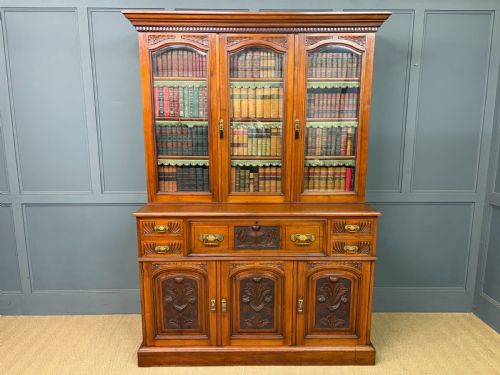
- A dual-purpose furniture form combining a writing bureau base with an upper glazed or panelled shelving cabinet. These substantial pieces served as both libraries and private writing stations.
Walnut Secretaire Bureau: Frequently Asked Questions
How do I use a secretaire bureau today?
The drop-front writing flap provides a practical fold-down surface for laptop use or correspondence, concealing the workspace when closed. Internal compartments organise stationery and small items efficiently.
The lower drawers or upper bookcase sections offer ample storage for household linens, books, or everyday items, integrating historic craftsmanship into daily routines.
Where should I place a walnut bureau?
These pieces suit studies, living rooms, or large hallways where their rich walnut grain and brass hardware serve as a focal point. Position them away from direct sunlight and heat sources to protect the wood and veneer.
Ensure adequate clearance in front of the cabinet so the drop-front writing flap can open fully without obstruction from other furniture.
How do I distinguish Georgian from Victorian walnut secretaires?
Georgian examples, particularly from the George I period, typically feature restrained figurations, herring-bone banding, and bracket feet. Their proportions lean towards architectural simplicity and refined internal drawer layouts.
Victorian pieces often incorporate heavier carved details, burr walnut veneers with high contrast, and occasionally elaborate marquetry or glazed upper bookcase doors. The construction methods inside the secondary drawers also indicate the nineteenth-century shift in workshop practices.