
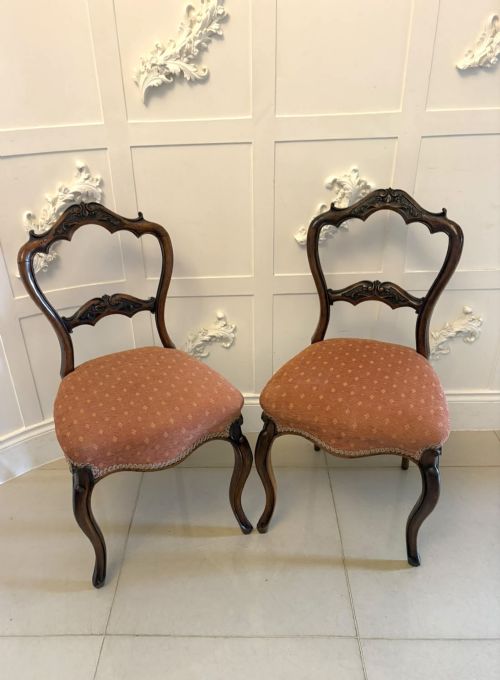
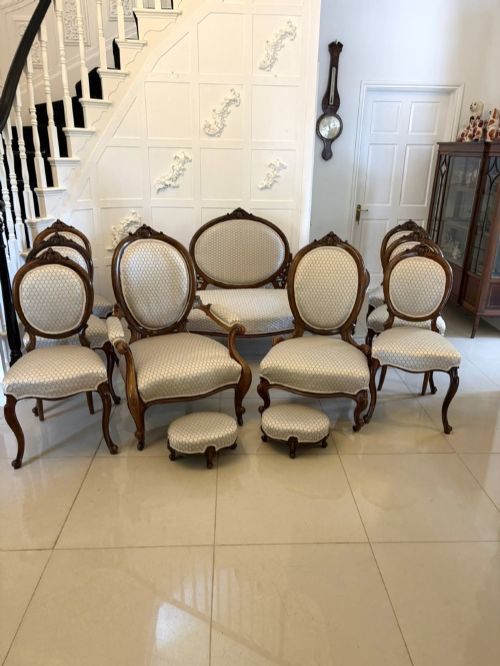
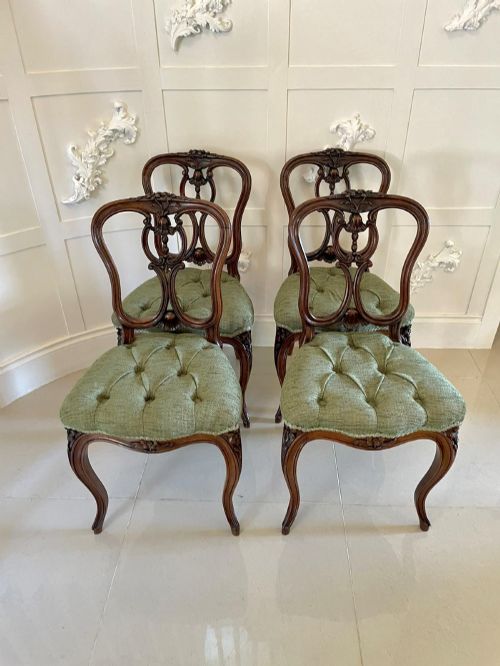

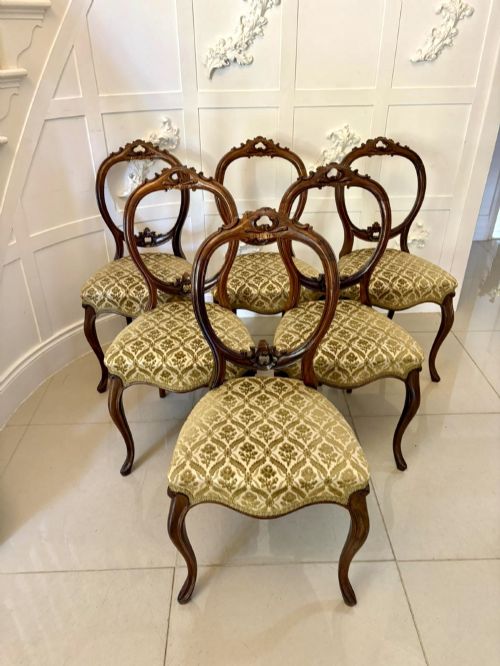
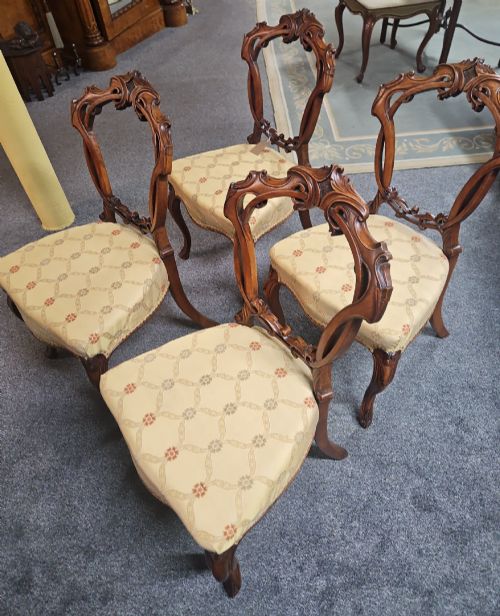
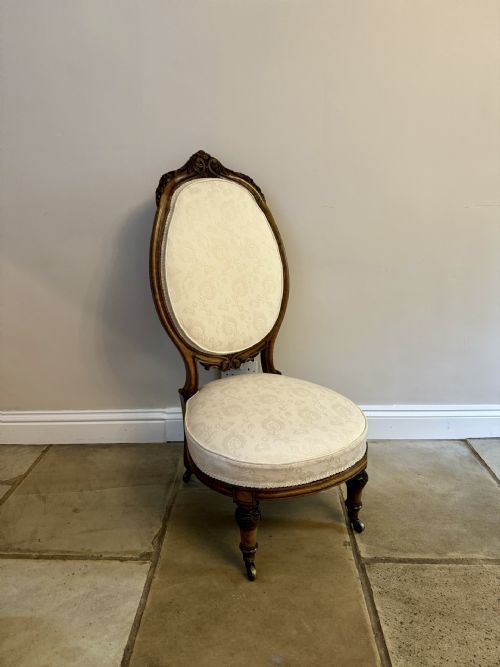
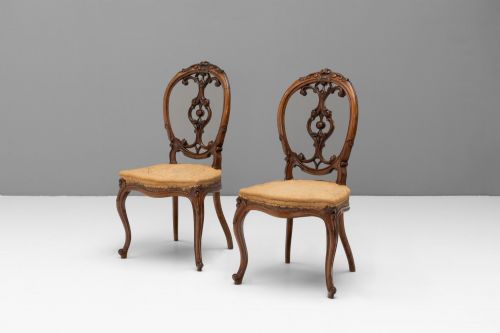


Walnut Rococo Side Chairs
Walnut rococo side chairs bring curving carved timber and rich upholstery to period interiors, offering both historic charm and practical seating.
Walnut Rococo Side Chairs
When searching for walnut rococo side chairs, buyers encounter diverse forms ranging from Victorian sets to 18th century Italian and Dutch examples. The selection spans several decades and centuries, with Victorian interpretations forming a substantial portion of the available pieces.
These items function as dining chairs, salon seats, nursing chairs, and accent pieces within period settings. The inventory includes single chairs, matched pairs, and larger sets numbering up to eight or nine pieces.
Origins stretch across Britain, France, Italy, and the Netherlands, displaying stylistic influences from the Louis XV revival and baroque traditions alongside native Victorian craftsmanship.
How they were made
Craftsmen utilised solid walnut to construct the primary frames, applying intricate carved detailing to the crest rails, cabriole legs, and pierced splats. Hard wood construction provided the structural integrity necessary for daily use over centuries.
Upholstery techniques incorporated fabric, velvet, contemporary textiles, and tapestry secured to the seats and backs, often complemented by brass elements. Selected pieces feature marquetry inlay work integrated directly into the timber framework.
Listings feature walnut timber combined with various textiles, including velvet, tapestry, and contemporary fabrics across multiple historical periods.
What varies in quality
The sophistication of the hand carving distinguishes standard seating from exceptional examples, with crisp floral and scroll motifs indicating superior workshop output. The selection of the walnut timber grain and the completeness of matched sets also influence the overall character of the chair.
Structural harmony between the undulating framework and the upholstered components determines the success of the execution. Pieces originating from recognised firms or specific regional traditions display distinct levels of refinement in their joinery and proportion.
Morison and Co of Edinburgh
The Walnut Rococo Side Chairs Glossary
- Rococo revival
- A design movement drawing inspiration from 18th-century French ornamentation. It is characterised by asymmetrical curves, C-scrolls, and naturalistic plant motifs.
- Cabriole leg
- A furniture leg featuring a double curve that bends outward at the knee and tapers inward toward the foot. This form derives from animal limbs and appears frequently on seats from this era.
- Balloon back
- A rounded, oval-shaped chair back resembling the profile of a hot air balloon. This silhouette is common in Victorian dining and salon seating.
- Pierced splat
- The central vertical wooden strip within a chair back that has been cut through to create an openwork pattern. It lightens the visual weight of the timber.
Walnut Rococo Side Chairs: Frequently Asked Questions
Where were walnut rococo side chairs used?
These seats served primarily in formal dining rooms, drawing rooms, and private parlours where entertaining took place. Their decorative carved backs suited them for placement against walls when not pulled up to tables.
In domestic settings, smaller variants functioned as ladies chairs or dressing table seats in bedrooms. Their versatile scale allowed them to move easily between different reception rooms as needed.
How do I care for antique walnut frames?
Maintain the timber by keeping pieces away from direct heat sources and strong sunlight, which can dry out and fade the wood. Regular dusting with a soft, dry cloth preserves the finish without requiring heavy polishes.
Check joints periodically for movement and handle the carved crest rails with care when repositioning the furniture. Professional conservation protects fragile upholstery and historic finishes.
Can I mix these chairs with modern tables?
The warm tones of walnut timber and curving silhouettes allow these seats to contrast effectively with contemporary dining tables. Their compact footprints make them practical additions to modern living spaces.
Pairing antique seating with simple modern designs highlights the intricate carving of the frames. Ensure seat heights align comfortably with the table surface in use.
How do I distinguish Victorian from 18th century pieces?
Examine the construction methods, tool marks, and timber preparation visible on the underside and interior frames. Eighteenth-century examples often exhibit hand-sawn components and older joinery techniques distinct from later production.
Stylistic proportions also offer clues, as Victorian revivals frequently exaggerate curves and utilise machine assistance in the carving process. Comparing the specific regional characteristics helps confirm the era of manufacture.