


Vintage Walnut Vanity Chairs
These vintage walnut vanity chairs offer compact seating options for dressing tables, bringing period character and warm timber tones into a bedroom scheme.
Vintage Walnut Vanity Chairs
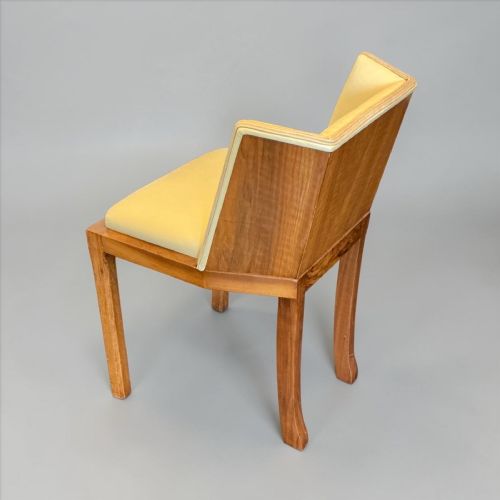
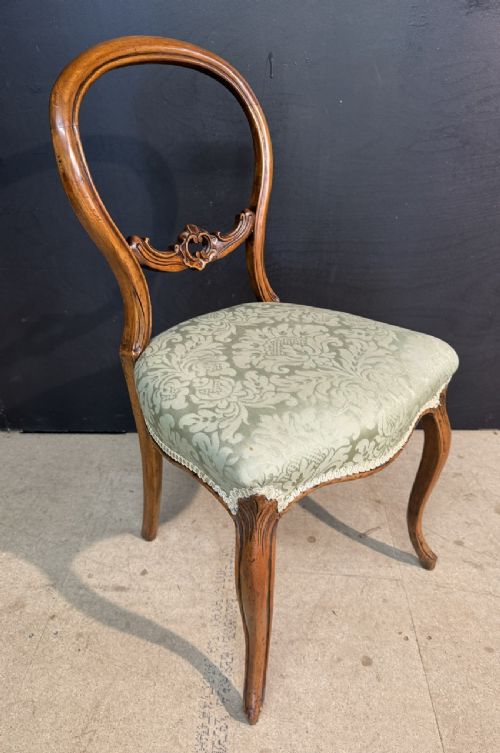
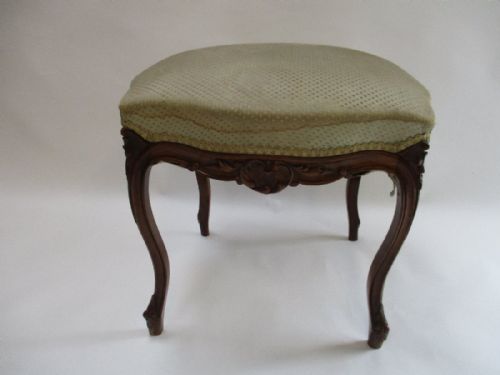
Vintage walnut vanity chairs encompass a varied group of low seating designed for dressing tables, bedrooms, and studies, appearing in forms ranging from small stools and side chairs to piano stools and armchairs. When searching for vintage walnut vanity chairs, buyers encounter pieces spanning several eras, notably the Victorian period, the Edwardian years around nineteen hundred, and the nineteen-twenties and thirties.
The selection frequently includes items built in revival idioms such as Queen Anne style, alongside mid-eighteenth-century Italian side chairs and streamlined Art Deco designs from England. Stools often feature specific practical additions like hidden storage compartments beneath the seat or newly upholstered tops, while other examples take the form of open-backed bedroom side chairs.
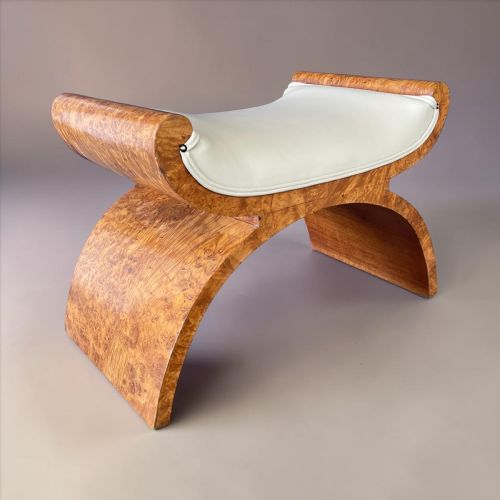
Makers and workshops of the early twentieth century, including Harry and Lou Epstein, produced distinct Art Deco interpretations in burr walnut, while earlier nineteenth-century examples lean towards carved ornamentation and cabriole legs. Origin and period dictate the exact silhouette, moving from heavily carved Victorian woodwork to the clean curved lines of nineteen-thirty pieces.
Materials and construction methods
The primary timber across these examples is walnut, utilised both in plain grain and highly figured burr walnut veneers, providing a rich brown palette with distinct natural figuring. Frameworks frequently incorporate hand-carved decorative elements, cabriole legs, or twisted rope turnings that demonstrate traditional cabinet-making skills of their respective periods.
Upholstery forms a vital part of the construction, utilising materials such as textile, fabric, leather, damask, and wool needlepoint to cover the seat pads. Brass components occasionally appear as hardware, castors, or structural accents, complementing the dark tones of the walnut timber frames.
The listings span from mid-eighteenth-century Italian side chairs to nineteen-thirties Art Deco designs, covering multiple periods including Victorian and Edwardian eras.
Assessing quality in walnut seating
Quality in these pieces rests heavily on the selection of the timber, where highly figured burr walnut veneer or choice solid walnut grain elevates the visual impact of the frame. The crispness and depth of hand-carved details, whether on cabriole legs or decorative rails, separate standard production items from finer workshop pieces.
Harry and Lou Epstein
The Vintage Walnut Vanity Chairs Glossary
- Burr walnut
- A specialised timber veneer taken from the burl growths of walnut trees, prized for its swirling, highly decorative grain patterns. It frequently appears on Art Deco cabinet work and furniture surfaces.
- Cabriole leg
- A furniture leg that curves outward and then tapers inward, typically ending in a pad, scroll, or claw foot. This form is common in Queen Anne style and eighteenth-century inspired pieces.
- Damask
- A reversible figured fabric traditionally woven on a jacquard loom, often utilised for upholstery on bedroom and dressing table seating. It provides a subtle sheen and textured pattern.
- Needlepoint
- A type of counted thread embroidery stitched on an open-weave canvas canvas, frequently seen on Victorian and early twentieth-century stool tops. It allows for intricate floral or geometric pictorial designs.
- Twisted rope leg
- A decorative turning style resembling a twisted cord or rope, found on the legs or stretchers of certain nineteenth-century and revival stools. This technique adds vertical texture to the wooden support.
Vintage Walnut Vanity Chairs: Frequently Asked Questions
What is the difference between a vanity chair and a piano stool?
Vanity chairs often feature low backs, side supports, or padded seats specifically proportioned for sitting at a dressing table or desk. Piano stools of the period occasionally incorporate internal storage compartments or adjustable mechanisms.
Both forms utilise walnut frames and similar upholstery, but their original intended functions dictated whether they required backrests or open stool designs.
How do I identify a Queen Anne style walnut stool?
Queen Anne style pieces typically feature distinct cabriole legs that curve outward from the seat frame and taper down to simple pad feet. The woodwork is generally smooth-surfaced walnut without heavy carving, focusing instead on graceful proportions and clean lines.
Revival versions from the early twentieth century often replicate these eighteenth-century structural traits closely.
Are Art Deco walnut chairs common in this category?
Art Deco examples from the nineteen-thirties appear frequently, often constructed from burr walnut with contrasting leather or fabric upholstery. These pieces favour geometric curves, smooth polished surfaces, and functional additions like built-in seat storage.
They offer a distinct aesthetic contrast to the earlier Victorian carved designs and Queen Anne revivals.
What upholstery materials should I expect to find?
Upholstery ranges from traditional wool needlepoint and woven damask to plain textiles and leather. Many pieces retain period fabrics or feature newly applied covers that respect the original style of the seating.
The choice of covering often reflects the date of the piece, from ornate Victorian needlework to streamlined Art Deco leather.